By SellerSprite Team
SellerSprite helps Amazon sellers evaluate products, map keywords, and build traffic strategies that connect on-Amazon conversion with off-Amazon discovery. This guide is written for brand owners who want to use Amazon Attribution, Brand Referral Bonus, and external traffic more intentionally, with measurement first and budget decisions second.
Answer first: Amazon Attribution helps you measure what your external traffic does after it reaches Amazon, while the Brand Referral Bonus program can return an average bonus of about 10% on qualifying sales driven by tagged non-Amazon traffic for eligible US seller brand owners. If you want to run social ads, influencer traffic, email, or content traffic into Amazon profitably, you need to understand all three concepts together and use SellerSprite to choose the right products, keywords, and traffic destinations.
Key Takeaways
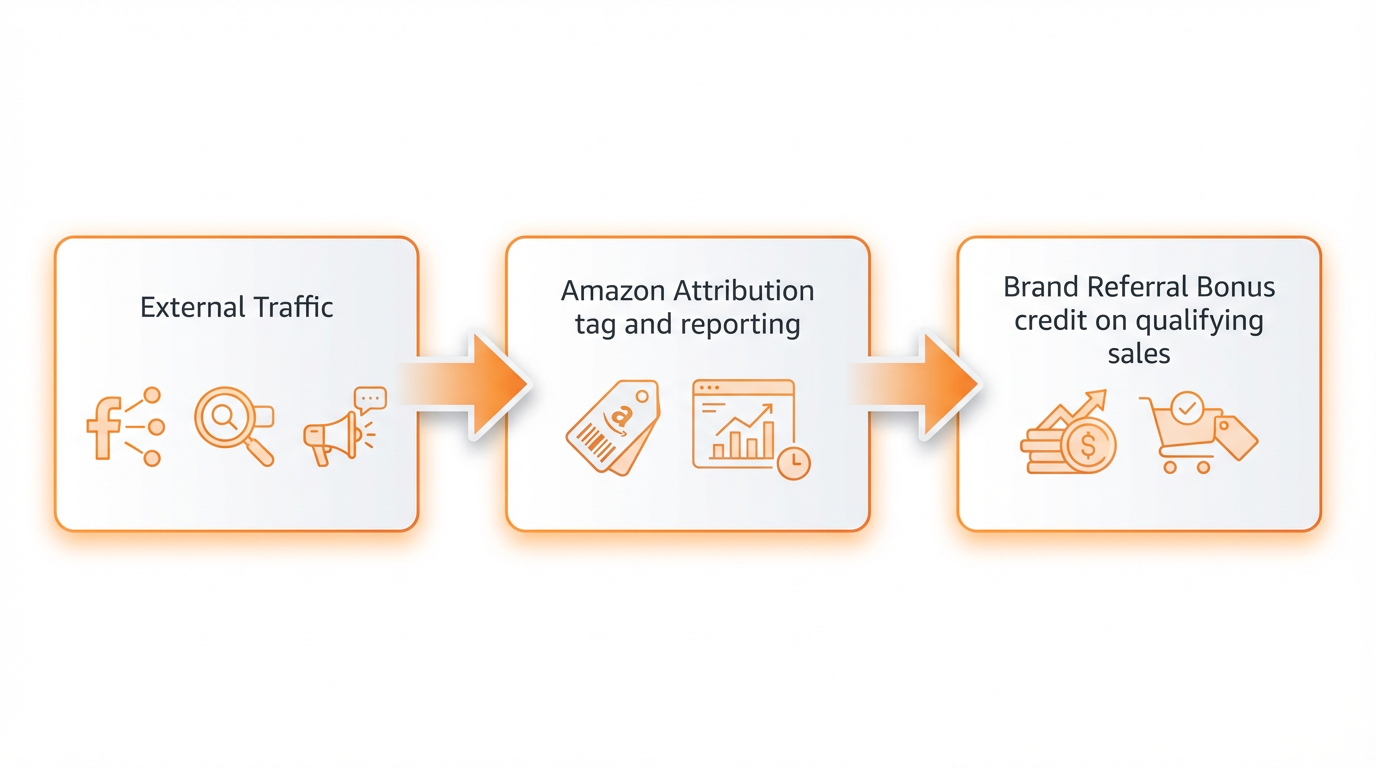
- Amazon Attribution is the measurement layer. Brand Referral Bonus is the fee-credit incentive layer. External traffic is the actual traffic source layer.
- Amazon states that Attribution uses a 14 day last-touch attribution model, and Brand Referral Bonus can average about 10% of qualifying sales for eligible US seller brand owners.
- External traffic works best when the product already converts on Amazon and the landing destination matches the traffic intent.
- SellerSprite helps before launch by evaluating products and keywords, and after launch by helping you judge where external traffic is most likely to support rank and profit.
Table of Contents
- What are Amazon Attribution, Brand Referral Bonus, and external traffic?
- Who is eligible and what are the key rules?
- How does the process work from tag creation to bonus credit?
- Which external traffic channels make the most sense?
- How do you estimate the economics of external traffic?
- How does SellerSprite help before you buy external traffic?
- What do real external traffic results look like?
- External traffic preflight checklist
- FAQ
- References
What are Amazon Attribution, Brand Referral Bonus, and external traffic?
Direct answer: These three terms are connected, but they are not the same. Amazon Attribution is the analytics system, Brand Referral Bonus is the incentive program, and external traffic is the traffic source you control outside Amazon.
Amazon Attribution
Amazon Attribution is a free measurement solution from Amazon Ads that tracks what happens on Amazon after shoppers click your non-Amazon marketing links. Amazon says it can measure the impact of search, social, display, video, email, and influencer or affiliate traffic on Amazon shopping activity and sales.
Brand Referral Bonus
Brand Referral Bonus is a separate program for eligible US seller brand owners. Amazon says it can provide a bonus averaging about 10% of qualifying product sales driven by non-Amazon marketing measured through Amazon Attribution. In practice, this usually appears as a later fee credit rather than instant cash back.
External traffic
External traffic is everything you send into Amazon from outside platforms, such as Google Ads, Meta, YouTube, blogs, email, affiliate content, or influencer posts. External traffic is not automatically profitable just because Attribution and Brand Referral Bonus exist. The quality of the traffic, the product, and the landing destination still determine whether the campaign actually works.
Who is eligible and what are the key rules?
Direct answer: Eligibility is not identical for every feature. Attribution is broader, while Brand Referral Bonus is more limited. The key rules are eligibility, correct tag usage, and understanding the attribution and payout timing.
- Amazon Attribution: Amazon Ads describes it as a free measurement solution for approved advertisers and brands using non-Amazon channels.
- Brand Referral Bonus: Amazon states that this is available to eligible US seller brand owners enrolled in Brand Registry.
- Attribution window: Amazon states that Attribution uses a 14 day last-touch model for conversion credit.
- Tag implementation: tags must be applied correctly to non-Amazon ads or links, otherwise measurement and bonus reporting can fail.
Takeaway: Do not treat eligibility, attribution, and payout timing as the same thing. They are separate parts of the system.
How does the process work from tag creation to bonus credit?
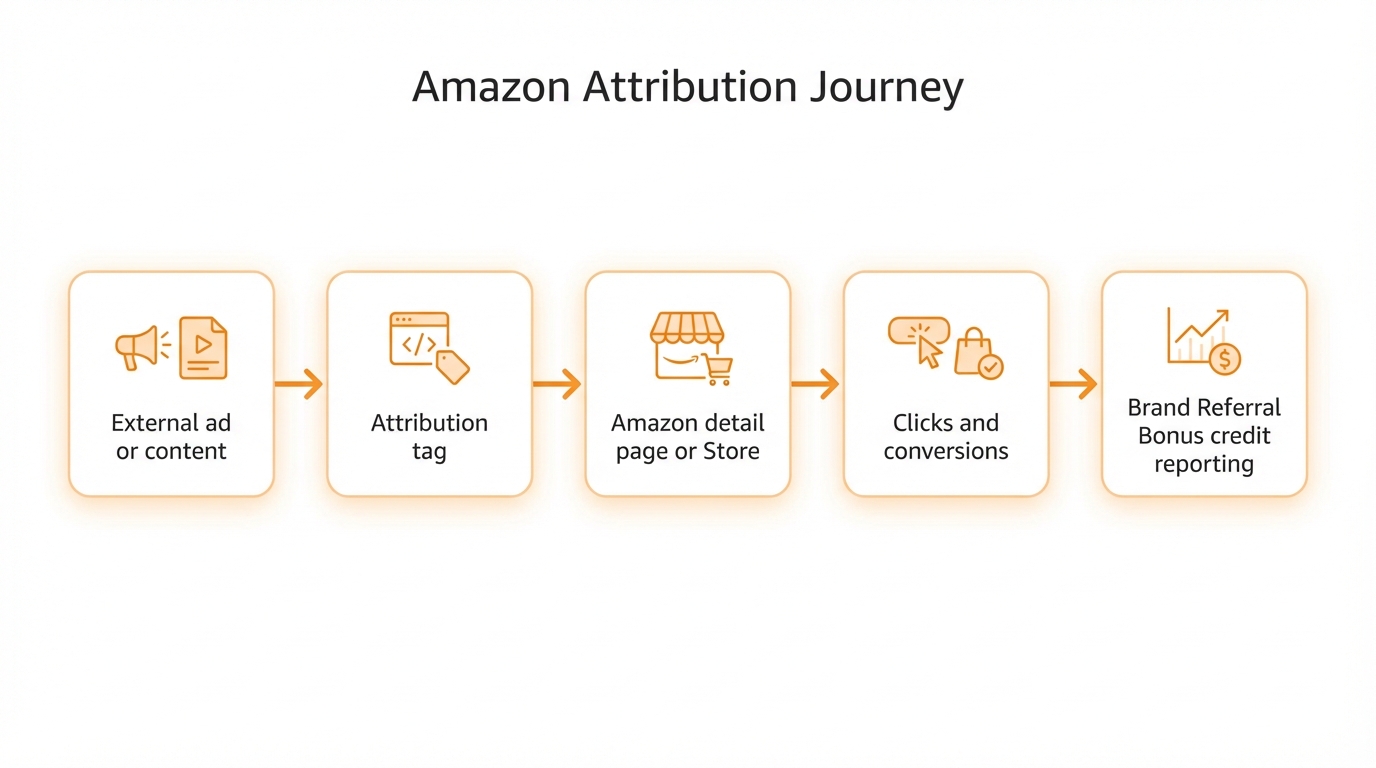
Direct answer: The workflow is simple on paper: create an Attribution setup, generate tags, apply those tags to external placements, drive traffic to Amazon, then analyze performance and qualifying bonus credit.
- Create an Amazon Attribution campaign and define the non-Amazon channel or tactic you want to measure.
- Generate the Attribution tag for the product detail page or Amazon Store landing page you want to use.
- Apply the tag to your traffic source, such as Google Ads, Meta, blog links, email, or influencer links.
- Drive external traffic and monitor clicks, add to carts, purchases, and downstream reporting.
- Review bonus eligibility and earned credit if your account is enrolled in Brand Referral Bonus and the sale qualifies.
Which external traffic channels make the most sense?
Direct answer: External traffic channels should be chosen based on traffic intent, product maturity, and creative fit. High-intent channels usually convert more directly, while awareness channels often need stronger creative and clearer economics.
How do you estimate the economics of external traffic?
Direct answer: The external traffic question is not just “Can I get clicks?” It is “Can I get profitable clicks after conversion rate, Amazon fees, and Brand Referral Bonus are considered?”
Takeaway: Brand Referral Bonus can improve the economics, but it does not fix a weak product, weak conversion rate, or poor traffic intent.
How does SellerSprite help before you buy external traffic?
Direct answer: SellerSprite helps you decide whether a product and keyword set can support outside traffic before you spend money. It does this by helping you check demand, search intent, competition, and probable landing-page fit.
- Product validation: use SellerSprite research tools to avoid pushing outside traffic into a product with weak market potential.
- Keyword selection: identify the exact search terms shoppers use before deciding whether to send traffic to a detail page or a broader Brand Store experience.
- Traffic direction: compare whether the external click should land on a single product page, a branded collection, or a store page based on intent.
Evaluate before you pay for external traffic
- Use SellerSprite to check whether the product already has enough demand and conversion potential.
- Map the search terms that match your traffic angle.
- Choose the landing destination that fits the shopper journey, not just the easiest page.
What do real external traffic results look like?
Direct answer: The best external traffic results usually come from clear intent or strong audience trust. The biggest mistake is assuming any outside click is automatically helpful for Amazon rank or profit.
Case 1: search traffic into a single ASIN
A brand sent high-intent search traffic to one product detail page using Attribution tags. The traffic volume was modest, but the keyword intent matched the product closely, so conversion quality stayed strong enough to justify the spend.
- Traffic pattern: fewer clicks, but stronger buyer intent
- Observed result type: cleaner return profile and easier bonus capture on qualifying sales
- Main lesson: search intent can beat larger but colder audiences
Case 2: influencer or content traffic into a Brand Store
Another brand used creator traffic with Attribution tags and sent it to a broader Store path rather than one narrow ASIN page. The audience was less search-driven but more receptive to a branded story and multi-product shopping path.
- Traffic pattern: softer intent but broader product exposure
- Observed result type: more product exploration and a different conversion path than single-ASIN direct response traffic
- Main lesson: landing page choice should match the traffic psychology
External traffic preflight checklist
Direct answer: Before you send a single outside click into Amazon, check the fundamentals. This is where most wasted external traffic can be prevented.
Before you launch outside traffic
- Confirm eligibility: make sure your account is actually enrolled where needed, especially for Brand Referral Bonus.
- Choose the product carefully: use SellerSprite to avoid pushing traffic to weak offers.
- Choose the right keyword or audience angle: the traffic promise should match the landing page promise.
- Tag everything correctly: without proper Attribution tags, the measurement layer breaks.
- Estimate economics first: include traffic cost, Amazon fees, and expected bonus credit.
- Check the product page: weak conversion pages turn external traffic into expensive noise.
FAQ
Who can use Amazon Attribution?
Amazon describes Attribution as a free measurement solution for approved advertisers and brands using non-Amazon marketing channels. Exact eligibility can vary by account type and market.
Do I need Brand Registry to use Brand Referral Bonus?
For the US seller program Amazon describes, Brand Referral Bonus is available to eligible seller brand owners enrolled in Brand Registry.
What is the attribution window for Amazon Attribution?
Amazon states that Attribution uses a 14 day last-touch attribution model, which means the conversion must happen within 14 days of the click to receive credit.
How is Brand Referral Bonus paid or credited?
Amazon describes Brand Referral Bonus as a credit based on qualifying external traffic sales, not as instant cash payout. Sellers should review their own reporting and settlement timing carefully.
Which external channel should I try first?
Start with the channel that gives you the cleanest intent or the strongest audience trust. For many sellers that means search, email, or a well-matched creator, not the broadest possible paid social audience.
Get Help From the SellerSprite Community
Share your negotiation situation, get feedback, and learn from other sellers in the SellerSprite Discord and Facebook Group.
View The SellerSprite Course Directory
Ready for the next step? Open the SellerSprite Academy course directory to continue building your Amazon FBA skills chapter by chapter.