TL;DR: Choosing between FBA and FBM impacts your bottom line significantly. A dedicated FBA vs. FBM revenue calculator helps you quantify fulfillment fees, storage costs, and shipping rates to determine which model yields the highest net profit margin for your specific product size, weight, and sales velocity.
Key Takeaways
- FBA typically wins on Buy Box share and Prime eligibility but carries higher storage and per-unit fees.
- FBM allows greater control over inventory and lower storage costs for slow-moving or oversized items.
- Accurate calculation requires inputting direct costs (shipping, labor) alongside Amazon fees to get true profitability.
Table of Contents
Note on marketplaces: This guide is specifically optimized for the US market.
For Amazon sellers, the choice between Fulfillment by Amazon (FBA) and Fulfillment by Merchant (FBM) is rarely binary. It is a complex financial decision that hinges on a delicate balance of shipping rates, storage fees, and operational overhead. While FBA offers the allure of the Prime badge, it often eats into margins with higher per-item costs. Conversely, FBM can seem cheaper on paper but may drain resources through manual labor and lost Buy Box opportunities. To navigate this, you need a robust FBA vs. FBM revenue calculator approach. This guide breaks down the financial anatomy of both models to help you maximize profitability.
Quick Answer
Before diving into granular fee structures, it is helpful to establish a baseline heuristic. Generally speaking, your fulfillment choice should align with your product's physical characteristics and sales velocity. However, the "correct" answer shifts when your volume scales or product dimensions change.
When FBA wins and when FBM wins
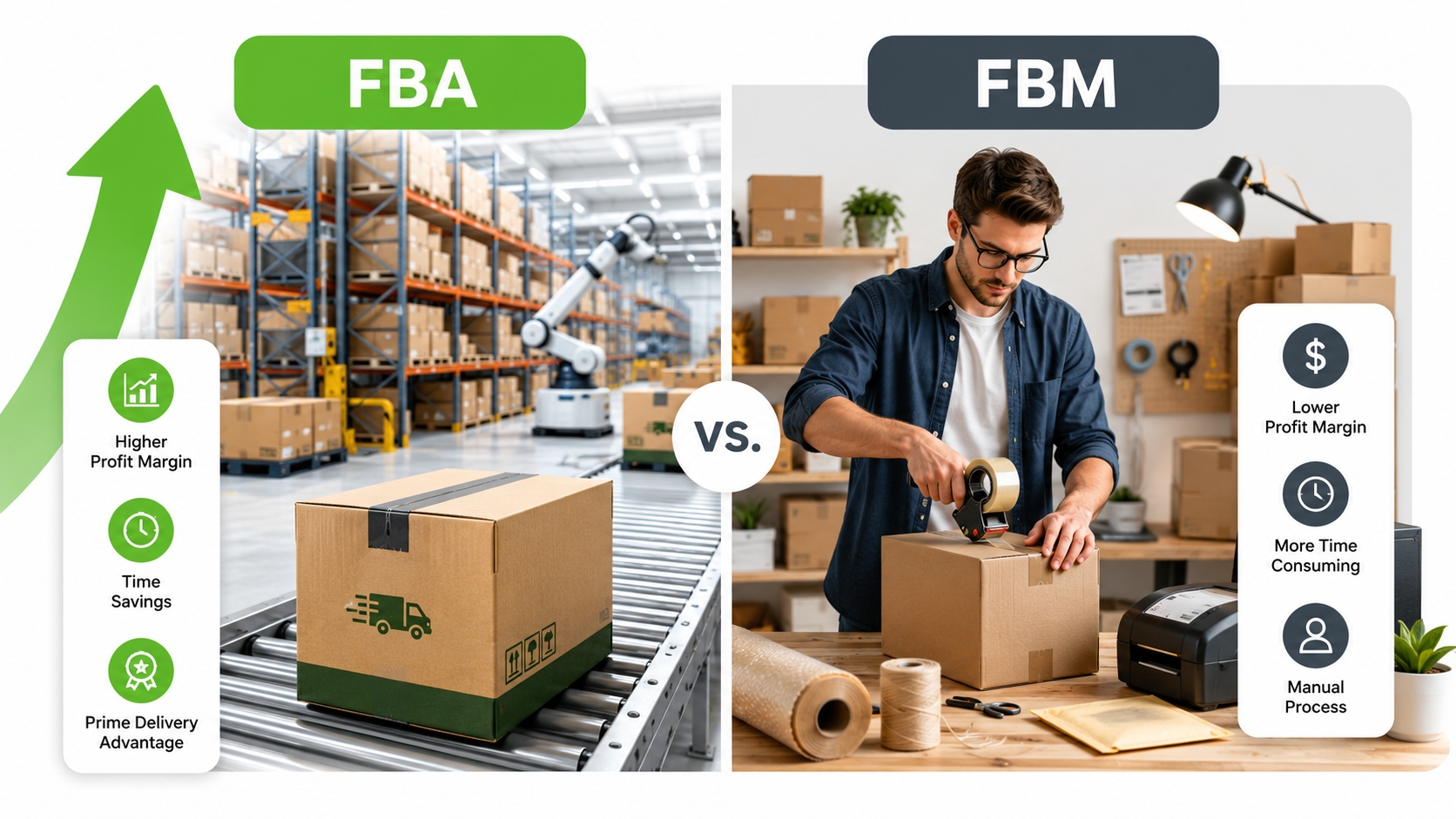
FBA is usually the winner for small, lightweight items with high sales velocity. If you are selling standard-sized goods (under 1 lb) that turn over quickly, the convenience of Prime and the low outbound shipping rates often outweigh the storage fees. On the flip side, FBM typically wins for oversized, heavy, or slow-moving inventory. If your product has a high dimensional weight or sits on the shelf for months, Amazon's long-term storage fees can obliterate your margins, making self-fulfillment or a 3PL the more profitable path.
💡 Strategic Rule of Thumb
FBA generally maximizes revenue and conversion through Prime eligibility, while FBM maximizes cash flow and margin retention for heavy or slow-moving items by avoiding storage fees.
Ultimately, you cannot rely solely on heuristics. You must plug your specific data into a dedicated Amazon revenue calculator to see the definitive numbers for your situation.
FBA vs. FBM Cost Components
To perform an accurate comparison, you must dissect the total cost of ownership (TCO) for your inventory under both models. It is not just about the fee Amazon charges; it is about the hidden operational costs that accumulate over time. Understanding these components is the first step in building a precise FBA vs. FBM calculator model.
Fulfillment fees
Under FBA, fulfillment fees are charged per unit and cover picking, packing, shipping, and customer service. These fees are tiered based on the size tier (standard vs. oversized) and weight of the item. Amazon's fees are generally competitive for small items but can be punitive for larger ones. You can review the detailed breakdown of these fees on Amazon FBA fees explained. For FBM, explicit "fulfillment fees" as Amazon charges them do not exist; instead, you pay your 3PL or you incur the direct costs of picking and packing boxes yourself, which must be accounted for in your Amazon fulfillment cost analysis.
Labor and packaging
FBA sellers often overlook their own labor costs because Amazon handles the logistics. However, the cost of prepping inventory (labeling, bagging, boxing) to meet Amazon's strict compliance standards is a real expense. In FBM, labor is the most significant variable. Whether you are paying staff to pick and pack or spending your own time, this hour-value cost must be included in your FBM profit calculator. Additionally, packaging materials (boxes, tape, dunnage) are a recurring cost that FBA sellers pay indirectly through higher fees, but FBM sellers must purchase directly.
Shipping rates
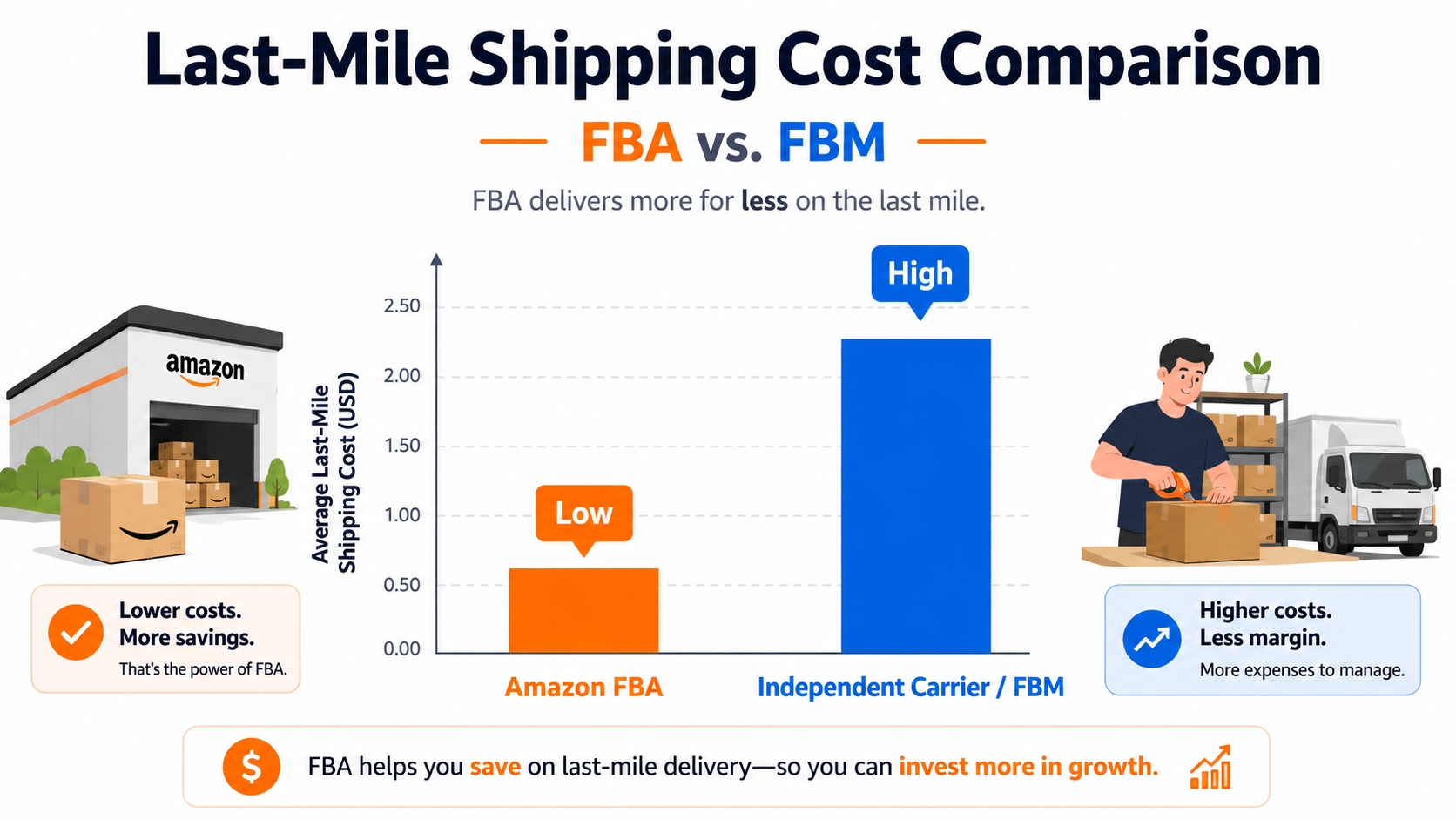
This is often the deciding factor. FBA leverages Amazon's massive volume discounts with carriers, resulting in very low "Last Mile" shipping costs to the customer. FBM sellers must rely on carriers like UPS, FedEx, or USPS. Unless you have negotiated massive volume discounts with a carrier, your per-unit shipping cost for FBM will likely be higher than Amazon's implied cost in FBA, especially for residential deliveries. However, FBM allows you to use slower, cheaper ground shipping methods that Amazon's Prime 2-day requirement prohibits, potentially saving money on non-urgent orders.
Returns and customer service
Returns are a financial leak that varies by fulfillment method. FBA manages returns, often returning inventory to you only if it is sellable, or disposing of it if not. You pay for return processing fees, but you save on the labor of handling angry customers. FBM requires you to handle returns manually. You pay for the return shipping (unless you deduct it from the refund), process the item, and handle customer inquiries. High-return categories (like apparel) often favor FBA simply because the operational headache of manual returns is massive.
Non-cost factors to include
While we are focusing on revenue and costs, a true FBA FBM comparison must account for opportunity costs. FBA products generally rank higher and win the Buy Box more often, leading to higher organic sales volume. If you switch to FBM to save $2 per unit but lose 20% of your sales volume because you lose the Prime badge, your total profit will drop. Therefore, any calculator must allow you to adjust for "estimated volume difference" based on the fulfillment method.
Step-by-Step Calculation Workflow
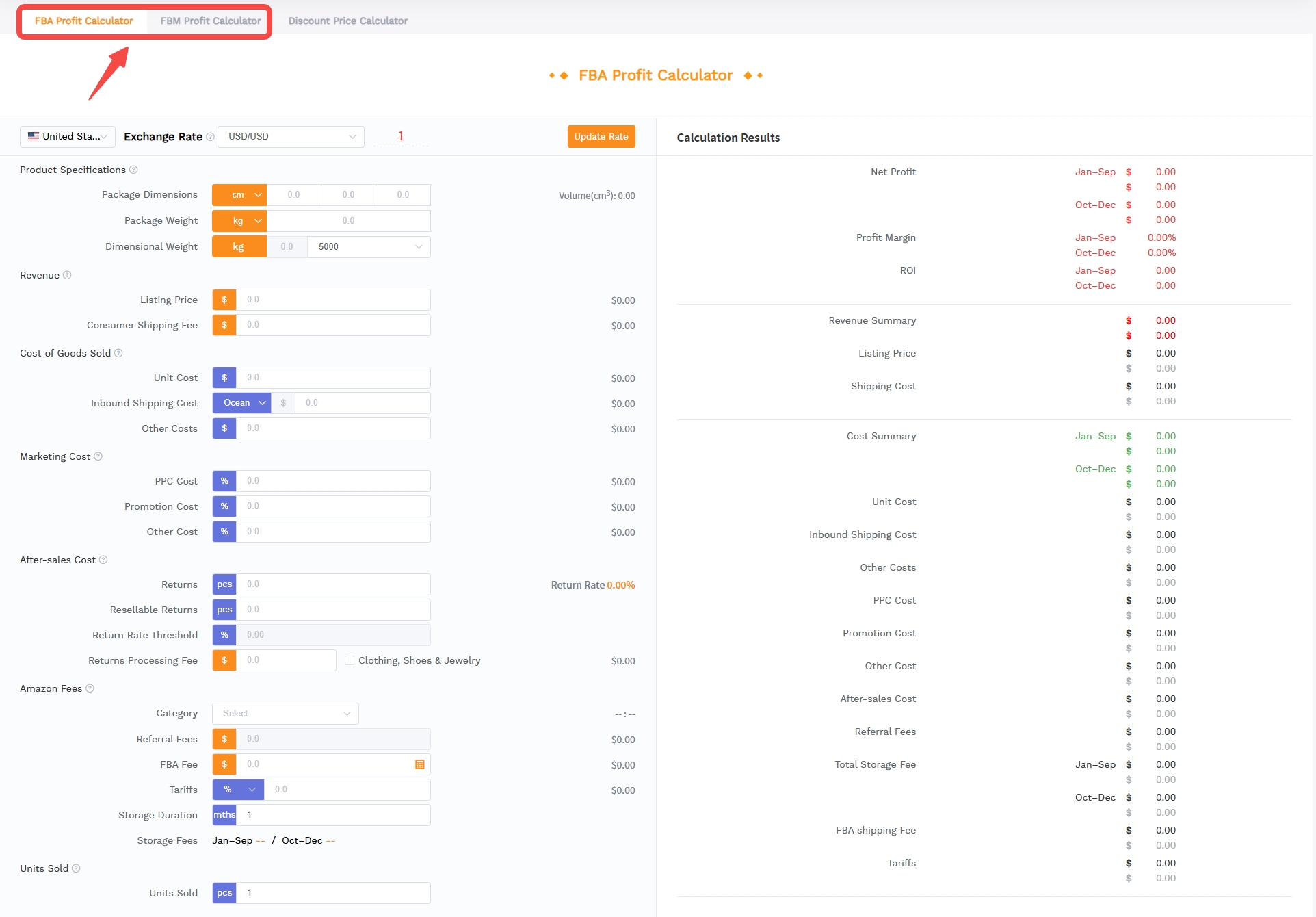
Now that we understand the variables, let's execute the math. A systematic approach ensures you don't miss hidden costs. You can perform this manually, but using an Amazon fulfillment profit calculator automates this data entry and reduces errors.
Keep price and product cost constant
To ensure a fair comparison (apples-to-apples), start by fixing variables that don't change based on fulfillment. Your Product Cost (COGS) remains the same regardless of who ships the item. Similarly, assume your sales price is constant for the baseline calculation (even though we know Prime might command a premium, set that aside for a moment). This isolates the fulfillment costs as the only variable affecting the bottom line.
Enter FBA inputs
Input all Amazon-specific costs into the calculator. This includes the referral fee (usually 15%), the FBA fulfillment fee (based on size tier), and monthly storage fees. Don't forget to calculate an average for Inbound Placement fees if applicable. For example, if you sell a standard size T-shirt, you would input the $3.22 (approximate) referral fee and the standard fulfillment fee. Add in estimates for return processing if your category has a high return rate.
Enter FBM inputs
Now, input your Merchant Fulfillment data. Enter the cost to ship the item from your warehouse (or 3PL) to the customer's average zone. If you are using a 3PL, include their pick/pack fee. If doing it yourself, assign an hourly labor rate (e.g., 2 minutes to pick/pack @ $20/hr = $0.67 labor cost). Add packaging costs ($0.30/box). The sum of these figures is your total FBM fulfillment cost per unit.
✅ Calculation Checklist
Did you include Inbound Shipping to Amazon (FBA)?
Did you factor in your own hourly wage for FBM labor?
Did you account for the dimensional weight surcharge for FBM shipping?
Compare net profit and margin
Subtract the specific fulfillment costs (FBA or FBM) from your gross margin (Price - COGS - Referral Fee). The resulting figure is your Net Profit Per Unit. Finally, calculate the net margin percentage (Net Profit / Price). You might find that while FBA offers a lower net profit *per unit*, the higher potential sales volume makes it the winner overall. However, purely from a unit-margin perspective, this comparison reveals the cheaper method.
Sensitivity test by price and shipping cost
Smart sellers do not stop at one calculation. They run a sensitivity analysis. What happens if carrier rates increase by 10%? Does FBM suddenly become unprofitable? What if you drop your price by $5 to beat a competitor? Does the lower FBA margin protect you, or does the thinner FBM margin push you into the red? Testing these scenarios ensures your business strategy is resilient against market volatility.
Decision Matrix
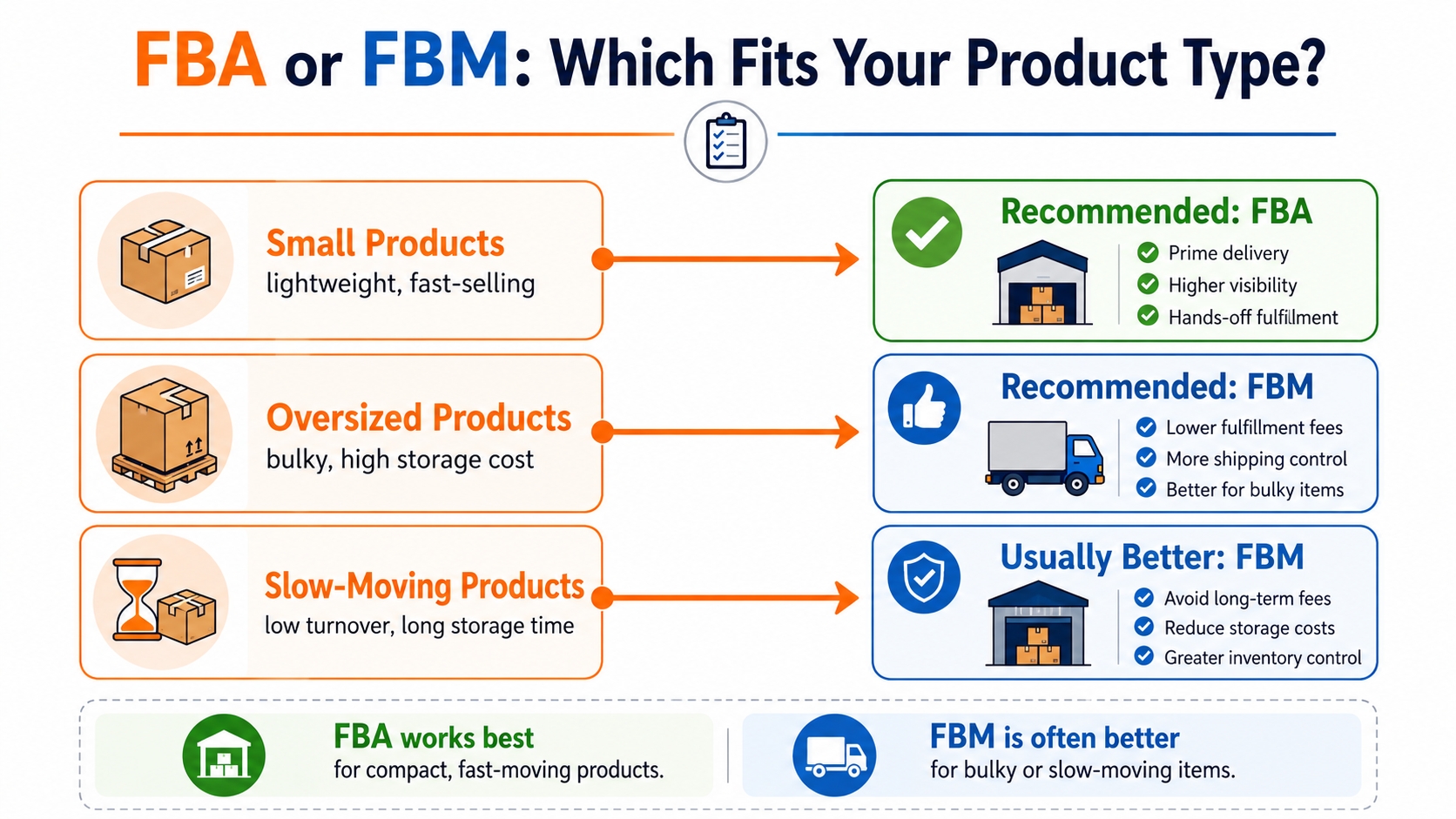
Translating your calculator results into a strategy requires looking at product archetypes. Different product characteristics inherently favor one fulfillment model over the other. Use this matrix to guide your interpretation of the calculator's output.
Small/light products
For items under 1 lb (e.g., phone accessories, cosmetics), FBA is almost always superior. Amazon's fulfillment fees for small standard-size items are incredibly low, often lower than what you can pay for postage alone via USPS First Class Mail for FBM. Plus, the Prime badge drastically increases conversion rates for these impulse-buy, low-ticket items.
Oversized products
Furniture, heavy fitness equipment, or bulky items are the danger zone for FBA. Amazon charges high "oversize" and "special handling" fees. Your FBA vs. FBM calculator will likely show a massive savings for FBM here because you can use LTL (Less-Than-Truckload) freight carriers or specialized logistics companies that move bulk items cheaper than Amazon's parcel-based rates.
Slow-moving products
If your inventory turnover is low (selling < 1 unit per month), FBA's Long-Term Storage Fees (LTSF) will eventually eat your entire profit. FBM (or a 3PL with monthly billing that is cheaper than Amazon's storage) is the strategic choice. You can store these items in your own warehouse or a cheaper 3PL and ship them only when an order comes in, avoiding the "clock" that Amazon starts running the moment it hits their fulfillment center.
High-return products
For categories like apparel or electronics where returns exceed 10%, the calculation gets tricky. FBA handles returns easily but often returns damaged or unsellable goods, resulting in total loss. FBM allows you to inspect returns, clean them, and resell them as "New" or "Like New." If you are tight on margin and your product is prone to returns, inspecting the item yourself (FBM) might save significant inventory value.
What to Do After the Calculation
Once you have the numbers in hand, the work is not done. The calculation informs the strategy, but market dynamics dictate the final decision. You must validate your calculator's findings against real-world market data before committing to a fulfillment model.
Recheck demand
Verify the sales velocity assumptions you used in your calculator. If the calculator shows FBM is profitable only at 50 sales a month, but the keyword data suggests you can do 500 sales a month with Prime, the higher volume of FBA might outweigh the lower unit margin of FBM. Always cross-reference your cost analysis with Amazon search volume and BSR (Best Sellers Rank) data.
Review competitor fulfillment methods
Analyze the top 10 competitors for your target keywords. Are they FBA or FBM? If the top of the search results is dominated by FBA Prime listings, entering the market with FBM (MFN) might result in a click-through rate so low that you cannot generate momentum, regardless of your profit margin. Conversely, if you see a mix of FBM sellers thriving, it signals that customers are willing to wait for shipping, validating a lower-cost, lower-speed strategy.
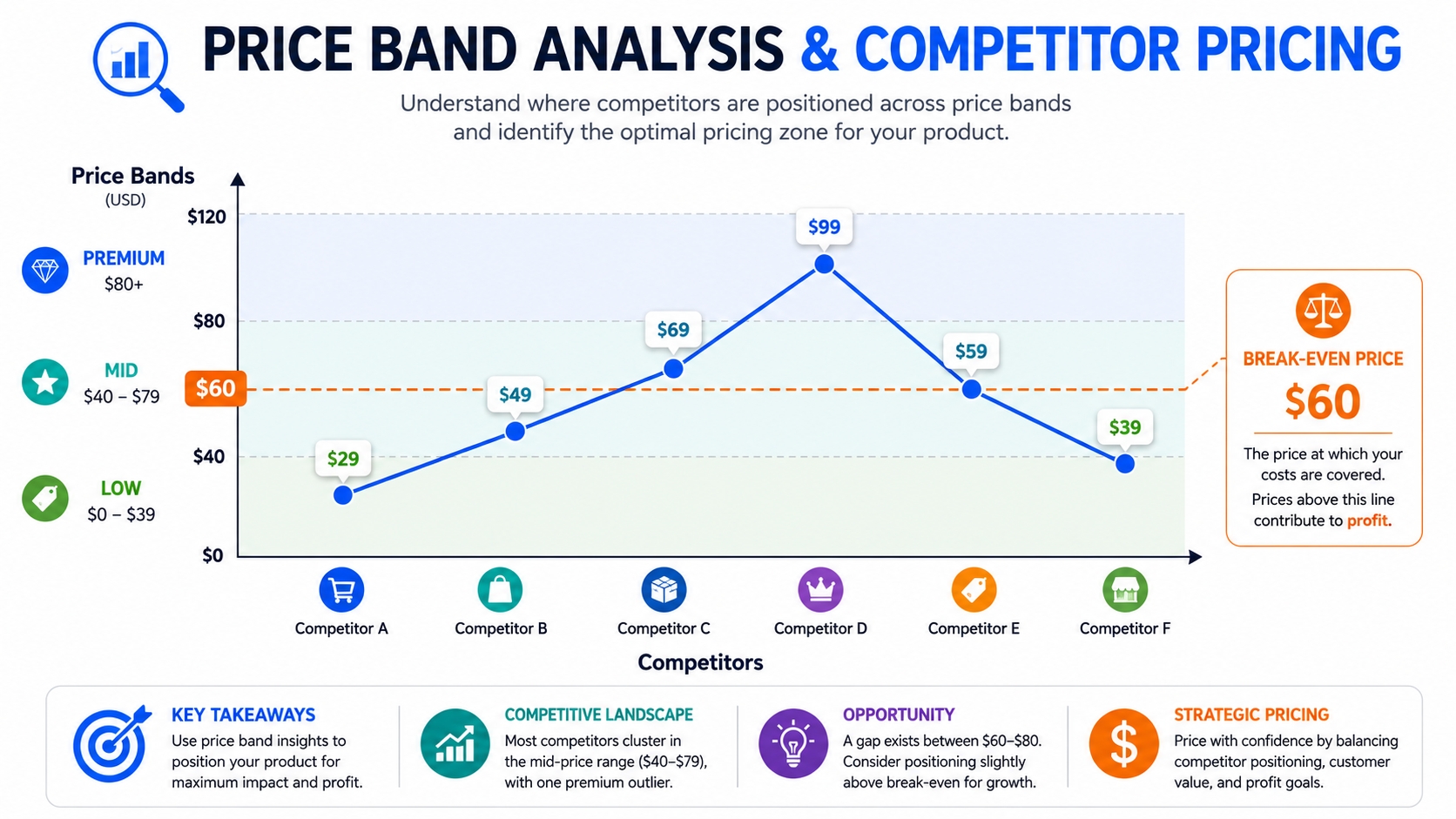
Track price bands
Identify the price floor and ceiling in your niche. If your calculator shows that FBA requires listing at $19.99 to break even, but competitors are selling at $14.99, you have a problem. You may need to optimize your supply chain costs to fit the market price, or switch to FBM if that allows you to compete at the $14.99 price point profitably. Tracking these price bands ensures your calculated costs actually fit the market reality.
FAQ
How to compare FBA and FBM profit?
To compare profits, subtract all costs (COGS, shipping, referral fees, storage, labor) from the sales price for both methods. The model with the higher remaining Net Profit is the winner. Don't forget to factor in potential volume differences: FBA may yield more sales even if the per-unit margin is slightly lower.
Is FBA always more profitable than FBM?
No. FBA is often more profitable for small, fast-moving items due to shipping discounts and Prime conversion rates. However, for oversized, heavy, or slow-moving items, FBM is often more profitable because it avoids Amazon's high storage and dimensional weight fees.
What costs should I include in an FBM calculator?
You must include product cost, Amazon referral fees, outbound shipping costs (carrier rates), packaging materials (box, tape, dunnage), labor costs (picking/packing time), warehouse storage rent (if applicable), and advertising costs.
When does FBM make more sense than FBA?
FBM makes more sense for oversized/heavy items (to avoid high Amazon fees), for slow-moving inventory (to avoid long-term storage fees), for unique/handmade items (to maintain quality control), or when you have highly optimized, ultra-cheap self-shipping logistics.
Can I use both FBA and FBM for the same product?
Yes, this is known as a multi-channel fulfillment strategy. Some sellers send a portion of inventory to Amazon for Prime sales velocity and keep the rest in their own warehouse to protect against stockouts or to sell through other channels (like Shopify) using FBM.
Next Steps
- Use the SellerSprite FBA vs. FBM Revenue Calculator to input your specific product data.
- Run a sensitivity analysis to see how a 10% increase in shipping costs affects your margins.
- Check your competitors' fulfillment strategies to see if FBM is a viable option for your niche.
References
- Amazon Seller Central - Fulfillment Fees
- SellerSprite Guide - Amazon Revenue Calculator Guide
- SellerSprite Guide - Amazon FBA Fees Explained
By SellerSprite Success Team
The SellerSprite Success Team consists of seasoned Amazon experts and data analysts dedicated to empowering sellers with actionable insights, advanced tools, and strategic guidance for e-commerce growth.