TL;DR: Amazon Merch on Demand lets you sell custom apparel without inventory; use SellerSprite to research niches, optimize keywords, and maximize royalties.
Key Takeaways
- Thorough niche and keyword research drives sales and royalties.
- Accurate product metadata (titles, bullets, tags) improves Amazon search visibility.
- Pricing strategy and royalty calculation are key to profitable scaling.
Table of Contents
- Quick Answer: What Is Amazon Merch on Demand?
- Key Takeaways for Merch Creators
- How Amazon Merch on Demand Works
- Is Amazon Merch on Demand Worth It in 2026?
- Amazon Merch Niche Research Workflow With SellerSprite
- Keyword Research for Amazon Merch Listings
- Pricing and Royalty Planning
- Compliance and IP Risk
- Next Steps
- FAQ
- References
Note on marketplaces: This guide is specifically optimized for the US market.
Quick Answer: What Is Amazon Merch on Demand?
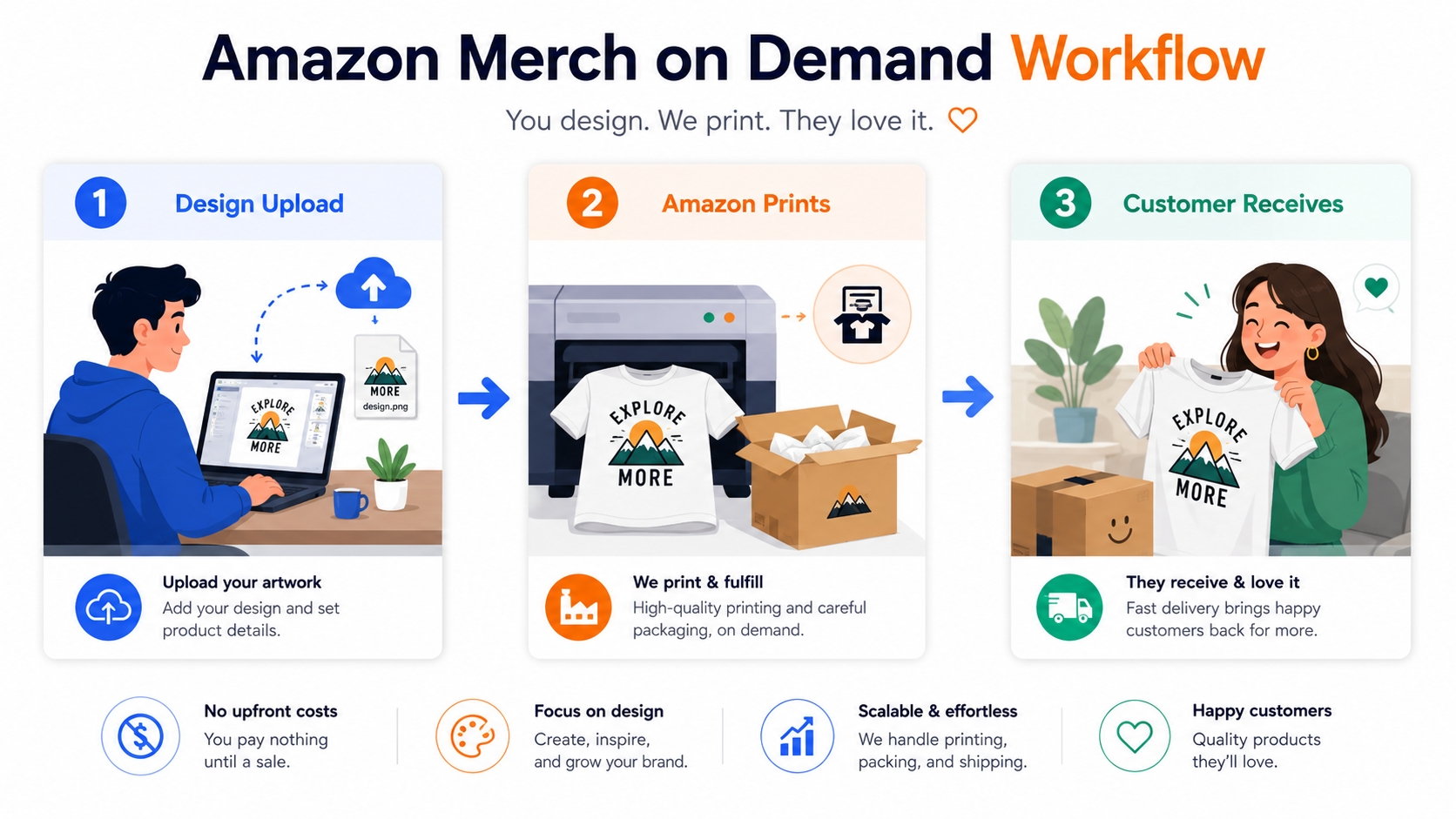
Amazon Merch on Demand (formerly Merch by Amazon) is Amazon's print‑on‑demand service that lets creators upload artwork, choose products, and sell them on Amazon without ever handling inventory or shipping.
Print-on-demand model in one paragraph
When a customer purchases your design, Amazon prints the item on‑demand, packages it, and ships it directly to the buyer. You receive a royalty for each sale, while Amazon takes care of production, logistics, and customer service.
Who it is best for
The platform suits graphic designers, niche hobbyists, brand owners, and marketers who want a low‑risk way to test designs and scale quickly. Beginners appreciate the zero‑upfront inventory cost, while seasoned sellers leverage data‑driven niche research to accelerate growth.
Key Takeaways for Merch Creators
Before you start scaling, focus on three pillars: niche validation, keyword‑rich metadata, and royalty‑aware pricing.
Niche research before design volume
Use SellerSprite's niche tools to identify demand‑rich categories, filter out oversaturated markets, and prioritize evergreen or seasonal trends that align with your creative strengths.
Keyword metadata matters
Amazon's search algorithm heavily weighs titles, bullet points, and tags. Proper keyword placement boosts discoverability, especially for long‑tail queries shoppers use when looking for specific designs.
Royalties depend on pricing and Amazon costs
Royalty percentages change with product type, price point, and Amazon's production cost. Understanding this matrix lets you price competitively while protecting profit margins.
Checklist for a strong launch:
- Validate niche demand using SellerSprite.
- Gather 5‑10 high‑traffic keywords per design.
- Run royalty calculator before setting price.
- Ensure all artwork meets Amazon's content policies.
How Amazon Merch on Demand Works
The platform's interface is straightforward, but mastering each step can dramatically affect your sales velocity.
Upload artwork
Upload a high‑resolution PNG or JPEG (minimum 300 dpi). Amazon automatically validates dimensions and provides suggestions for optimal placement.
Choose product type and colors
Select from tees, hoodies, tank tops, and more. Each product offers a different royalty rate; you can enable multiple colors to broaden buyer appeal.
Add product title, description, and price
Craft a concise title (max 50 characters) packed with primary keywords. Use bullet‑point style in the description to highlight fit, material, and design inspiration.
Amazon handles production, shipping, and customer service
Once listed, Amazon prints each order on demand, ships it with Prime eligibility when possible, and manages returns, freeing you to focus on design and marketing.
No‑inventory business model
Because you never hold stock, cash flow stays positive and risk is minimal, which could be a perfect match for creators testing multiple niches simultaneously.
Is Amazon Merch on Demand Worth It in 2026?
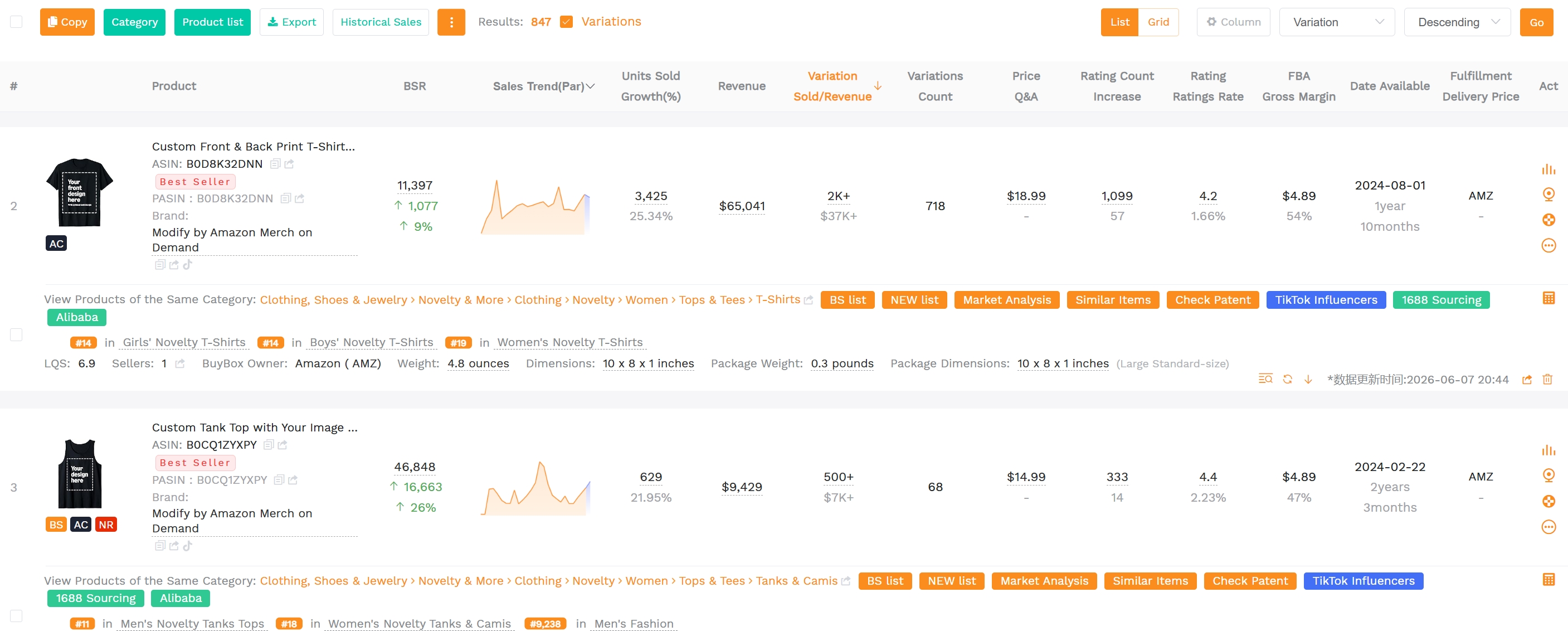
The landscape has evolved with more sellers, tighter approval, and evolving royalty structures, but the upside remains compelling for data‑driven creators.
Pros
Zero upfront inventory, access to Amazon's massive buyer base, and streamlined fulfillment. High‑margin niches can still generate six‑figure revenue when coupled with robust SEO.
Cons
Approval bottlenecks for new accounts, rising competition in popular categories, and royalty percentages that can dip below 20% for lower‑priced items.
Who should avoid it
Creators lacking design assets, those unwilling to invest time in keyword research, or brands that need strict control over packaging and branding may find better ROI elsewhere.
Competition and approval constraints
Amazon now screens designs for trademark conflicts more aggressively. Leveraging SellerSprite's IP‑risk checker Global Brand Database before upload reduces rejection rates.
Amazon Merch Niche Research Workflow With SellerSprite
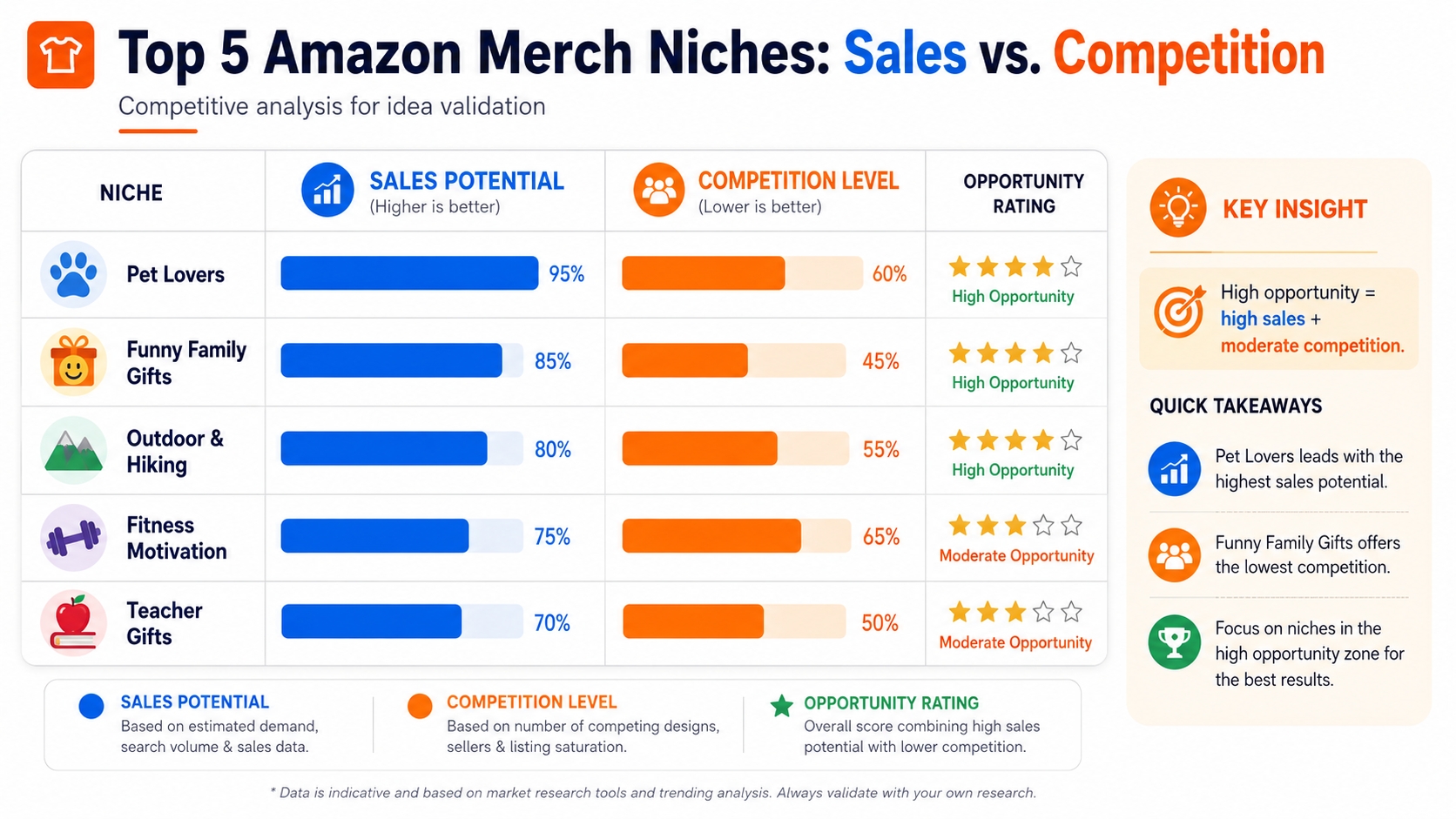
SellerSprite combines market‑level data with keyword insights to give you a step‑by‑step roadmap from broad category to profitable design.
Find broad category demand
Start with high‑volume categories (e.g., "Dog Lovers", "Fitness Motivation"). The platform highlights search volume trends and seasonal spikes, allowing you to target evergreen interest.
Identify seasonal and evergreen niches
Seasonal peaks (e.g., Halloween, Christmas) are useful for short‑term bursts, while evergreen niches (e.g., "Yoga", "Coffee") provide sustained revenue. Use your customized calendar to schedule design releases.
Check competitor density
SellerSprite maps the number of existing listings for each niche keyword. Low‑density areas indicate untapped opportunities; high‑density signals a need for differentiation.
Save niche ideas
Create a private board to store promising keywords, reference images, and royalty projections. This becomes your design backlog.
Market research → Keyword research → Competitor validation
The three‑step loop ensures each design is rooted in demand, searchable, and positioned to outrank existing listings.
Keyword Research for Amazon Merch Listings
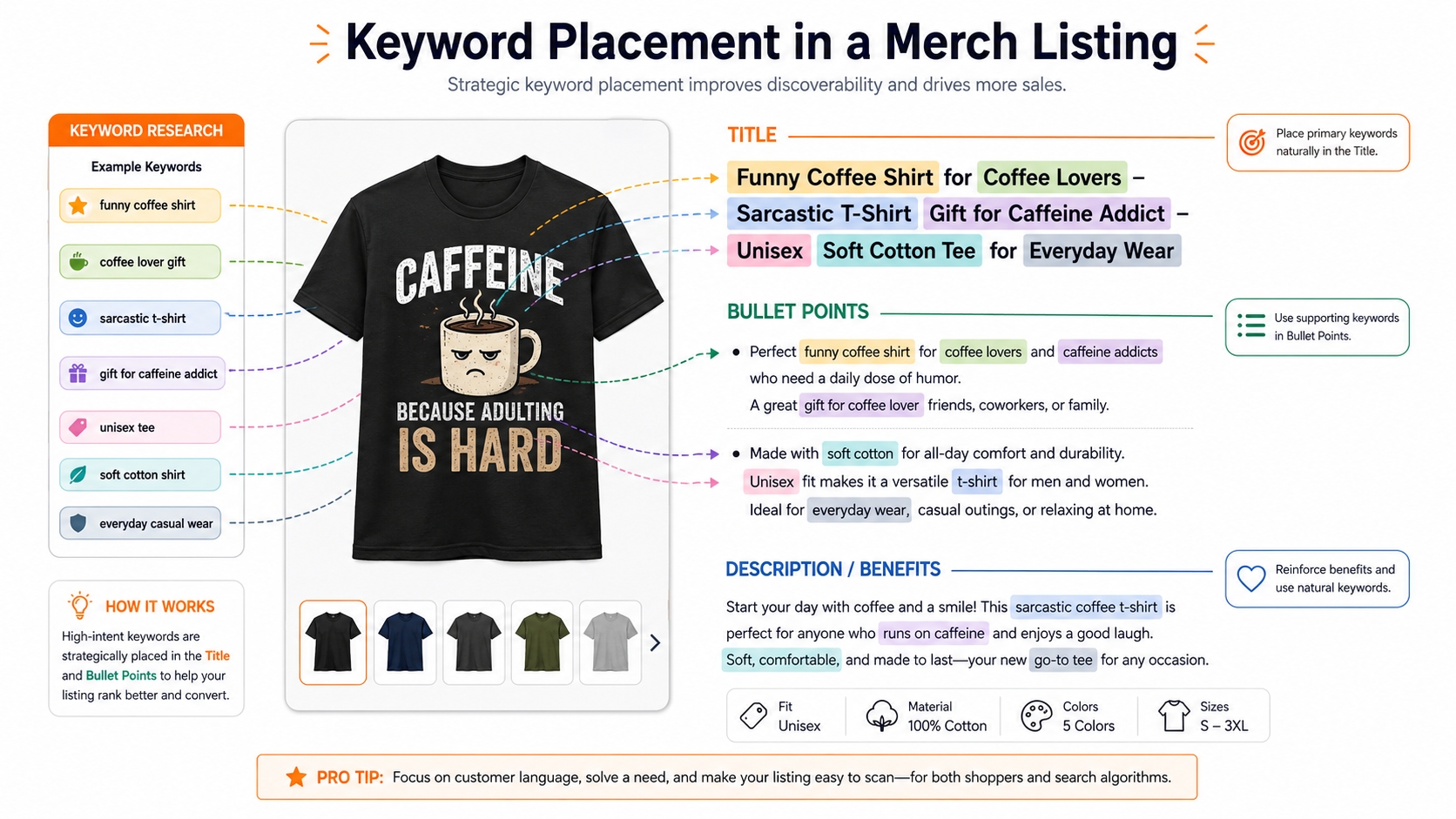
Effective keyword placement is the bridge between your design and the shopper's search query.
Product title keywords
Include 2‑3 primary keywords at the beginning of the title (e.g., "Funny Cat Tee – Vintage Cat Lover T-Shirt"). Avoid exceeding 50 characters to prevent truncation in search results.
Bullet and description metadata
Amazon allows up to 50 characters for each bullet. Use these slots to embed secondary keywords naturally, describing fit, fabric, and use‑case scenarios.
Avoiding irrelevant keyword stuffing
Keyword stuffing can trigger algorithmic penalties. Focus on relevance; each term should directly describe the product or anticipated buyer intent.
Buyer intent examples
"gift for dad", "workout motivation shirt", and "retro gaming tee" each reflect distinct purchase motivations. Align your title and bullets accordingly.
Pricing and Royalty Planning
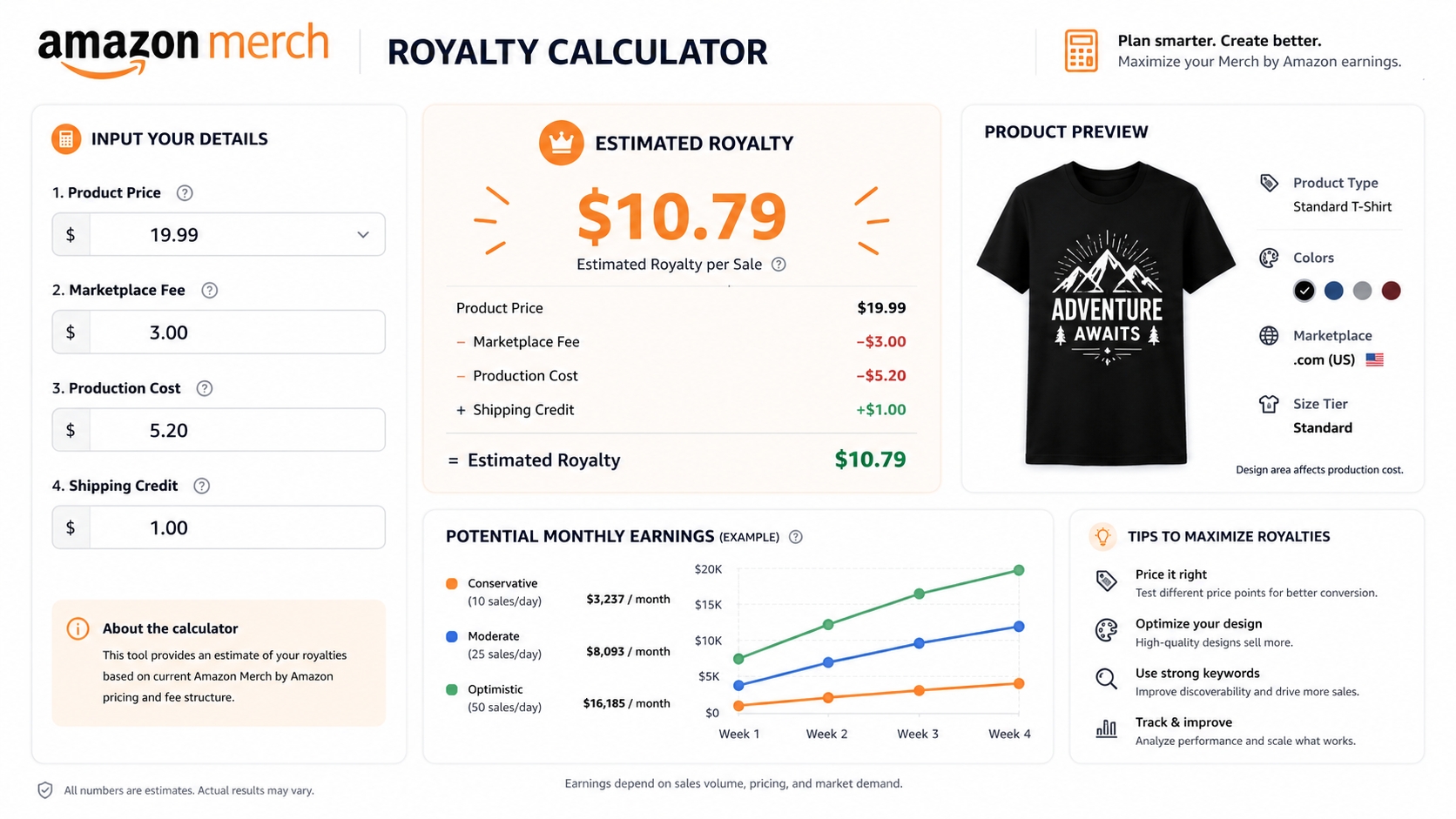
Setting the right price balances competitiveness with profit. Amazon publishes a royalty calculator that updates each quarter.
What affects royalty
Product type (t‑shirt vs. hoodie), price tier, and Amazon's base production cost dictate the royalty percentage (typically 20‑30%). Higher‑priced items often yield larger absolute royalties but may sell fewer units.
How to think about price testing
Start with Amazon's suggested price, then A/B test ±$2 increments. Track conversion rate and royalty per sale; the sweet spot is where revenue per impression peaks.
Why external traffic may matter more over time
Relying solely on Amazon's organic search limits scalability. Driving external traffic (e.g., Instagram, TikTok, paid ads) can boost sales velocity and improve organic ranking through higher sales velocity signals.
Update this section whenever Amazon royalty rules change
Always keep your eyes on Amazon's latest policy and update your strategy when Amazon modifies royalty structures, ensuring your pricing stays optimal.
Compliance and IP Risk
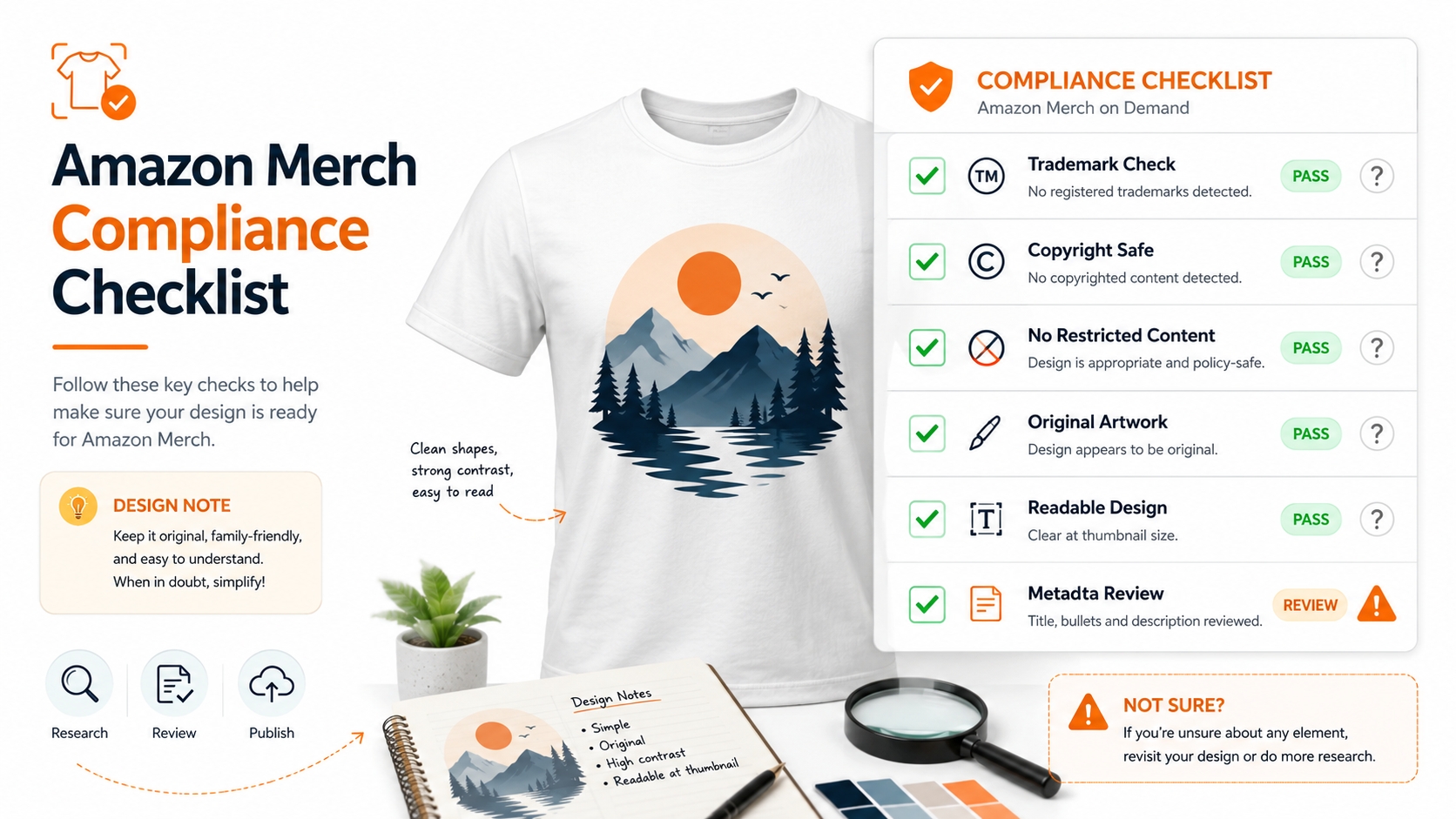
Violating Amazon's content policies can result in listing removal or account suspension. Conduct thorough IP checks before publishing.
Trademark checks
Search the USPTO database for registered marks that resemble your design. SellerSprite's Global Brand Database tool also works perfectly for this step.
Copyright and publicity rights
Only use artwork you own or have licensed. Public figures, logos, and copyrighted characters are prohibited unless you hold explicit permission.
Prohibited content
Amazon bans hate speech, vulgar language, and political statements. Review the full policy page to avoid accidental violations.
Metadata can also create IP risk
Even if the artwork is original, using trademarked terms in titles or tags can trigger infringement claims. Keep metadata strictly descriptive.
Next Steps
- Sign up for a free SellerSprite account to unlock the Merch Toolkit: Start your free trial now.
- Run the niche and keyword research workflow outlined above, then upload your first design.
- Monitor royalties and adjust pricing according to the performance.
- Implement the compliance checklist before each launch to avoid account suspensions.
FAQ
How does Amazon Merch on Demand work?
You upload artwork, choose product types, set a price, and Amazon prints, ships, and handles customer service for each order. You earn a royalty per sale without holding inventory.
Is Amazon Merch on Demand the same as Merch by Amazon?
Yes. Amazon rebranded Merch by Amazon to "Merch on Demand" in 2022, but the core service print‑on‑demand apparel sales remains unchanged.
How do Amazon Merch on Demand royalties work?
Royalties are calculated as the sale price minus Amazon's production cost, multiplied by a royalty rate (typically 20‑30%). Higher‑priced items can yield larger absolute royalties but may sell fewer units.
What are the best design practices to increase sales on Amazon Merch on Demand?
Focus on clear, high‑contrast graphics, target niche audiences, use relevant keywords in titles and bullets, and test multiple color variations. Avoid copyrighted material and follow Amazon's content policies.
How can I optimize my product listings for Amazon Merch on Demand to improve visibility?
Integrate primary keywords in the product title, sprinkle secondary keywords in bullet points, avoid keyword stuffing, and maintain high customer ratings. External traffic and seasonal promotions also boost organic ranking.
References
- Amazon Merch on Demand Overview View
- Amazon Merch on Demand Toolkit View
- Amazon Merch on Demand Royalties View
By SellerSprite Success Team
The SellerSprite Success Team combines years of Amazon marketplace experience with data‑science expertise, helping sellers of all sizes dominate search results through proven keyword strategies and cutting‑edge tooling.