This guide is for US, EU, and UK Amazon sellers sourcing from China who want to negotiate with Alibaba suppliers (and use 1688 for smart price benchmarking) without sacrificing product quality.
All currency examples use USD for clarity. You can easily convert the same logic to EUR, GBP, JPY, or your local currency when setting your target landed cost.
TL;DR: Key Takeaways for Negotiating With Alibaba Suppliers and 1688
- Protect quality first, then negotiate price. Cheap units can turn into expensive returns and bad reviews.
- Negotiate the whole deal: unit price, MOQ, payment terms, lead time, packaging, labeling, and QC.
- Use 1688 as leverage: benchmark domestic pricing, then ask the supplier to explain the gap.
- Communicate visually: photos, short videos, and annotated specs reduce mistakes and speed decisions.
- Stay win-win: you want better terms, but suppliers should still feel respected and motivated to prioritize you.
About the author
Former sourcing and supplier-ops lead supporting Amazon FBA brands that manufacture in China. Hands-on experience negotiating with Alibaba suppliers, benchmarking on 1688, setting QC checkpoints, and building repeatable negotiation scripts for US, EU, and UK launches.
Focus areas: target cost modeling, MOQ strategy, lead time control, packaging and labeling for FBA, and quality vs margin decision-making.
Table of Contents
- Build trust to negotiate better with Alibaba suppliers
- Quality vs price: choose the margin that survives Amazon reality
- Create leverage: politely show you have options
- Use visuals to prevent supplier miscommunication
- Negotiable terms checklist and strategy table
- Ask why: learn, uncover cost drivers, and find alternatives
- 1688 price benchmarking and 1688 bargaining flow
- Mini case studies
- Common pitfalls when negotiating with Alibaba suppliers
- 30-minute negotiation homework
- Get help and go deeper: community plus sourcing resources
- References
Build Trust First to Negotiate With Alibaba Suppliers More Easily
On Alibaba, negotiation is not only about the quote. It is also about relationships and reliability. Suppliers often prioritize buyers who are consistent, respectful, and easy to work with.
How to build negotiation-friendly rapport
- Open with clarity: send a short spec, target quantity, and timeline. Avoid vague requests like "best price?"
- Be consistent: respond on time, summarize decisions, and confirm next steps.
- Show respect for constraints: ask what drives cost and lead time instead of pushing blindly.
- Reward good behavior: if they fix issues quickly, say so. Suppliers remember buyers who are fair.

Set Your Target Price Before You Negotiate
Model fees, shipping, and margin so you know the highest unit cost you can accept without sacrificing quality.
Quality vs Price When You Negotiate With Alibaba Suppliers
If the supplier suddenly "can do much cheaper," assume something changed. Usually, it is materials, finish, tolerance, QC, or packaging. Your goal is not the cheapest unit. Your goal is profitable quality that survives returns, reviews, and compliance expectations in the US, EU, and UK.
Quality vs price comparison (what Amazon sellers actually feel)
Create Leverage: Negotiate With Alibaba Suppliers by Showing You Have Options
You can be friendly and still signal competition. The key is tone. You are not threatening. You are doing normal due diligence.
Simple script that works
- Line to add in your inquiry: "We are comparing a few suppliers and will choose the best overall value for long-term orders."
- Follow-up question: "What is the best price you can offer if we confirm the order this week?"
- Fair promise only: mention future volume only if you can realistically deliver it.
Build a Stronger Negotiation Position With Competitor Data
Use competitor keywords and demand signals to estimate realistic order volume and justify your target pricing.
Use Visuals to Prevent Miscommunication When You Negotiate With Alibaba Suppliers
Most mistakes happen after the quote. A small spec misunderstanding can wipe out the discount you negotiated. Visuals reduce back-and-forth and protect your production run.
Visual communication checklist
- Annotated photos: circle the exact area and write a short note.
- 10 to 30 second video: show the sample, point out issues, and confirm the fix.
- One spec sheet: version number, dimensions, materials, packaging, labeling, and QC expectations.
- Confirm in writing: "Approved version v3.2. Please produce to this spec."
Negotiable Terms When Sourcing From China (Alibaba Suppliers and Factories)
Unit price is only one lever. Many suppliers hold price firm but can improve total value through terms. Use the table below as your negotiation checklist.
Negotiable Terms table (what to ask and how to negotiate)
Ask Why: The Fastest Way to Negotiate Better With Alibaba Suppliers
When a supplier says "cannot," your best move is calm curiosity. Ask why. You often uncover a cost driver you can change without hurting quality.
Three "why" questions that unlock options
- "What is driving the cost increase?" (material grade, labor step, yield, tooling, packaging)
- "If we keep quality, what variable can we change?" (quantity tier, lead time, packaging complexity)
- "Can you show the difference?" (photos, spec sheet, or a short production explanation)
1688 Price Benchmarking: How to Negotiate With Alibaba Suppliers Using 1688
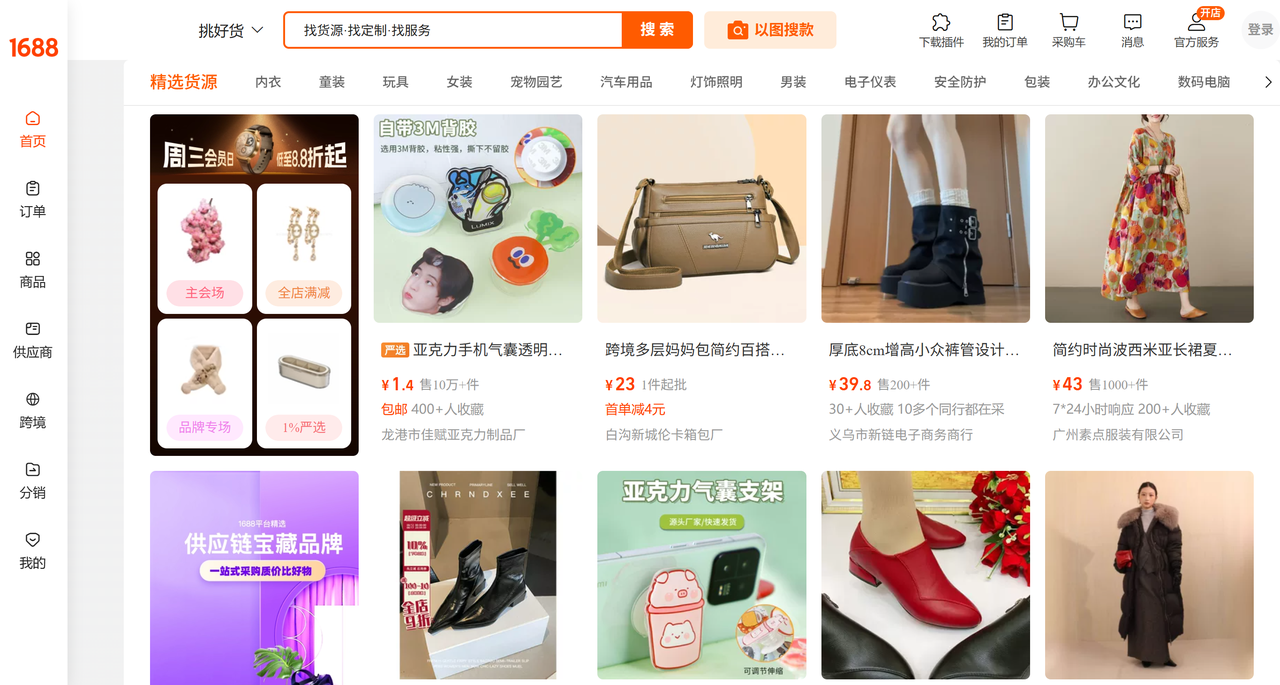
1688 is Alibaba's domestic marketplace. It often shows lower CNY pricing because listings target local buyers. You should not assume you can buy at that exact price. But you can use 1688 to benchmark and ask the supplier to explain the gap.
1688 bargaining and benchmarking process (Step 1 to 6)
Step 1: Open 1688 in Chrome and turn on auto-translate
Goal: navigate listings faster, even if your Chinese is limited.
Step 2: Search with Chinese keywords or use image search
Tip: translate 2 to 3 keyword variations, then also try the camera icon image search.
Step 3: Collect 5 to 10 comparable listings and note tiered pricing
Focus on similar materials, size, and bundle count. Save screenshots.
Step 4: Convert CNY to USD and create a benchmark range
Keep it as a range, not a single number. Convert to EUR, GBP, or JPY if needed.
Step 5: Compare 1688 vs your Alibaba supplier quote
Ask what is included in the quote: export packing, English support, compliance, QC, labeling, etc.
Step 6: Discuss the gap politely and invite the supplier to propose options
Use a neutral line: "We found similar domestic pricing on 1688. Can you help us understand the difference, and what levers we can adjust while keeping quality?"
Mini Case Studies: Realistic Negotiation Wins
Case study 1: Lower MOQ without breaking trust
A new US seller wanted to test demand and asked to reduce MOQ from 1,000 to 300 units. Instead of demanding a discount, they framed it as a launch validation run and proposed a two-step plan.
- Offer: pay a slightly higher unit price for the 300 unit pilot.
- Commit: if sell-through hits target, place a 1,000+ unit reorder within 30 to 45 days.
- Result: supplier accepted the pilot MOQ and agreed to tiered pricing for reorder.
Case study 2: 1688 benchmark used the right way
A UK seller saw similar products on 1688 at roughly half the Alibaba quote. They did not demand a match. They asked the supplier to break down differences.
- Discovery: Alibaba quote included better packaging, extra QC steps, and export-ready labeling.
- Negotiation: seller simplified packaging for the first order and moved one QC step to pre-shipment inspection only.
- Result: supplier reduced total cost meaningfully while keeping core materials the same.
Common Pitfalls When You Negotiate With Alibaba Suppliers
- Pitfall: chasing the lowest unit price
Fix: lock specs, define quality checks, then optimize price and terms. - Pitfall: vague requests like "best price?"
Fix: share target quantity tiers, timeline, packaging needs, and expected reorder plan. - Pitfall: negotiating only one lever
Fix: work through the Negotiable Terms table and trade variables strategically. - Pitfall: changing specs mid-negotiation
Fix: version-control your spec sheet and confirm "approved version" before production. - Pitfall: using 1688 as a threat
Fix: use 1688 as a benchmark and ask, "Help me understand the difference."
30-Minute Negotiation Homework (Do This Before Your Next Supplier Call)
- 5 minutes: Use Profitability Calculator to define your max unit cost and target landed cost.
- 8 minutes: Pick 3 negotiation levers (MOQ, lead time, payment terms, packaging, labeling, QC) you will ask for.
- 7 minutes: Collect 5 comparable 1688 listings and note the tiered price range.
- 5 minutes: Write a 4-line message: appreciation, benchmark question, your target, and a win-win ask.
- 5 minutes: Prepare 3 annotated photos or a 20-second video to confirm your key specs.
Action Stack: Research, Negotiate, Then Optimize Your Listing
After you lock supplier terms, use keyword and competitor workflows to build a listing that converts.
Get Help From the SellerSprite Community
Get Help From the SellerSprite Community
Share your negotiation situation, get feedback, and learn from other sellers in the SellerSprite Discord and Facebook Group.
Related resources to build your sourcing skill stack
- How to Sell on Amazon From Alibaba or 1688.com (sourcing overview and platform differences)
- Supplier Management and Product Safety Tips (reduce risk after you sign the deal)
View The SellerSprite Course Directory
Ready for the next step? Open the SellerSprite Academy course directory to continue building your Amazon FBA skills chapter by chapter.
References
- Negotiating the Best Price for Your Product
- SellerSprite Profitability Calculator
- SellerSprite Reverse ASIN
Back to Top