TL;DR: A single overlooked trademark term in your title or design can get your Amazon Merch listing rejected or your account suspended. This checklist walks you through the exact compliance checks every seller should perform before uploading, covering trademarks, copyrights, publicity rights, and Amazon's content policy.
Key Takeaways
- Amazon Merch compliance extends beyond artwork: product titles, descriptions, bullet points, and brand names must also avoid infringing third‑party IP.
- Perform a multi‑step pre‑upload check for trademarks, copyrighted images/fonts, celebrity references, and sensitive content to prevent rejections.
- If a design is rejected, know how to read Amazon's reason, remove risky elements, and resubmit, while keeping records of your rights.
Table of Contents
Note on marketplaces: This guide is specifically optimized for the US market.
Quick Answer
If you ask veteran Amazon Merch sellers what slows down scaling, the answer often isn't design talent or traffic; it's compliance rejections. Amazon's automated and human review systems scan every submission for intellectual property violations, prohibited content, and metadata issues before a single product goes live. Understanding where the risks hide can save you weeks of frustration and account health damage. The short answer? Amazon Merch compliance applies to your artwork, product title, description, bullet points, and brand name. A misstep in any of these can trigger a rejection, even if the design itself is original.
Compliance covers artwork, title, description, bullets, and brand name
When people hear "design compliance," they often picture a t‑shirt graphic alone. But Amazon's Content Policy explicitly states that all text associated with a product, including the title, description, bullet points, and the brand name you select, must not infringe on others' intellectual property. A clever slogan in the product title can be trademarked; a descriptive phrase in a bullet point might contain a copyrighted tagline. Even the brand name you choose can become a legal minefield if it's too similar to a registered mark. In practice, compliance is a holistic process that demands the same scrutiny for metadata as for the visual design.
The Main Compliance Risks
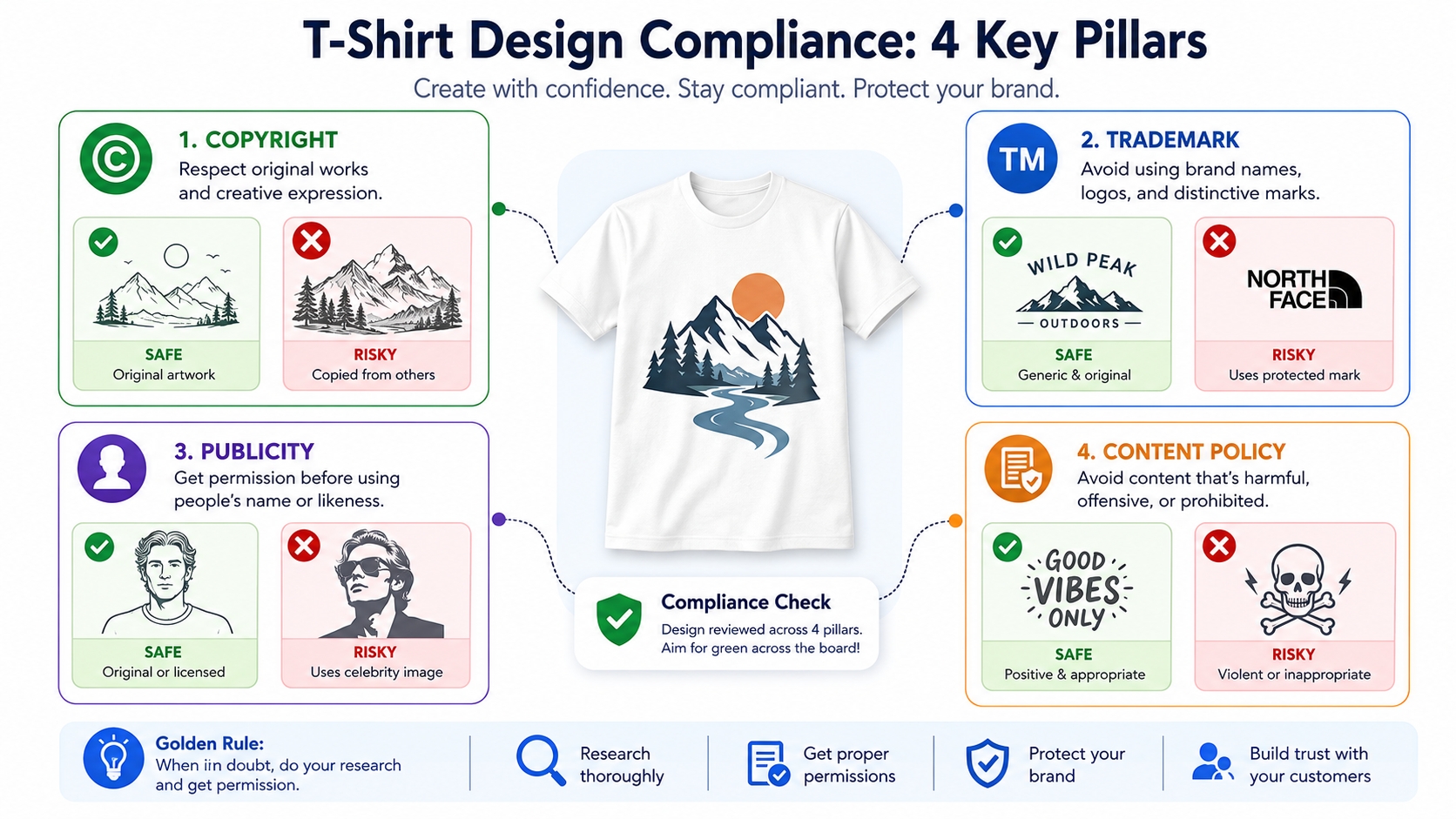
Before you can build a reliable pre‑upload routine, it's crucial to understand the four primary categories of intellectual property and content risks that impact Merch sellers. Each carries its own legal weight and Amazon enforcement mechanisms. Let's break them down.
Trademark infringement
Trademarks protect words, phrases, symbols, and designs that identify the source of goods. For Merch sellers, this is the most common pitfall. A phrase like "World's Best Dad" might seem generic, but if it's registered as a trademark for apparel, using it in your title or on the shirt can lead to a rejection or, worse, a notice of infringement. Amazon's system scans for exact matches and near‑matches to registered marks. The rule of thumb: if a word or slogan appears in the USPTO database (United States Patent and Trademark Office) for clothing classes, never use it without a license. Even variations like intentional misspellings or adding a prefix usually won't protect you; Amazon's algorithms and human reviewers are trained to spot them.
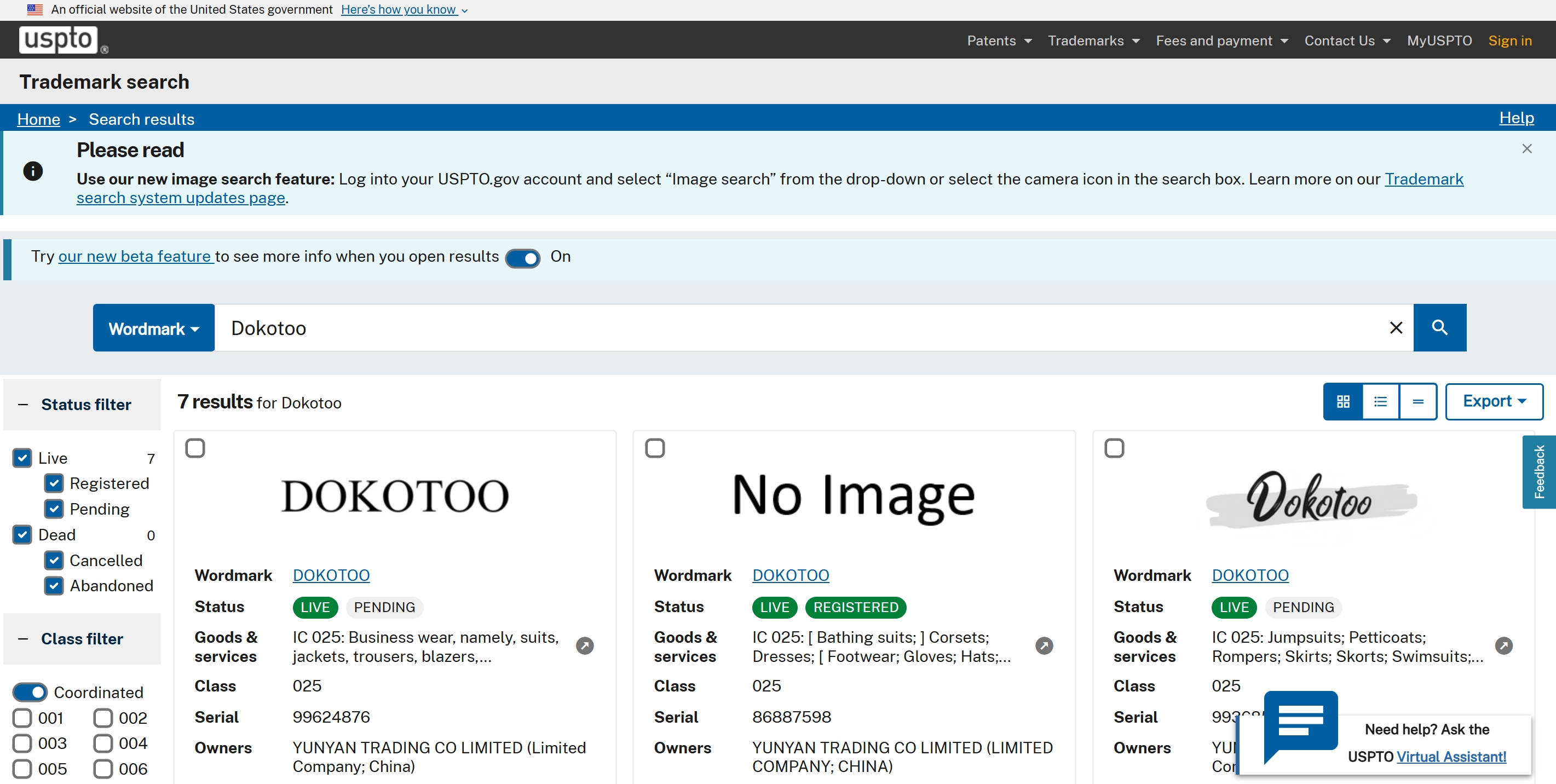
⚠️ Pro Tip: Trademark classes matter. A trademark registered for software doesn't block your use on a T-shirt. Always filter by the International Class (IC) 025 for clothing. USPTO TESS allows this filter.
Copyright infringement
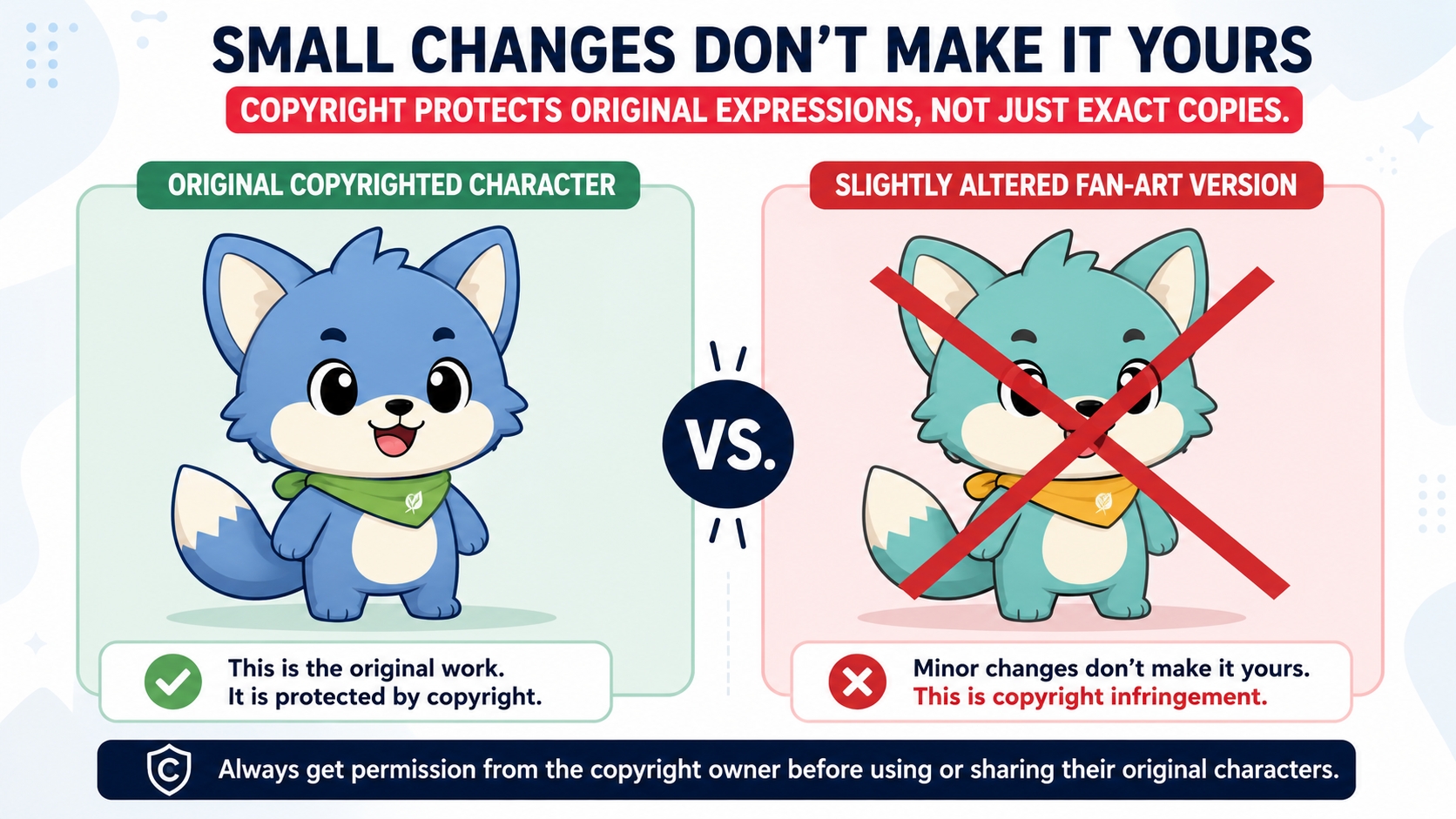
Copyright protects original works of authorship fixed in a tangible medium, which includes artwork, photographs, and even fonts. Unlike trademarks, copyright is automatic from the moment of creation, so there's no need for registration to enforce it (though registration gives extra legal weight). For Merch sellers, the risk often comes from using images or vectors you found online without verifying the license, or from tracing a popular character. A common misconception: "if I change it 20%, it's fair use." That's not how copyright works. Courts consider whether the new work is transformative and does not substitute for the original. Amazon typically sides with the rights holder, so any recognizable derivative of a protected work will likely be rejected.
Fonts are another hidden trap. Many premium fonts require a commercial license for use on merchandise. Using a free‑for‑personal‑use font on a design for sale is copyright infringement. Always check the font's end‑user license agreement (EULA). If you can't find a clear commercial license, pick a font from a verified open‑source library like Google Fonts.
Publicity rights
Publicity rights (or personality rights) protect an individual's name, image, likeness, and other recognizable attributes from unauthorized commercial use. This means you cannot use a celebrity's face, name, nickname, or even a catchphrase strongly associated with them without permission. Amazon Merch's policy explicitly forbids content that references celebrities, public figures, or their intellectual property without proper licensing.
A less obvious trap: using a silhouette that is unmistakably a famous athlete, or a phrase like "You're a wizard, Harry" (a direct movie quote) can trigger a rejection because it exploits the persona of a well‑known figure or character, even if the actor's face isn't shown. The same goes for team names and league trademarks. If your design says "Just Win, Baby" (a phrase associated with the Las Vegas Raiders), you're stepping on multiple IP rights. The safest path is to avoid all celebrity, team, and brand references unless you hold a formal licensing agreement.
⚠️ Key Rule: If you didn't create it from scratch without referencing a protected figure, and you don't have a license, skip it. Even parodies can be risky because Amazon often sides with the IP owner to avoid liability.
Prohibited or sensitive content
Beyond IP laws, Amazon enforces its own content guidelines that ban hate speech, violence, illegal activities, drug use, profanity, sexually explicit material, and content that targets protected groups. These policies are detailed in the Merch by Amazon Content Policy. Even if your design is original and doesn't infringe on IP, it can still be rejected if it crosses these lines. The policy also covers product metadata: titles and descriptions that include profanity or inflammatory language will be rejected, even if the graphic is clean.
Metadata can violate policy too
Many sellers obsess over the artwork but forget that the words they use in the listing also get reviewed. A title like "Protect Your Rights" might sound fine, but if Amazon's system flags the word "Rights" as related to a political slogan, it could be rejected. Avoid using sensitive keywords, such as those related to medical claims, political movements, or social justice causes, unless your design is explicitly about that topic and compliant with Amazon's policies. Even then, it's risky. A better approach: keep metadata factual and neutral, describing the design without pushing any agenda.
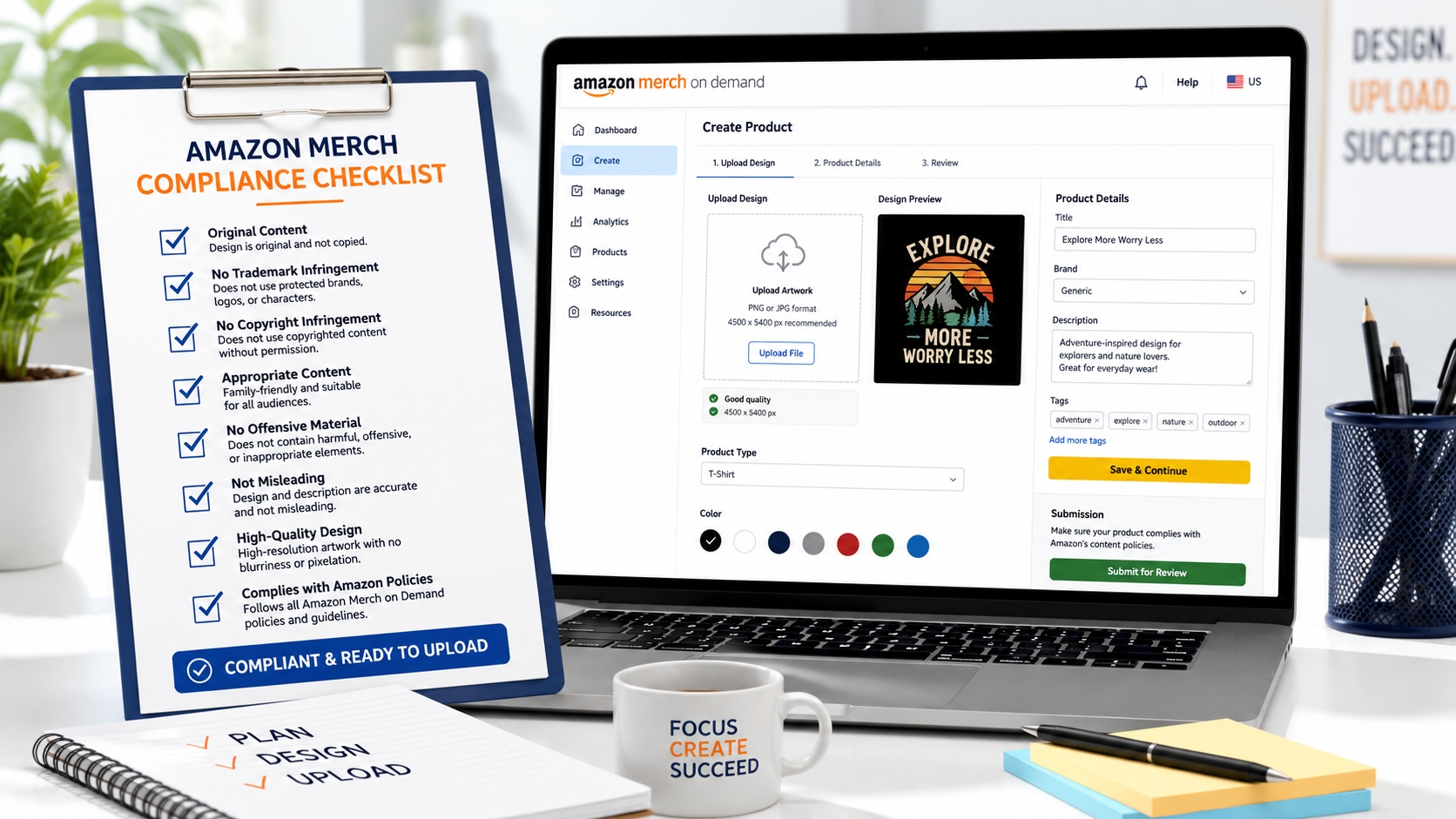
Pre‑Upload Compliance Checklist
With the risks clear, it's time to implement a systematic pre‑upload routine. Treat this checklist as a non‑negotiable step before you hit "Submit" on any design. We'll walk through each check with actionable tools and best practices. Remember, tools (including those from our Merch toolkit) can surface risks, but final verification is your responsibility, which means you'd better consider consulting an IP attorney for borderline cases.
Check phrase ownership
Start by running every text element you plan to use, including slogans, titles, and even individual words, through a trademark database. The USPTO's TESS system (free) lets you search for live and pending marks. Focus on Class 025 (clothing) and any related class such as 035 (retail services). A crucial step: search for phonetic variations and common misspellings. A trademark for "Kool Kidz" might still cause a rejection for "Cool Kids" because the sound‑alike factor. Also, check terms in the WIPO global brand database if you sell outside the US, as Amazon enforces international rights by default.
Many seasoned sellers maintain a "rejection tracker" spreadsheet of phrases they've learned are problematic, which doubles as a team training resource. (For a deeper dive, see our Amazon Merch on Demand guide.)
Check images and fonts
For images, never pull art from Google Images, Pinterest, or free stock sites without verifying the license explicitly. Use only assets you created entirely yourself, or that have a verifiable commercial license allowing print‑on‑demand use. Tools like Creative Commons search and licensed platforms (e.g., Adobe Stock, Shutterstock with appropriate licenses) can help. If you're hiring a designer, require them to provide a certificate of originality or a license transfer.
Fonts: as mentioned, confirm the font's EULA permits commercial use. Even free fonts from websites like DaFont often have "free for personal use only" restrictions. Use Google Fonts or purchase a commercial license from a reputable foundry. An additional tip: sometimes a font may be protected by design patent, not just copyright, so it's worth checking if a font looks very similar to a famous brand's logo font (e.g., the Disney font). If it's even slightly reminiscent, avoid it.
✔️ Designer Checklist:
1. Created from scratch without tracing.
2. No copyrighted characters or elements.
3. Font license covers merchandise.
4. Stock images: commercial license for print‑on‑demand.
Check celebrity and team references
This step is binary: if your design mentions or depicts any real person, group, or organization, no matter how indirectly, either get a license or scrap it. A useful test: "Would a reasonable person associate this with a specific celebrity, team, or brand?" If yes, it's dangerous. Beyond direct names, watch for nicknames ("King James"), jersey numbers without names but in recognizable context, team color combinations, and stadium silhouettes. Even a phrase like "Go Birds" might be tied to a professional sports team's marketing, triggering a rejection.
If you're unsure, search a celebrity's name on the USPTO database; many have trademarks covering their name, signature, or catchphrase. Also, check the Amazon Brand Registry for any protected terms related to brands you might inadvertently invoke.
Check product metadata
Now scrutinize the title, description, bullet points, and brand name. Does any of them include a trademarked term? A phrase like "I'm with the band" might be fine in a design, but if you put it in the title, it could be trademarked for shirts. Brand name: never use a trademark as your brand name, even if it's a generic word in a different context; for example, "Apple" for a t‑shirt brand could invite legal action from Apple Inc. Instead, coin a unique, fanciful name. Use a tool like the USPTO search for the brand name as well.
Beyond trademarks, ensure the language doesn't include any profanity, hate speech, or policy‑breaking terms. Amazon uses automated keyword scanning, so avoid euphemisms for prohibited products or skirting filters with asterisks or symbols. A safe practice: have a second person review the metadata before uploading.
What to Do if a Design Is Rejected
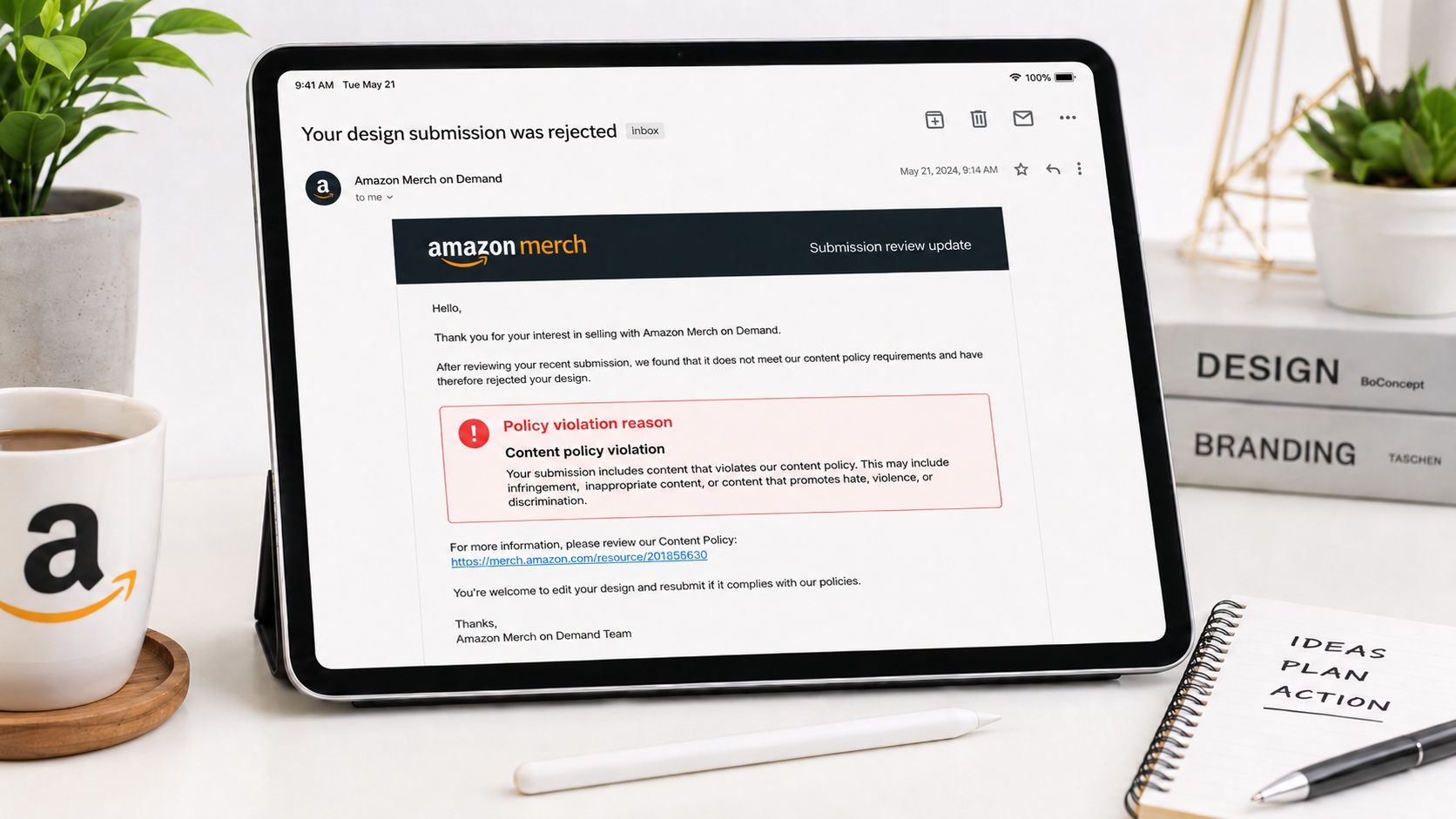
Even with the most diligent pre‑upload checks, rejections can still happen, sometimes due to a false positive, a trademark application you missed, or a policy update. Knowing how to respond quickly can minimize downtime. Rejections aren't the end of the road; in many cases, you can correct the issue and resubmit. More importantly, handling rejections systematically prevents repeated strikes that could lead to account suspension. Follow the three steps below whenever you see a rejection notice.
Read the reason
Amazon provides a rejection reason, though sometimes it's vague (e.g., "1 – Policy Violation") or cites a specific policy number. Don't ignore it. Go to the Merch account dashboard and check the exact reason. If it's "1.1 – Copyright", the issue is likely with the artwork. If it's "1.2 – Trademark", some text likely triggered a match. Cross‑reference with the policy. For unclear reasons, you can reply to the rejection email or contact Merch support for clarification, but response times vary. Many experienced sellers maintain a community forum or Slack group where they decode ambiguous rejections from collective experience.
Remove risky elements
Once you identify the likely cause, take a conservative approach: remove that element entirely rather than try to tweak it. If a phrase in the design is flagged, replace it with a generic alternative. If the title contained a trademark, rewrite it without that term. When uncertain, consult the Amazon Merch policy page directly to cross‑reference. Sometimes the issue is a combination: your design is fine, but the title mentions a brand that makes the design appear to be an affiliate product. Remove any brand references from the metadata to isolate the design.
Keep proof of rights
If you own the trademark, copyright, or have a license, most rejections can be appealed. However, you must provide documentation: a valid trademark registration certificate, a copyright registration, or a licensing agreement. Save these files in an organized folder. When appealing, attach the proof and clearly state why the design complies. For original artwork, you can include a dated timestamped file or a certificate of originality. Note: a simple statement "I promise I own it" is rarely sufficient; Amazon wants concrete documentation.
📌 Important: For rejections based on trademark, don't resubmit without resolving the issue, otherwise Amazon may see it as repetitive violation, which hurts your account health. Also, repeated rejections can lower your Royalties Dashboard score, leading to slower review times.
How Data Tools Help Without Replacing Legal Review
Data‑driven tools like those found in the Sellersprite suite (explore our toolkit) can accelerate compliance checks by revealing market trends, competitor activity, and even surface‑level IP red flags. However, they are not substitutes for legal counsel. Think of them as your first‑pass filter, helping you avoid obvious pitfalls so you can focus resources on high‑value designs that warrant deeper investigation.
Trend discovery
A major compliance risk comes from chasing viral trends. Tools that track search term popularity on Amazon, like Sellersprite's keyword research feature, can show you which slogans are surging. Before you jump on a trend, however, run that phrase through the USPTO database. Many trending phrases are trademarked within weeks of going viral. Using a trend discovery tool lets you see not just whether a phrase is popular, but also whether competing Merch products are already using it, hinting at potential IP ownership. Always verify; if no one is using it, it could be because it's trademarked and being actively enforced.
Competitor scanning
Reviewing top‑selling Merch products in your niche can reveal patterns. Tools that estimate BSR (Best Sellers Rank) and sales can identify which designs are performing, and you can then look at their titles and brand names. If a phrase appears across many successful products, it's either generic and safe, or it's widely infringing, which is a red flag. Sellersprite's competitor analysis tool can help you reverse‑engineer keywords, but you must independently check if those keywords are trademarked. Additionally, scanning competitors' brand names can alert you to newly registered trademarks that might cause your future designs to be flagged.
Manual IP verification
No tool can definitively guarantee a phrase or image is free of IP claims, because copyrights aren't publicly searchable in a single database. However, you can use Sellersprite to gather data that supports your manual check: for example, identifying the most frequently used keywords in a niche, then batch‑checking those in the USPTO. A manual process might look like this: use the tool to compile a list of top‑ranked keywords for "funny dad shirts," then step through each one on USPTO.gov, filtering for Class 025. Flag any matches. This hybrid approach drastically reduces the chance of rejection.
FAQ
What compliance risks should Amazon Merch creators check?
Creators must check for trademark infringement, copyright infringement, publicity rights violations, and prohibited/sensitive content. Every element, such as artwork, product title, description, bullet points, and brand name, must be cleared.
Can I use celebrity names, teams, or brand references in Merch designs?
Generally, no. Unless you have a formal licensing agreement, avoid any reference to celebrities, sports teams, league names, and recognizable brand elements. Even subtle allusions can lead to rejections because Amazon enforces publicity rights strictly.
Does Amazon Merch compliance apply to metadata as well as artwork?
Yes. Compliance covers the entire product listing, including title, description, brand name, and bullet points. Amazon scans these for trademarked terms, copyrighted phrases, and policy violations. Even if your artwork is clear, a trademark in the title can cause rejection.
What should I do if an Amazon Merch design is rejected?
First, read the rejection reason carefully. Identify the likely issue, then remove the risky element from the design or metadata. If you have rights, prepare documentation (trademark certificate, copyright registration, license) and appeal. Avoid resubmitting without changes, as repetitive rejections can harm your account standing.
How can I check whether a phrase may be protected?
Search the phrase in the USPTO database (TESS) focusing on Class 025 for clothing. Also check WIPO for international marks. Look for exact matches and phonetic similarities. Additionally, use third‑party trademark search tools for broader coverage, and consider consulting an IP attorney if you plan to build a brand around the phrase.
Next Steps
- Bookmark this checklist and run every future design through it before uploading. Need a deeper dive into launching on Merch? Start with our Amazon Merch on Demand guide.
- Streamline your compliance checks with Sellersprite's suite of keyword research and competitor analysis tools. Sign up for free and explore trending niches the smart way.
References
- Merch by Amazon Content Policy – Official Resource View
- Amazon Merch on Demand Guide – SellerSprite View
- Amazon Merch on Demand Toolkit – SellerSprite View
By SellerSprite Success Team
The SellerSprite Success Team combines years of Amazon marketplace experience with data‑science expertise, helping sellers of all sizes dominate search results through proven operational strategies and cutting‑edge tooling.
Last updated: 2026-07-17