New year, new insights. SellerSprite is bringing you the Amazon 2022 Annual Data Report. In this report, you can review how Amazon evolved and changed throughout 2022 across nine key dimensions.
Amazon Global Marketplace Overview
Amazon Global Market
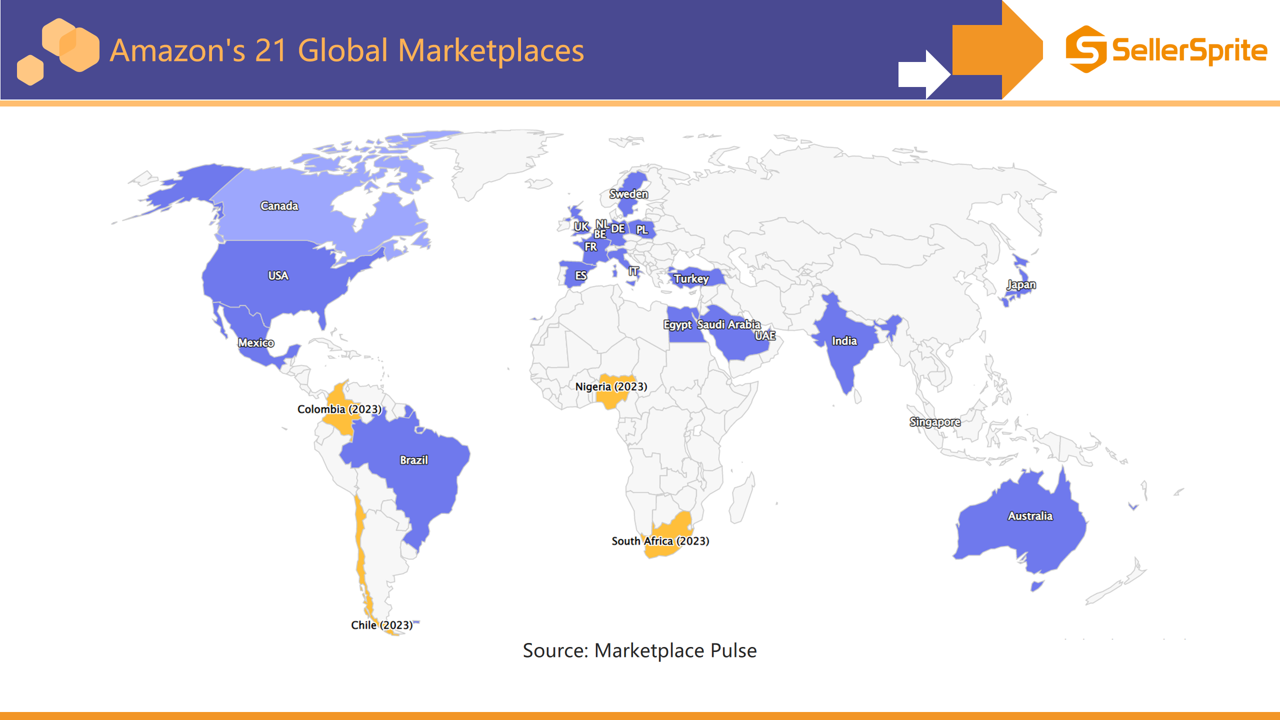
Amazon launched its Belgium marketplace in October 2022. This became Amazon's 10th active marketplace in Europe, bringing the total number of Amazon marketplaces to 21.
These marketplaces are mainly distributed across North America, Europe, and Asia, including the United States, Japan, Germany, the United Kingdom, India, Italy, France, Canada, Spain, Brazil, Mexico, Australia, Turkey, the Netherlands, the United Arab Emirates, Saudi Arabia, Sweden, Poland, Egypt, Singapore, and Belgium.
Amazon was expected to launch new marketplaces starting in spring 2023 in Colombia, South Africa, Nigeria, and Chile.
Amazon Traffic Overview
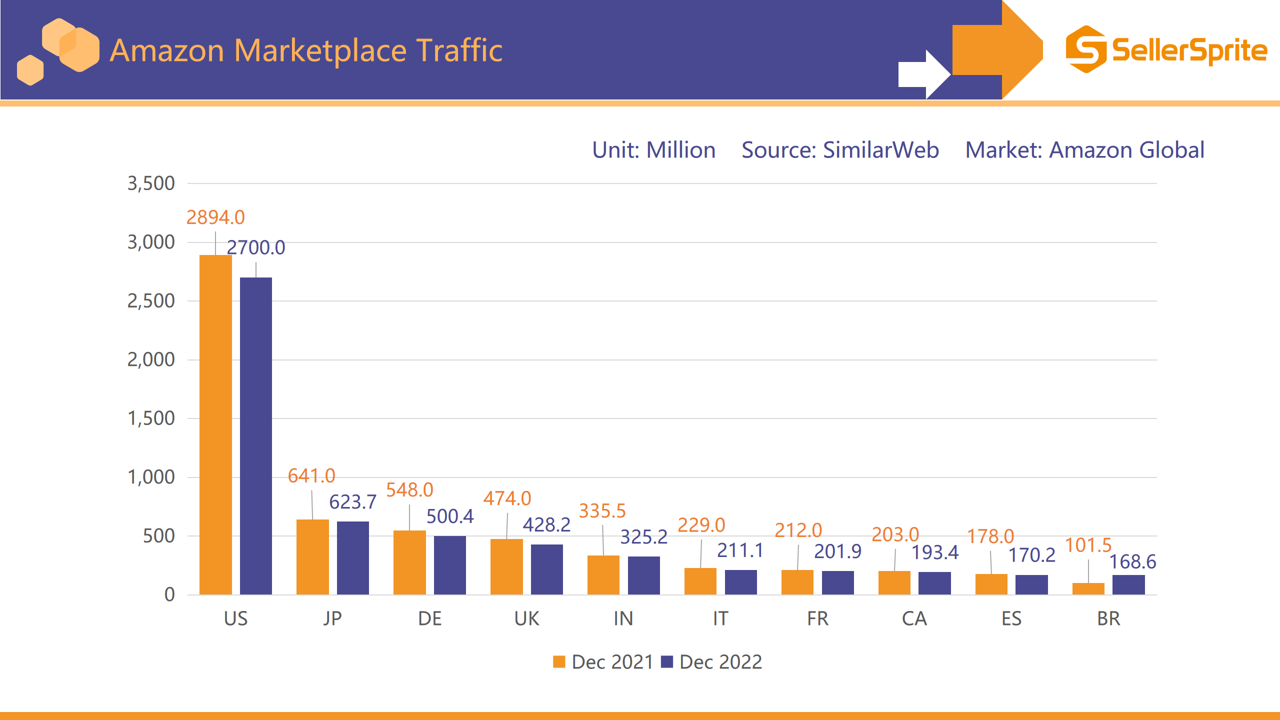
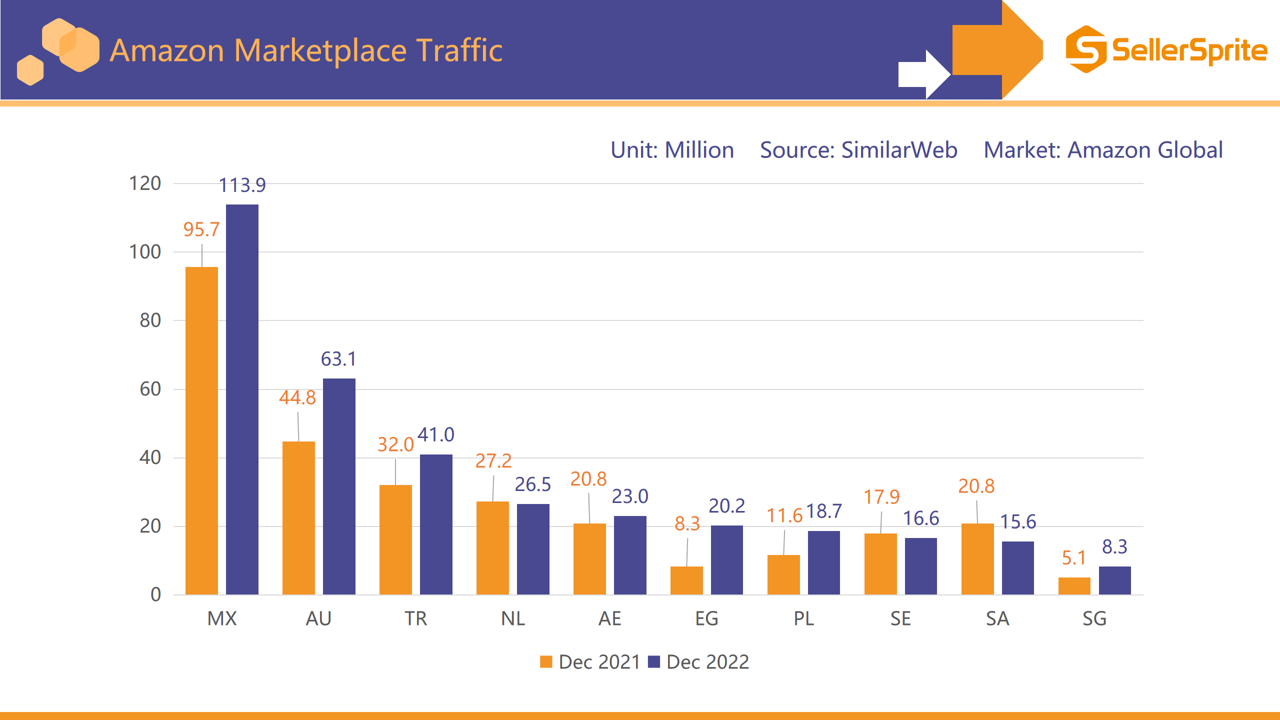
The United States marketplace remains Amazon's most important site, accounting for 45% of total visits across Amazon's 21 global marketplaces. The next three marketplaces are Japan, Germany, and the United Kingdom, each representing around 10%. Together, the United States, Japan, Germany, the United Kingdom, and India account for nearly 77% of Amazon's total web traffic.
That said, mobile devices may account for 50% or more of Amazon orders, so web traffic is no longer the only critical indicator.
Even so, the data still suggests that Amazon's expansion into smaller new countries typically takes years before it makes a meaningful contribution to the business.
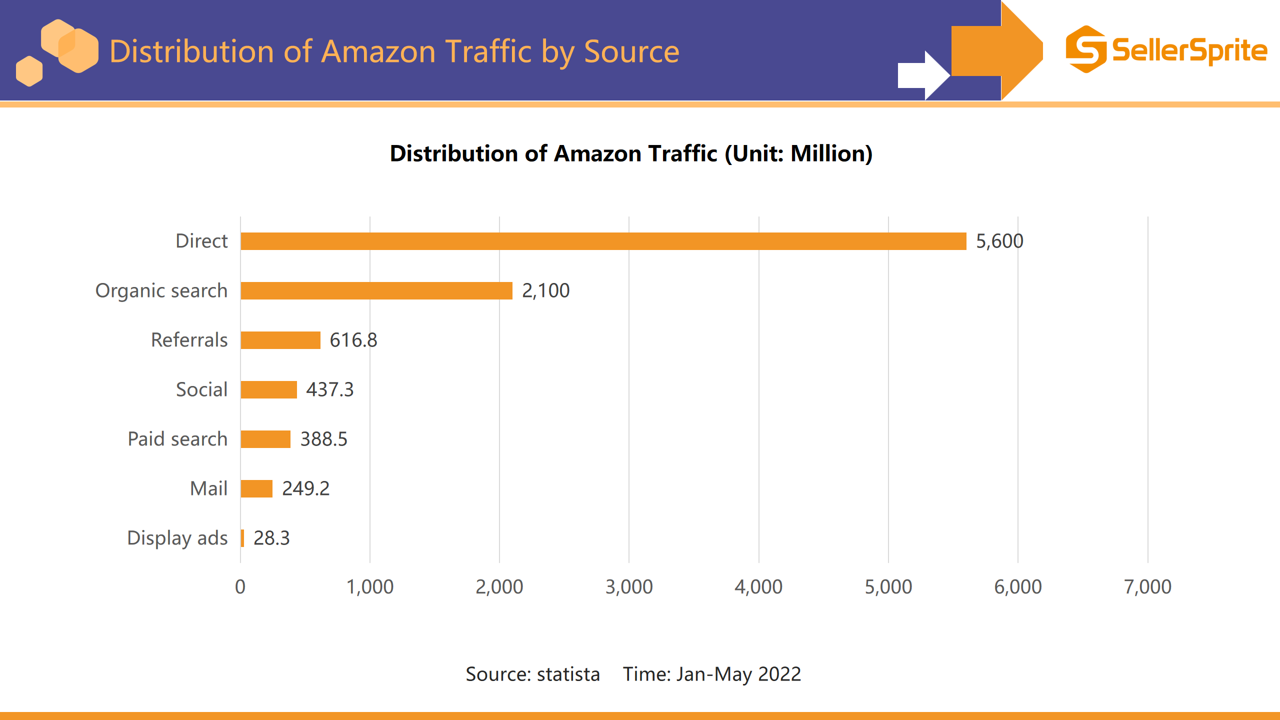
In the six months prior to May 2022, direct desktop visits to Amazon reached 5.6 billion. The second largest channel was organic search, generating more than 2.0 billion visits during the same period. Traffic from social media was about 437 million.
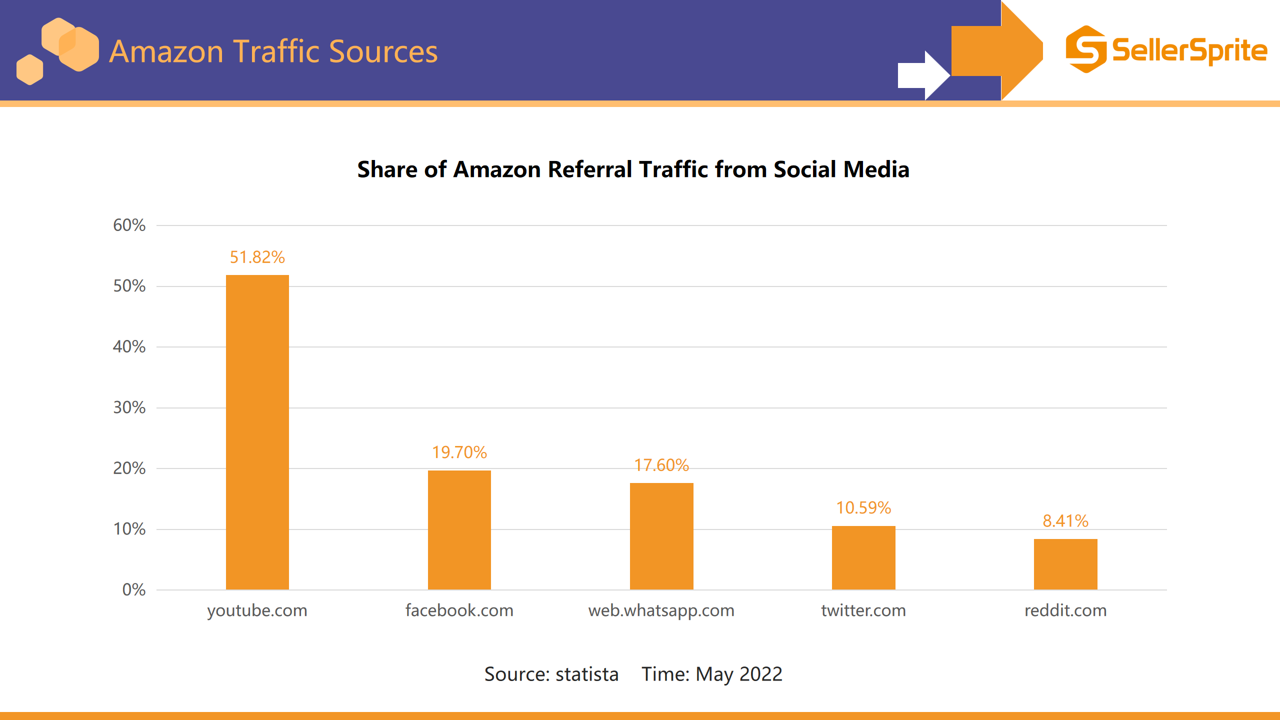
Among social platforms, YouTube delivered the most referral traffic to Amazon, accounting for more than half at 51.82%. Facebook ranked second, bringing nearly 20%, followed by WhatsApp Web at about 18%.
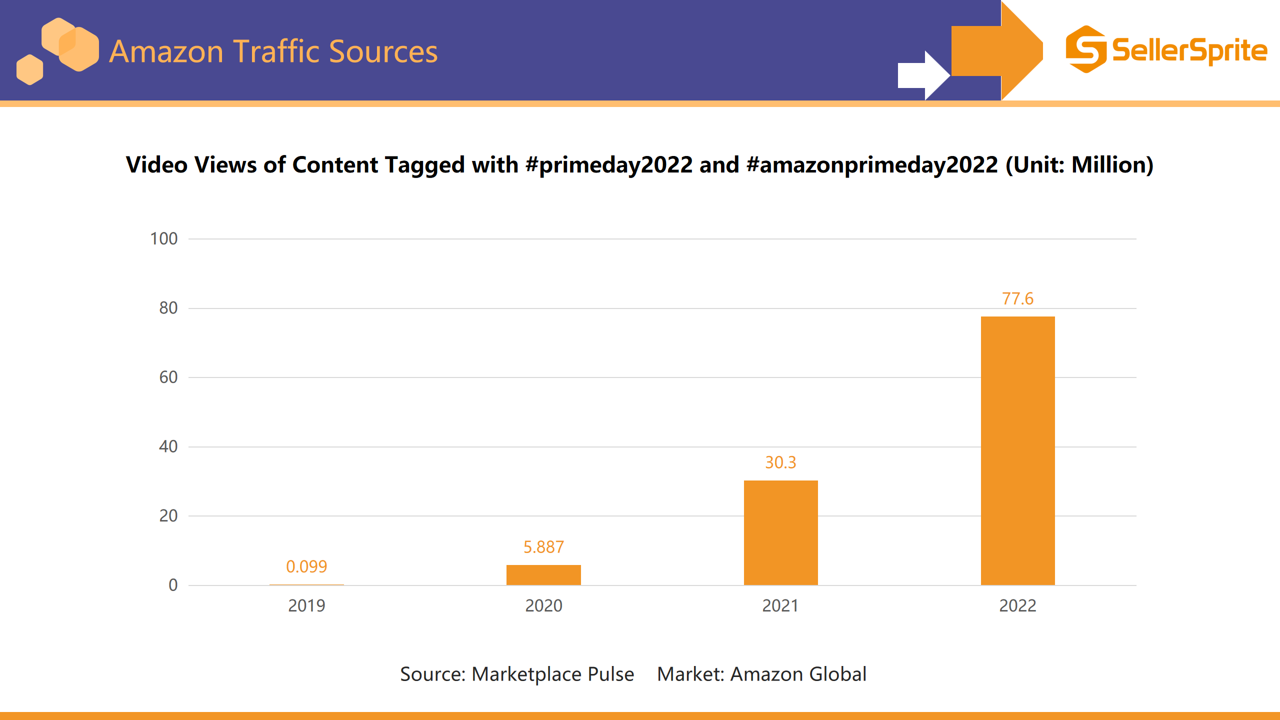
Prime Day became a strong example of social commerce in the United States. Videos on TikTok with primeday2022 and related hashtags reached 77 million views. In 2021, it was 30 million. In 2020, nearly 6 million. In 2019, it was almost zero.
Consumers are increasingly turning to social media to discover the best deals, rather than trying to find them directly on Amazon.
Amazon's Platform Growth and Changes
Amazon Brand Value
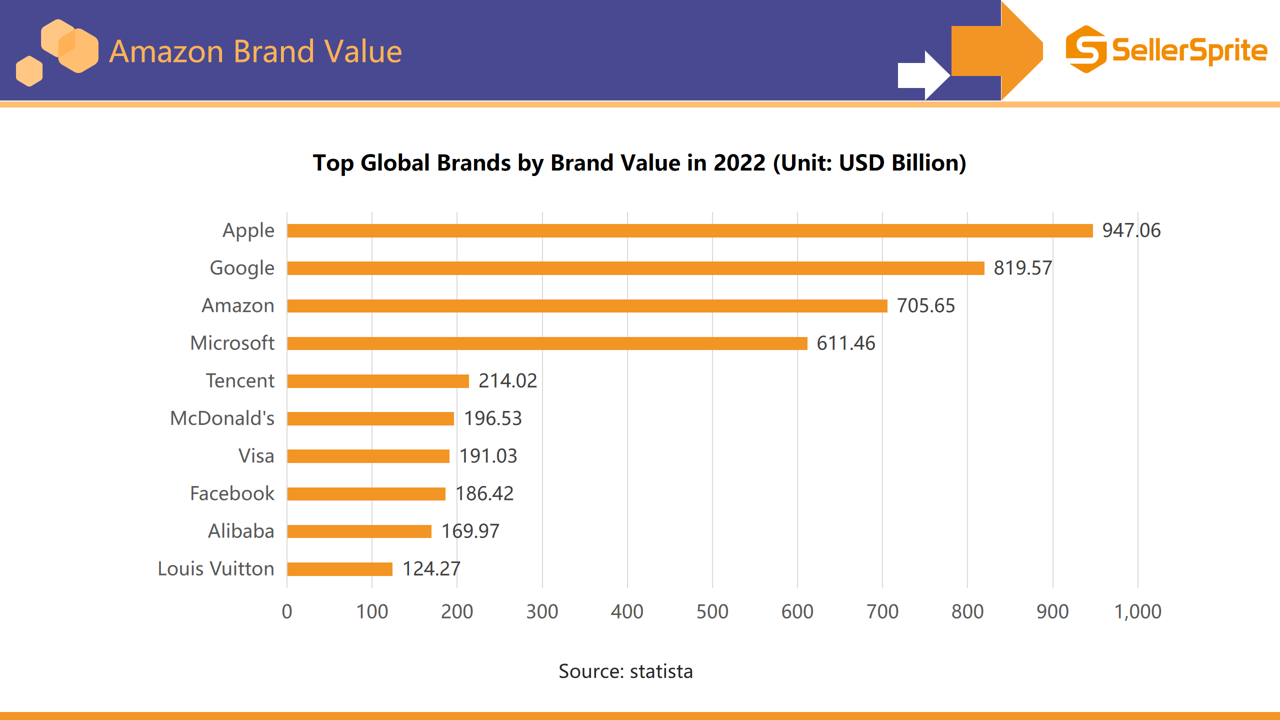
Apple returned to the top position as the world's most valuable brand in 2022, with an estimated brand value of more than 947.0 billion dollars. Google ranked second, and Amazon ranked third, valued at over 700.0 billion dollars.
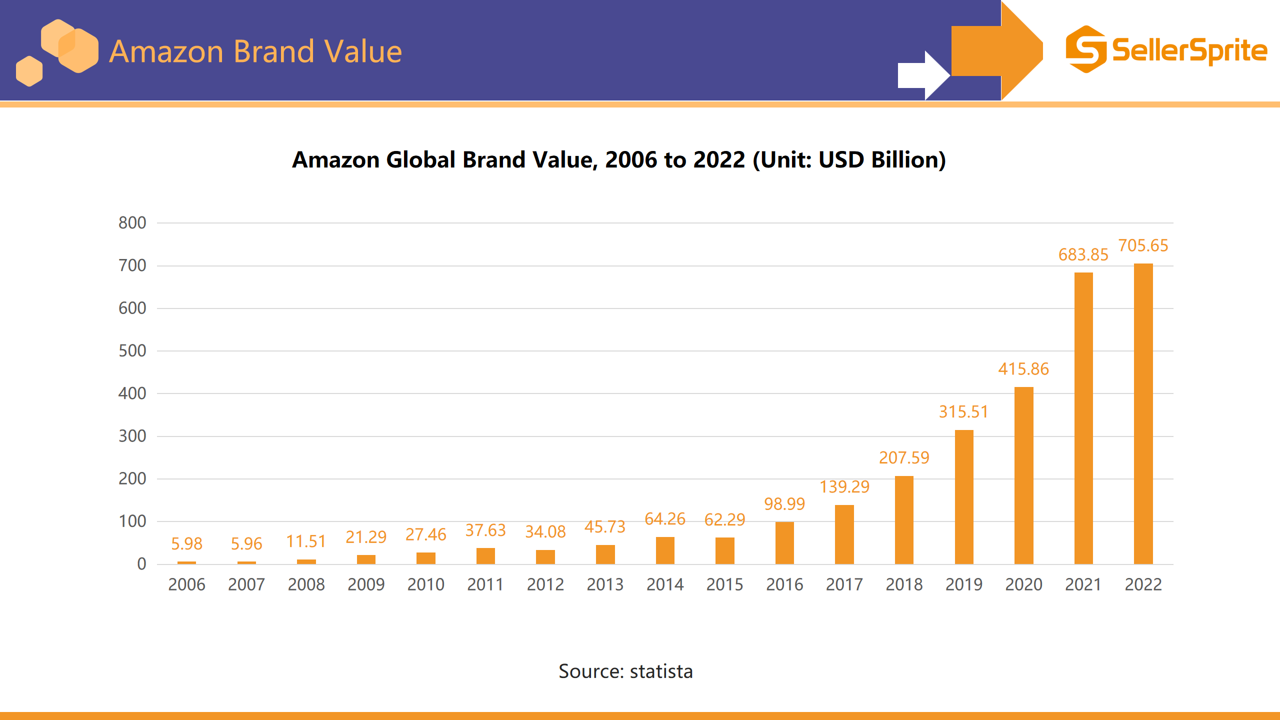
In 2022, Amazon's brand value reached 705.65 billion dollars, a record high. This figure increased only slightly compared with 2021, while the previous year saw brand value surge by nearly 70%.
Changes in Amazon Sales
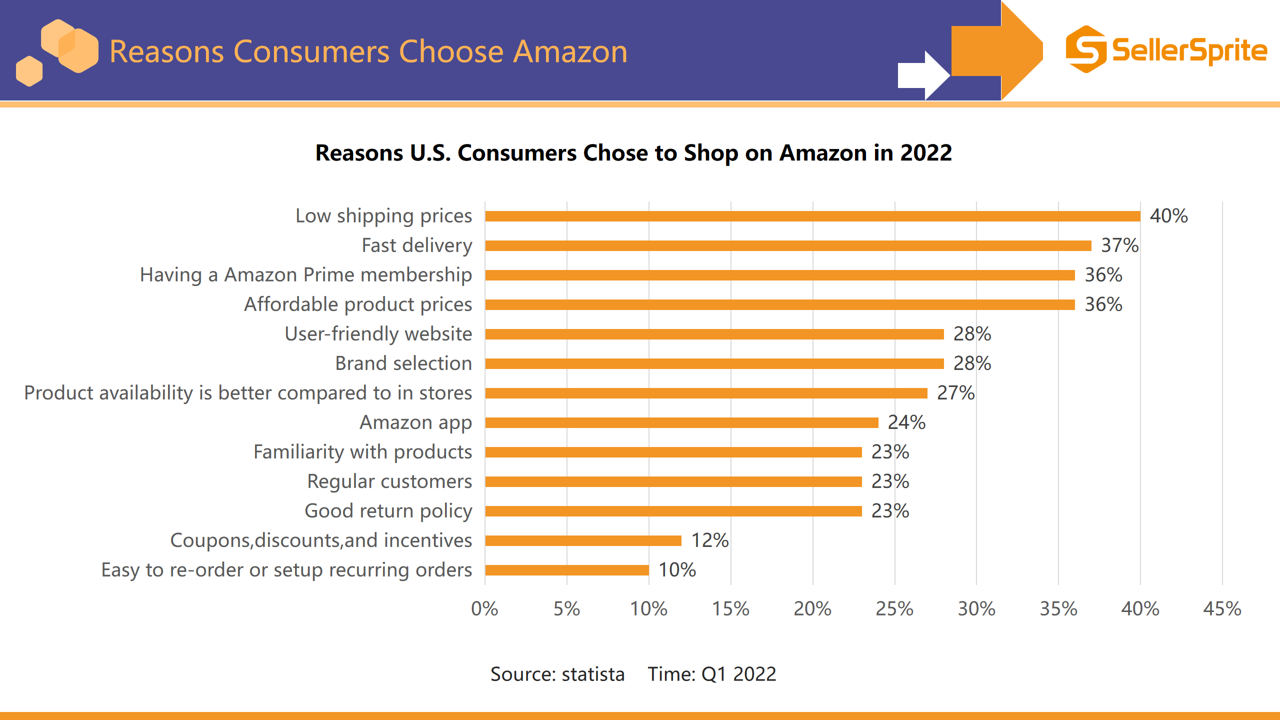
A survey in Q1 2022 found that 40% of United States consumers chose Amazon primarily because of low shipping costs. The next most common reasons were fast delivery at 37%, affordable product prices at 36%, and Prime membership at 36%.
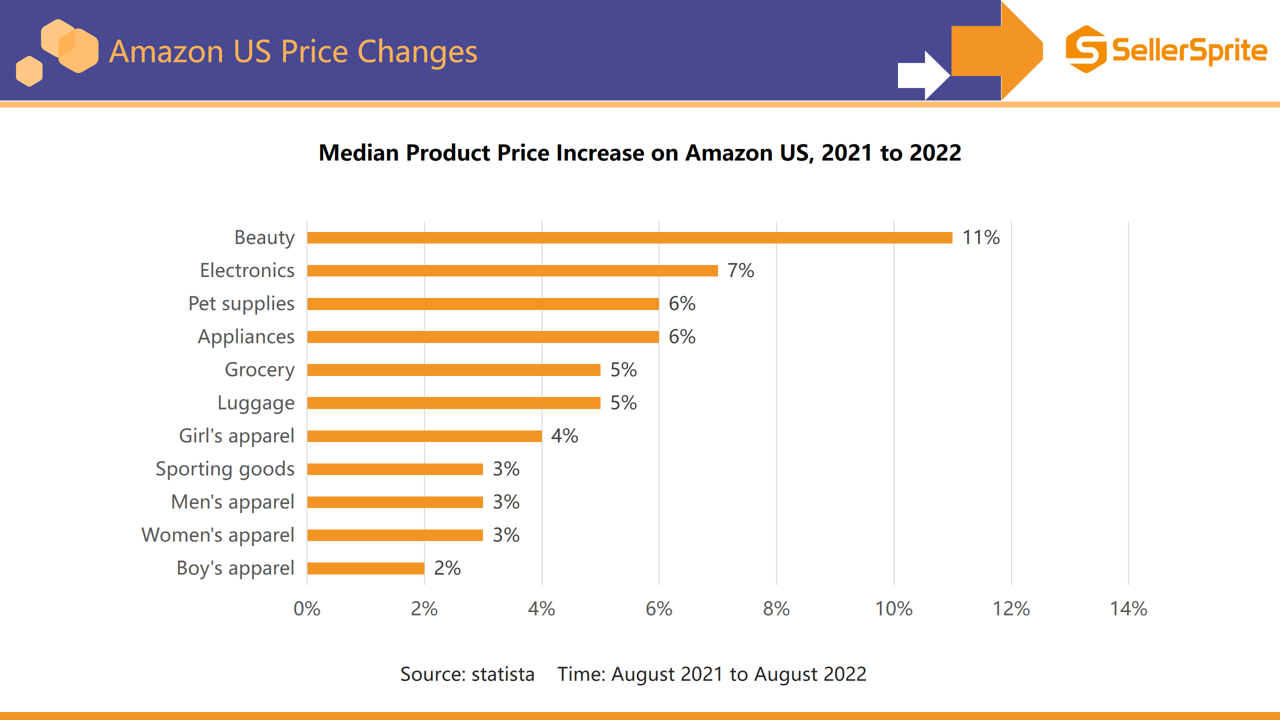
From 2021 to 2022, beauty products were among the fastest rising price segments on Amazon United States. As of August 2022, the median price of beauty products increased by 11% over the past 12 months, while boys clothing prices rose by only 2%.
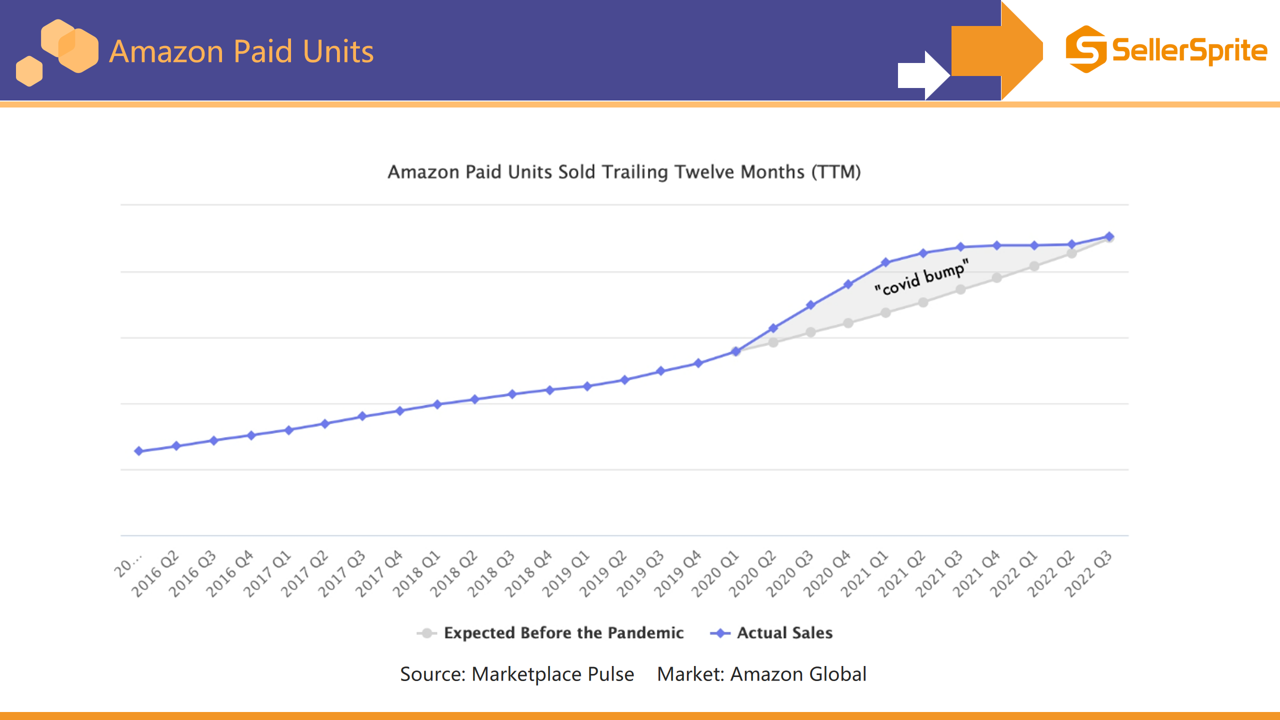
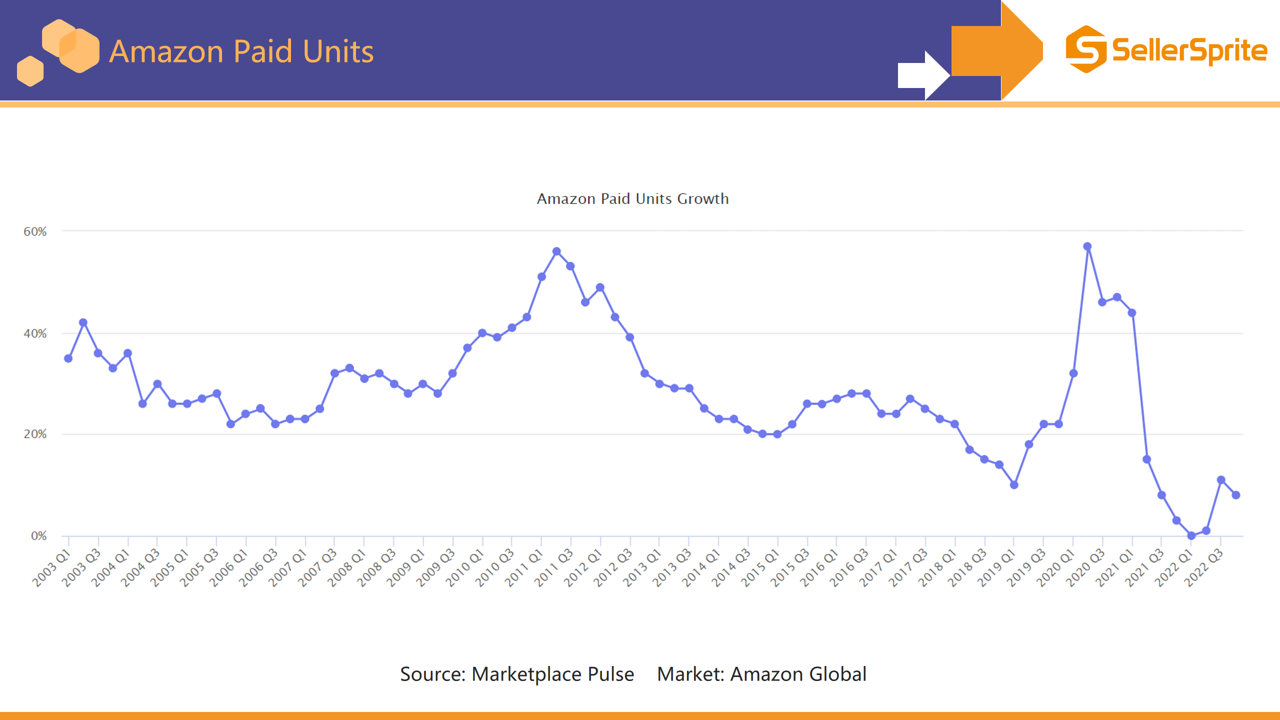
Amazon's growth is slowing, but so is the broader ecommerce industry. Its sales still align with the pre-COVID trend line.
Amazon no longer reports gross merchandise value, also known as GMV. Instead, it uses paid unit growth in quarterly results to measure the total number of units sold on Amazon, including sales from both Amazon and marketplace sellers.
This chart does not include Y-axis values because Amazon no longer discloses the number of units sold and only reports growth.
Amazon's paid units grew by 8% in Q4 2022, and overall growth in 2022 remained below the historical average.
Over the past 12 months, the total number of units sold on Amazon was roughly equal to what it would have been without the impact of COVID 19.
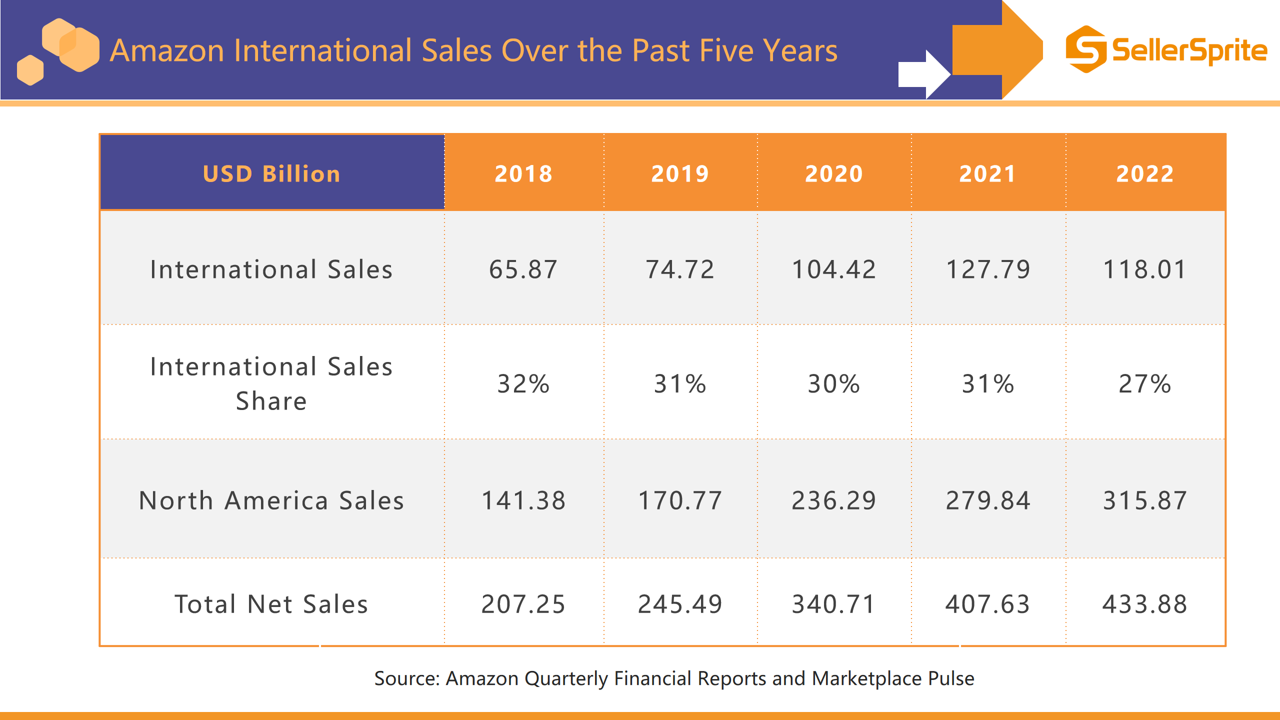
Amazon International generated 34.46 billion dollars in sales in Q4 2022, down 8% year over year from 37.27 billion dollars in Q4 2021. For the full year, International sales declined by minus 8%, from 127.79 billion dollars in 2021 to 118.01 billion dollars in 2022.
Amazon North America generated 93.36 billion dollars in sales in Q4 2022, up 13% year over year from 82.36 billion dollars in Q4 2021. For the full year, North America sales increased by 13%, from 279.83 billion dollars in 2021 to 315.88 billion dollars in 2022.
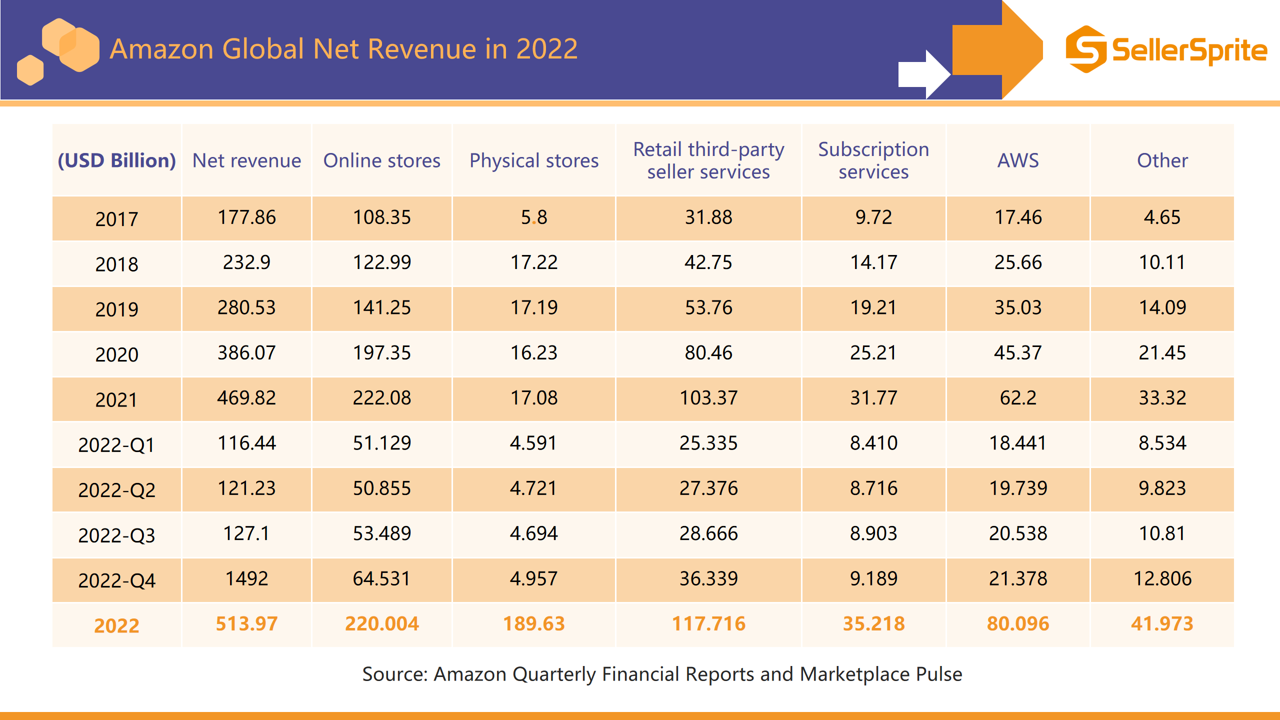
This chart shows Amazon's global quarterly net revenue in 2022 across Online Stores, Physical Stores, Third Party Seller Services, Subscription Services, AWS, and Other, including advertising and more.
Total net revenue for 2022 reached 513.97 billion dollars, exceeding 469.82 billion dollars in 2021.
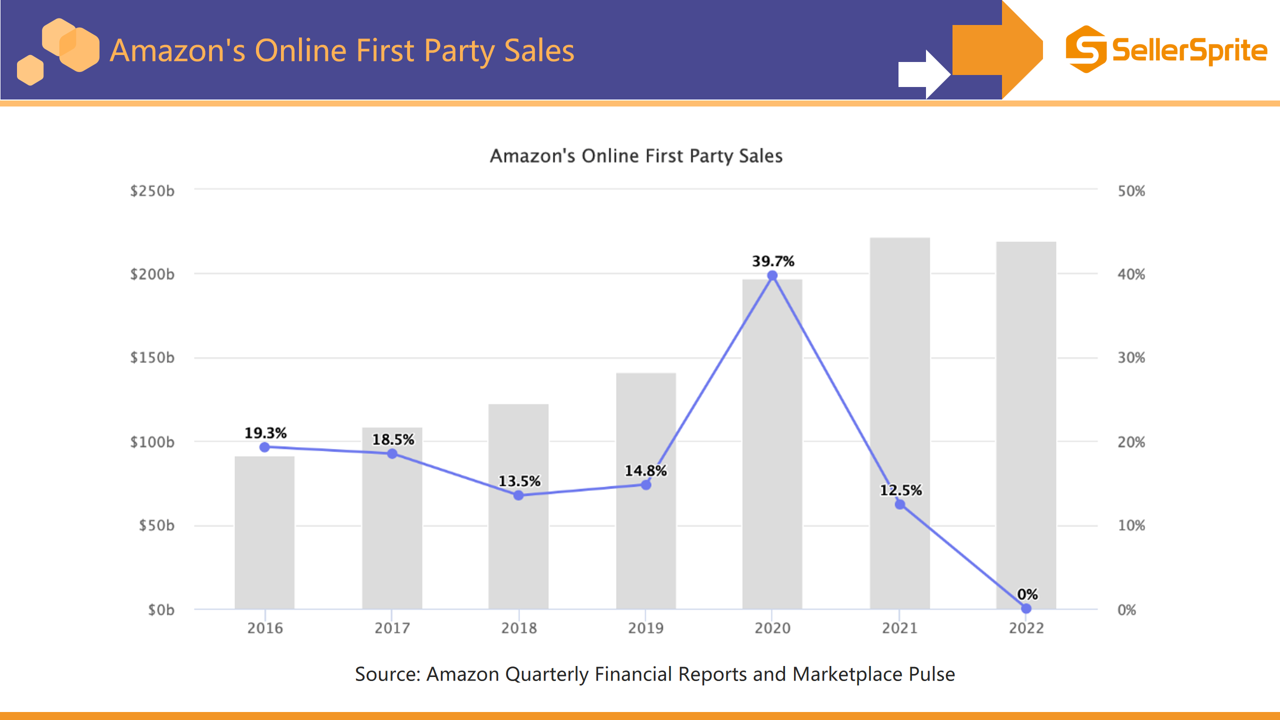
In 2022, Amazon's first-party sales, meaning vendor sales, totaled 220.0 billion dollars, down 0.9% from 2021. Part of the decline was driven by unfavorable foreign exchange impacts year over year. But even adjusting for foreign exchange, growth in 2022 stood in sharp contrast to prior years.
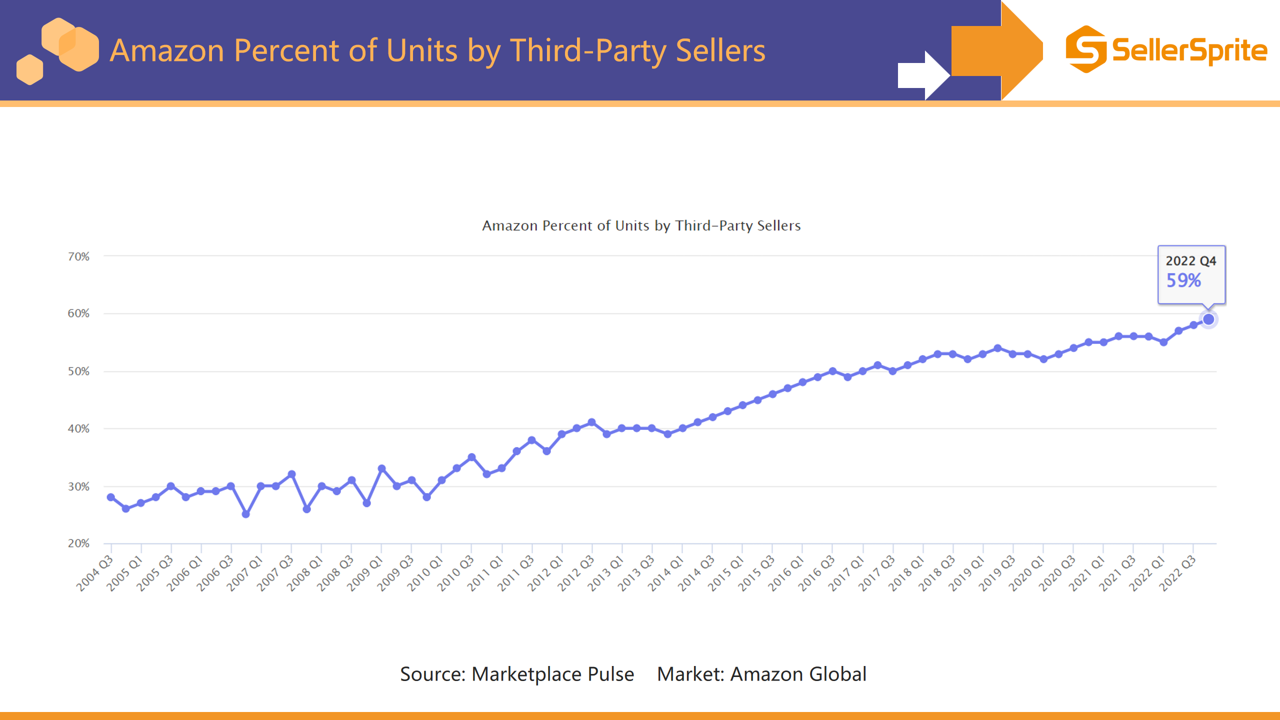
After a brief decline in Q1 2022, the marketplace seller sales share rose steadily starting in Q2. In Q4 2022, marketplace seller sales share reached 59.0%, up 5% year over year, an all-time high.
However, Amazon's total merchandise sales volume, meaning GMV, including both Amazon and marketplace sales, increased only slightly in 2022. Amazon does not disclose GMV. Growth is estimated based on first-party sales, marketplace fees, and total paid unit growth.
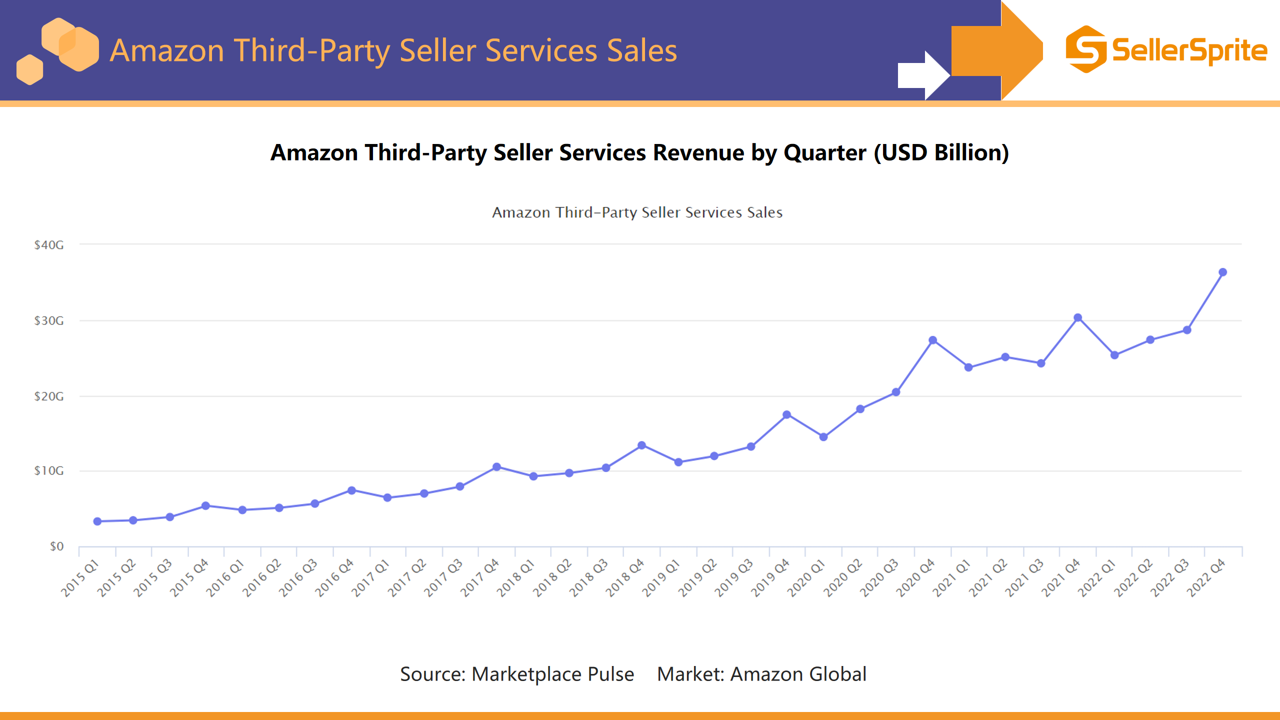
Amazon's 2022 marketplace seller services revenue includes commissions, fulfillment related services, shipping, and other marketplace seller services.
In Q4 2022, it reached 36.34 billion dollars, up 20% year over year from 30.32 billion dollars. For the full year, it grew 14%, from 103.37 billion dollars in 2021 to 117.72 billion dollars in 2022.
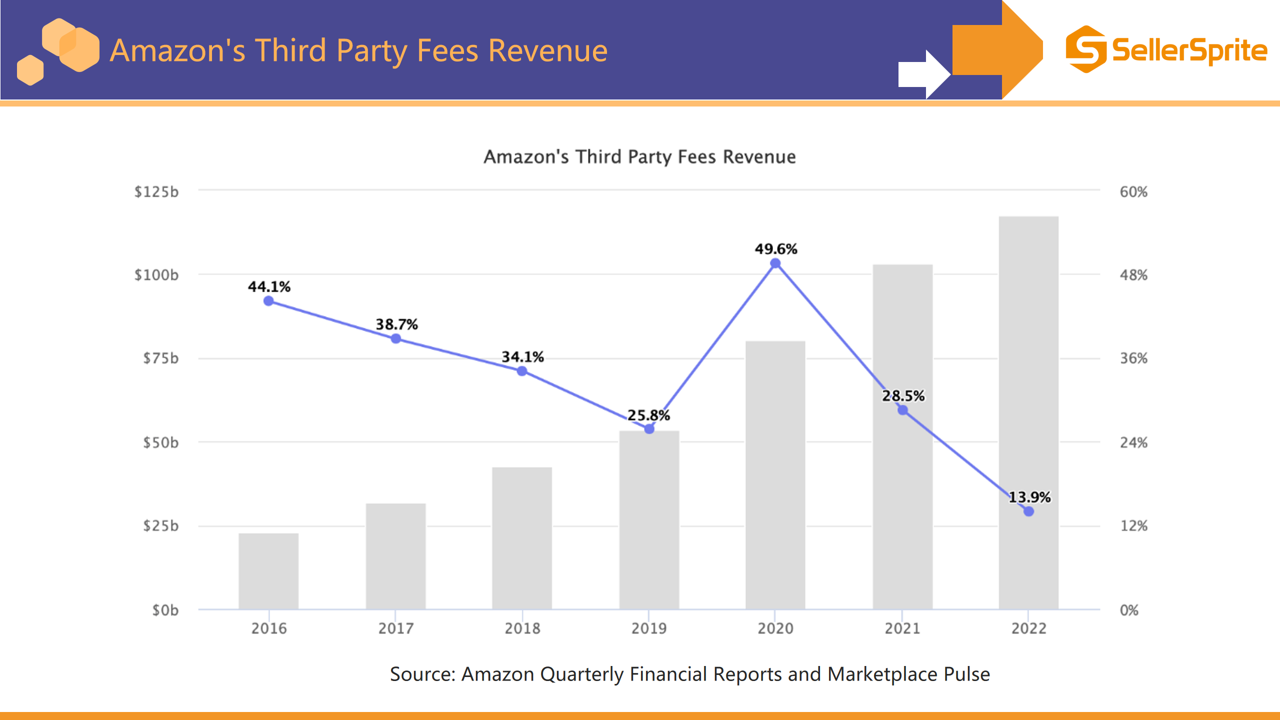
Marketplace seller sales growth in 2022 was among the slowest in many years. Amazon raised marketplace seller service fees again last year, yet growth in marketplace revenue slowed compared with the past. Rising fees paired with slower growth suggests that marketplace seller sales growth is decelerating.
Amazon Private Label Brands
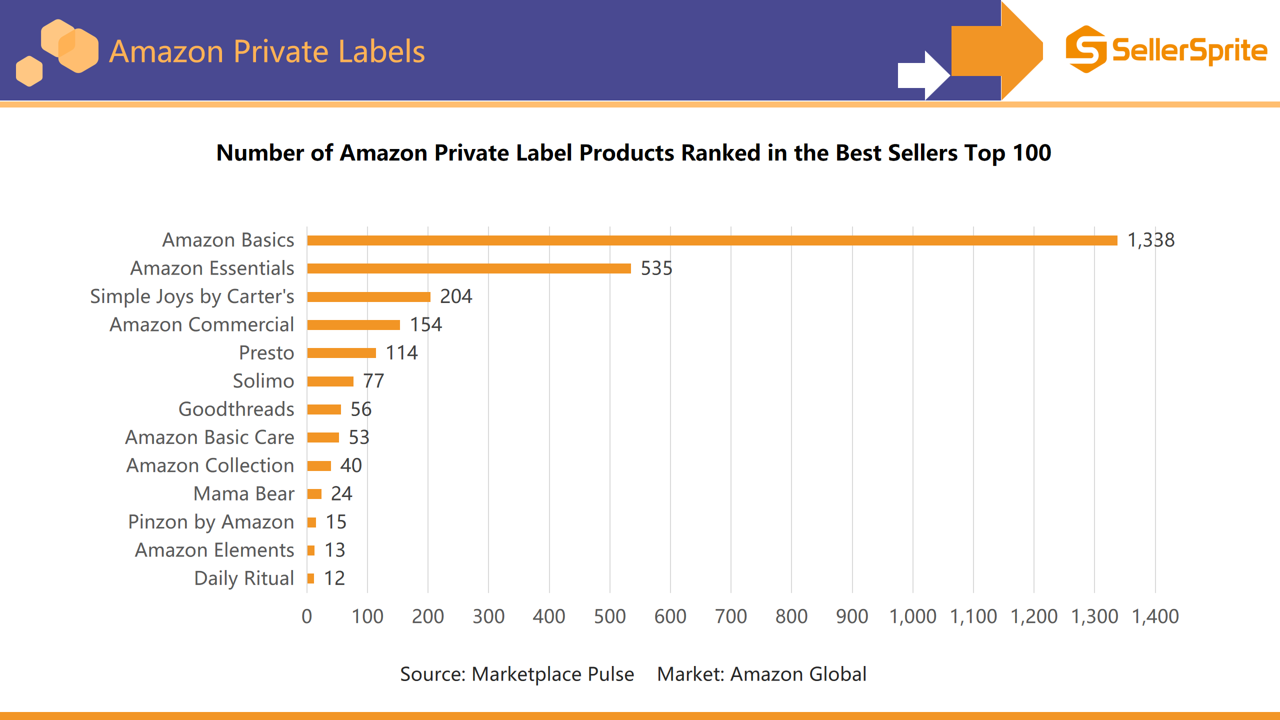
Amazon reportedly considered exiting its private label business to ease regulatory pressure, but that has not happened. While Amazon's private label portfolio covers tens of thousands of products, most of its sales come from a relatively small number of top products. Because Amazon has not stopped selling those products, removing some slow-selling long tail items has limited impact overall.
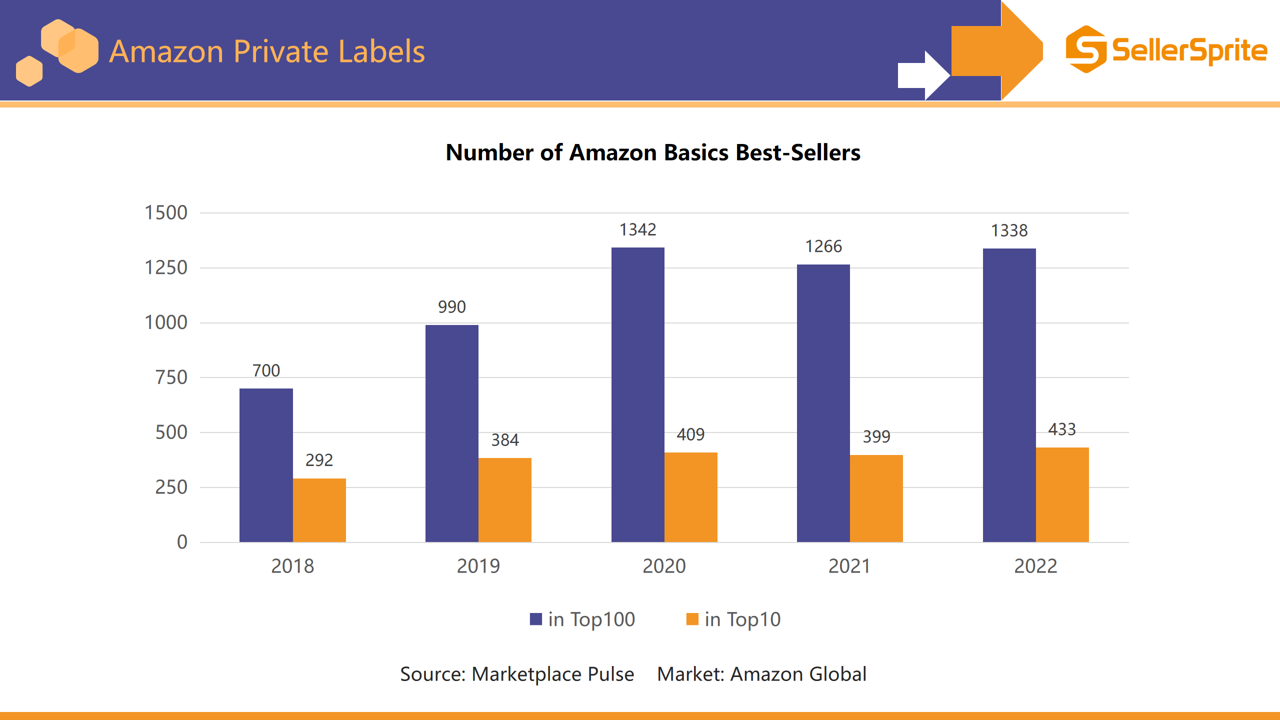
Although Amazon reduced some low-performing private label products, bestselling products under Amazon Basics and other private label brands remained available. By the end of 2022, Amazon Basics had 1338 bestselling products, nearly unchanged from 2021 and 2020.
For more than two years, the number of bestselling products has remained stable. This suggests Amazon has not become more aggressive in expanding beyond other niche markets.
Amazon Logistics
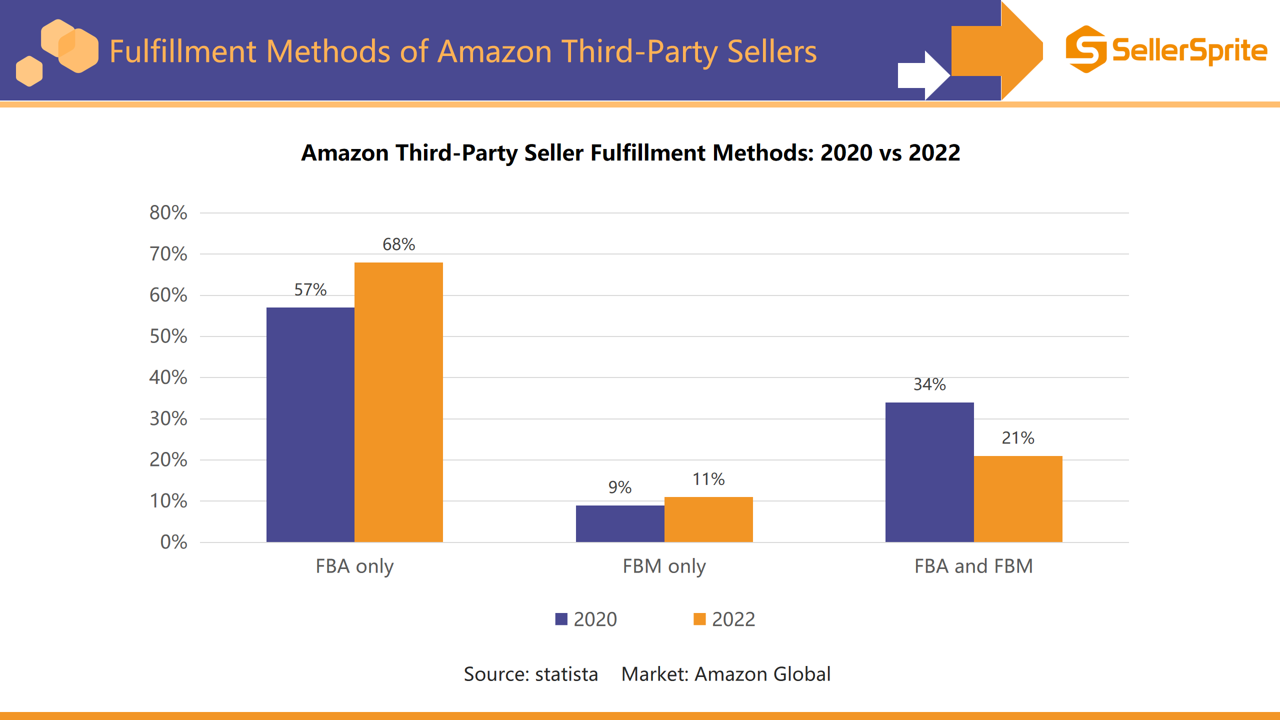
More marketplace sellers are relying on Amazon fulfillment to complete orders. In 2022, this figure reached 68%. In 2020, only 57% of marketplace sellers used the FBA program.
According to Marketplace Pulse research, more than 90% of top Amazon sellers are using this service. Amazon sellers have limited alternatives. Without FBA, it is often extremely difficult to maintain a competitive edge on Amazon.
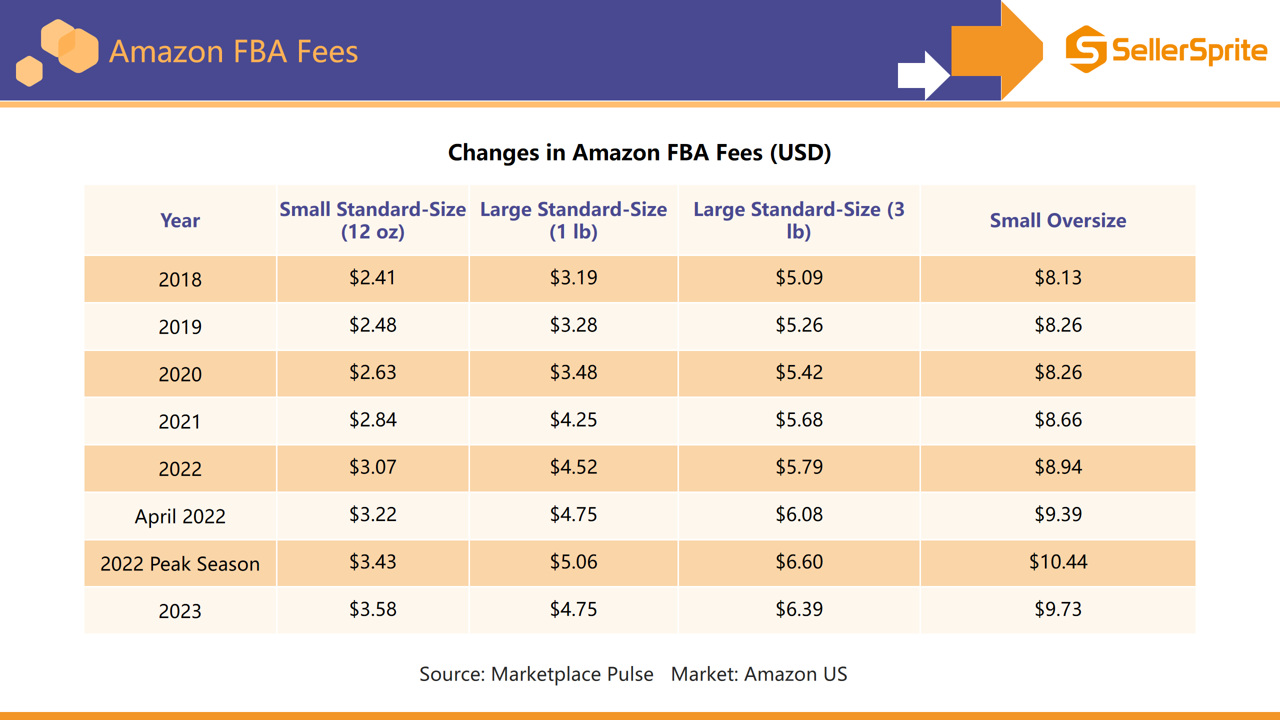
Since 2020, Amazon has increased fulfillment fees by more than 30%. Amazon is shifting rising costs onto marketplace sellers.
During the holiday season, from October 15 to January 14, Amazon charges sellers 5.06 dollars to ship a 1 lb item. By 2023, the platform would charge 4.75 dollars. In 2020, shipping the same product cost 3.48 dollars, an increase of nearly 40%.
Compared with 2020, by 2023 delivery costs would be about 30% higher for smaller items, and 20% higher for large and heavy items.
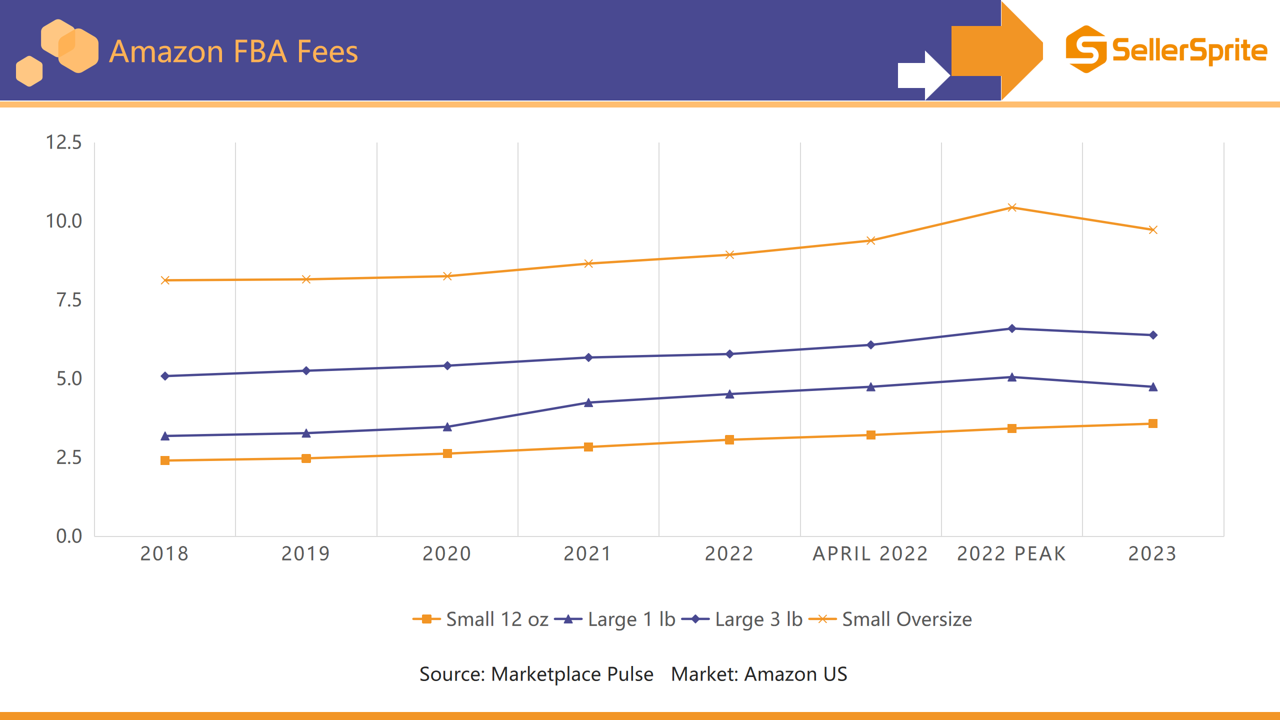
This line chart shows the trend of Amazon FBA fee changes in recent years.
Because most Amazon sellers use FBA, these fee increases affect the majority of sellers and ultimately mean consumers pay more.
Amazon Advertising
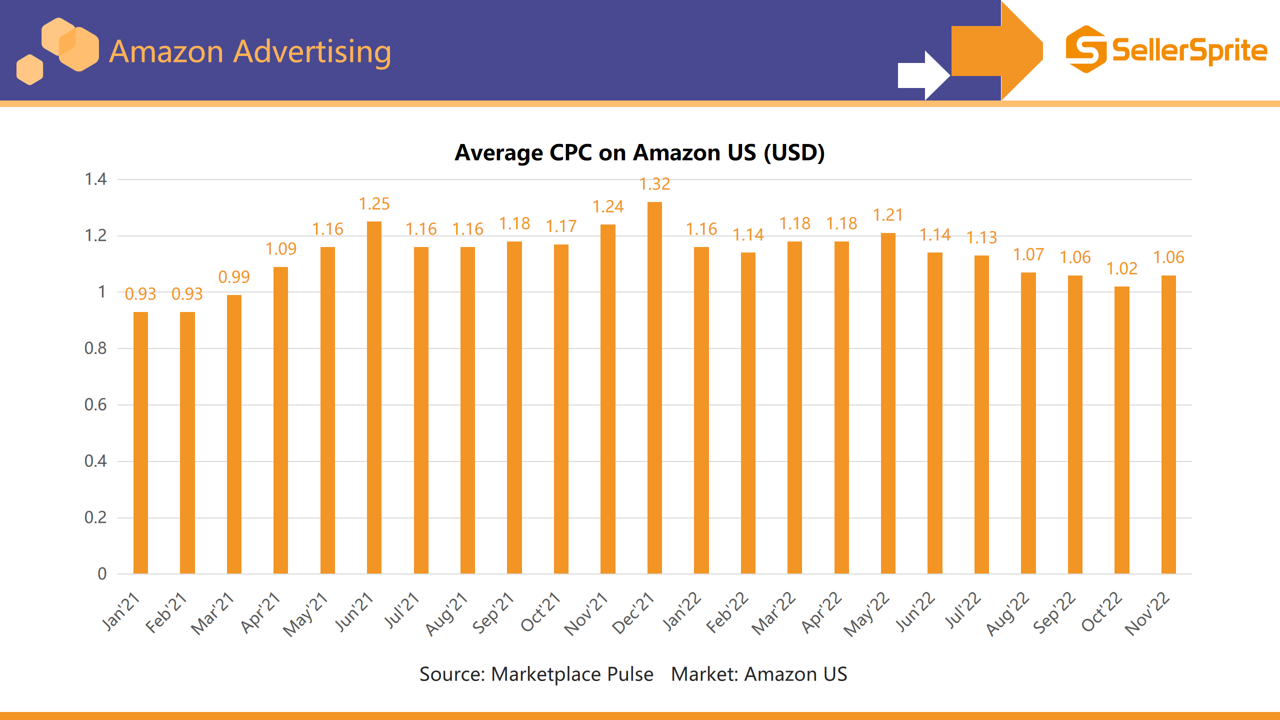
On average, Amazon ad prices remained stable in 2022, slightly lower than in 2021. In the United States marketplace, the average cost per click in November 2022 was 1.06 dollars, down from 1.24 dollars a year earlier.
Average advertising cost of sales was 22%. Average ad conversion rate held steady at 14%. As a result, average cost per sale was 7 to 8 dollars, lower than 9 to 10 dollars in 2021, but higher than 6 to 7 dollars in 2020. In other words, it takes about 7 clicks at an average cost per click of 1.06 dollars to generate one sale.
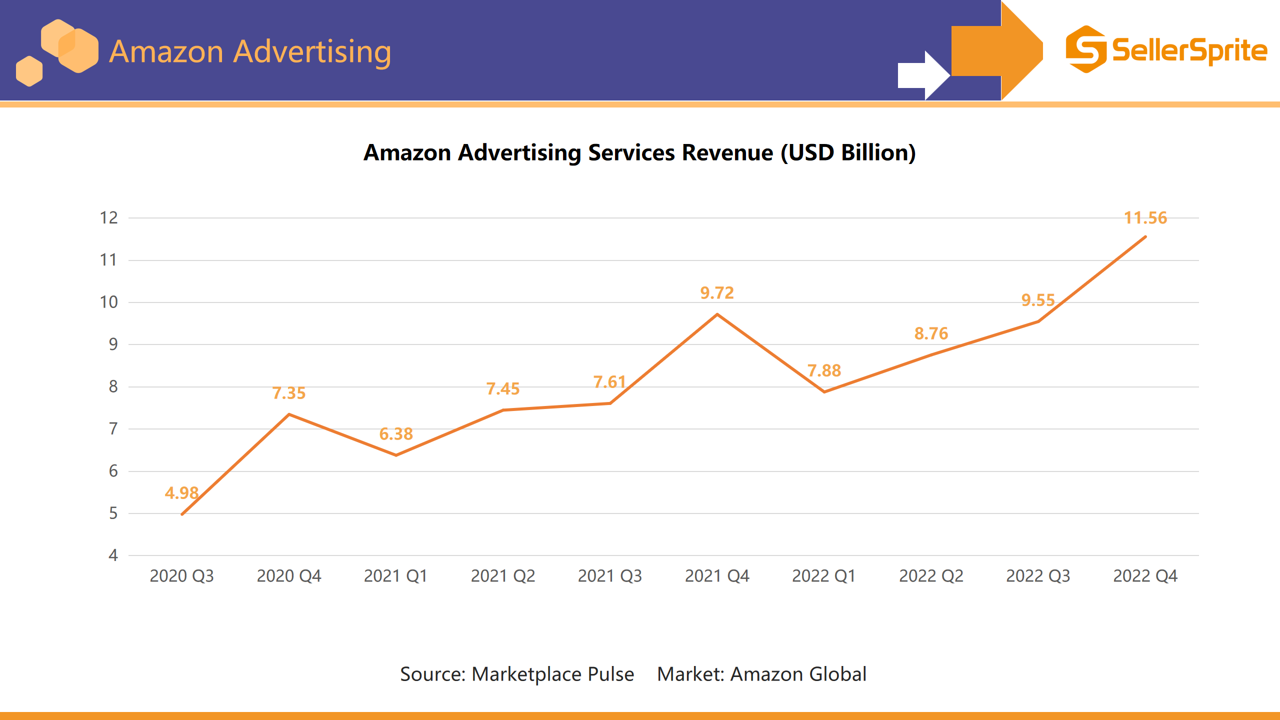
Amazon's annual ad revenue reached 37.75 billion dollars, growing 21% from 31.16 billion dollars in 2021 to 37.75 billion dollars in 2022. As of the end of 2022, it grew by 10 times over five years.
Amazon Ads grew without raising ad prices largely because it expanded its network reach, especially off Amazon. For example, Amazon announced that brands that do not sell on Amazon, such as restaurants or hotels, could run ads on Twitch, which is part of the same advertising network.
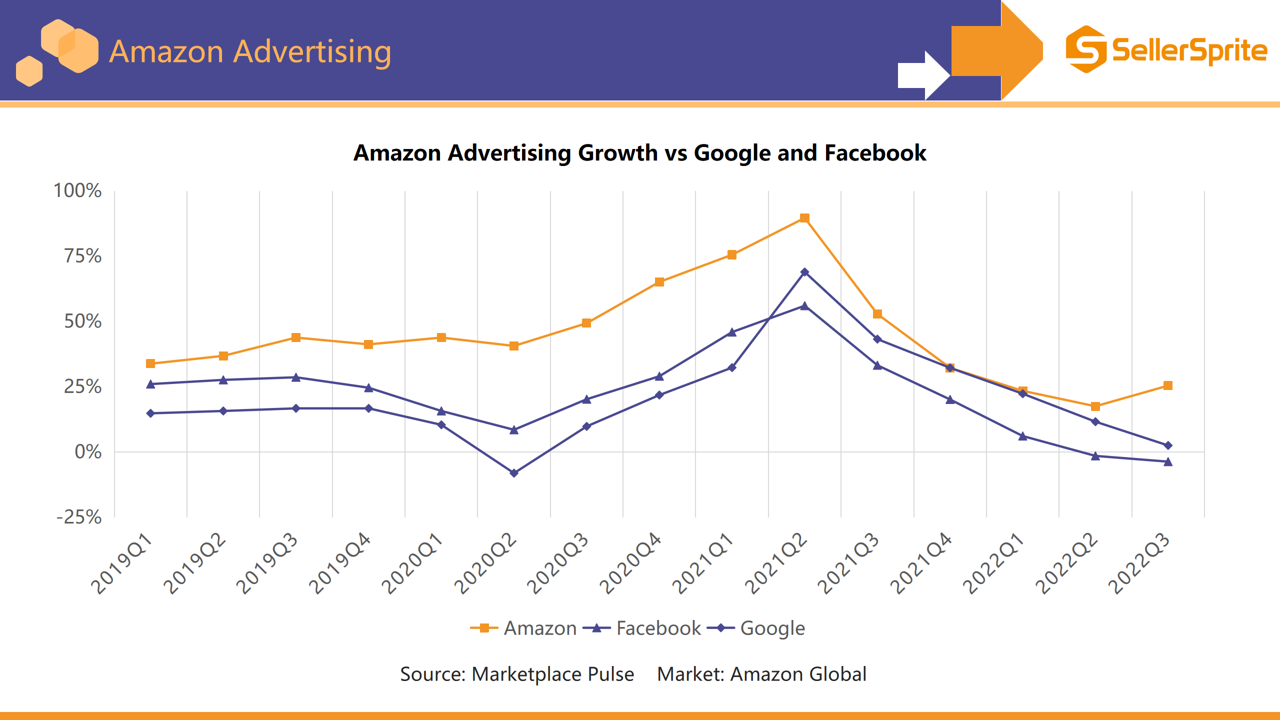
Over the past three years, Amazon's advertising business grew faster each quarter than Google and Facebook, yet Amazon was not competing directly with retailers for ad revenue.
In Q3 2022, Amazon's ad business grew 25% to 9.5 billion dollars. In comparison, Google's ad revenue, including all Google properties and YouTube, grew only 2.5% to 54.4 billion dollars. Facebook's ad business, including Instagram, shrank for the second consecutive quarter, down 3.7% year over year to 27.2 billion dollars.
Amazon Seller and Category Data
Product and Seller Tiering on Amazon
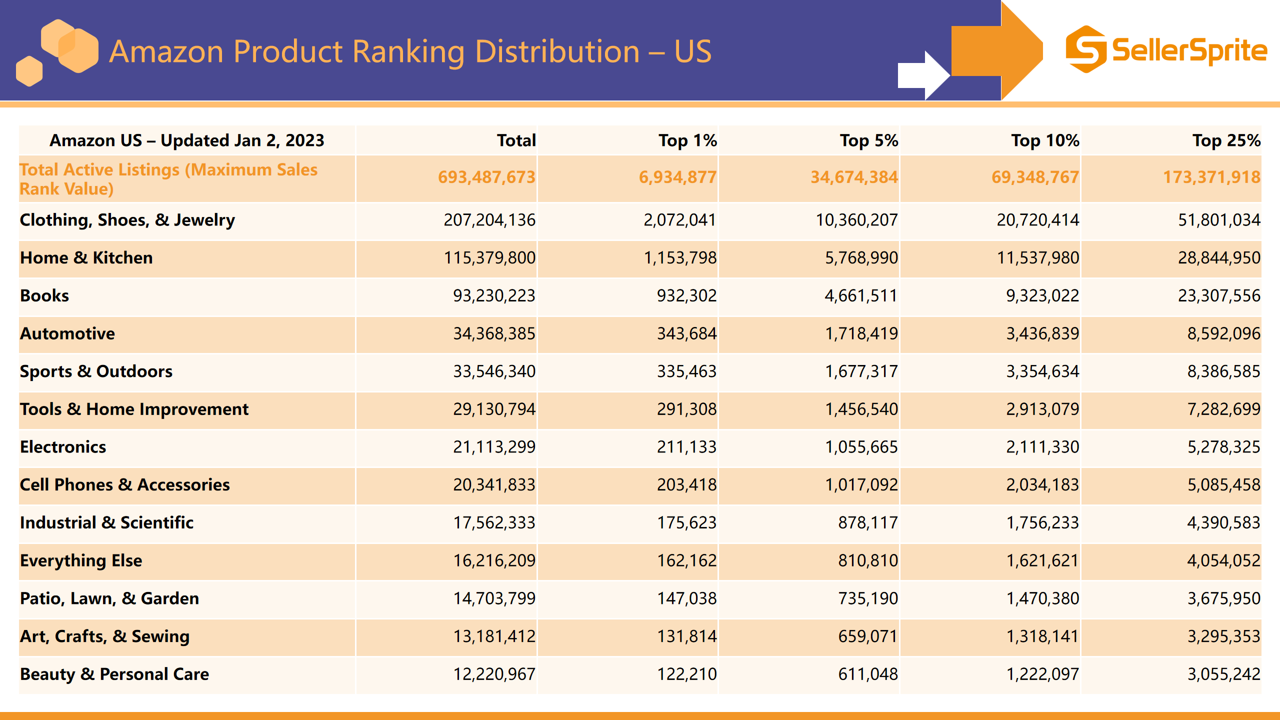
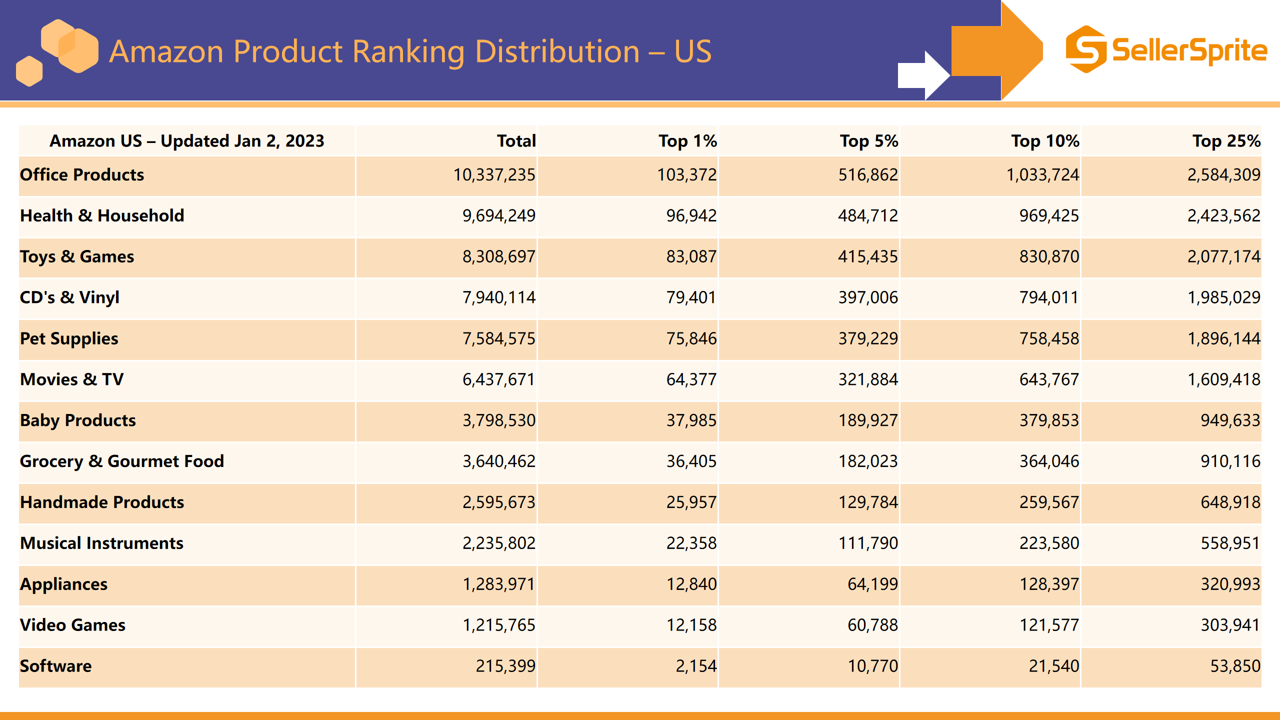
This section shows product tiering for Amazon United States, the United Kingdom, and Canada, specifically the number of active listings across top-level categories in each marketplace.
The relationship between supply and demand, reflected by the number of active listings and the search volume of core category keywords, is an important reference point for product research.
Categories are sorted in descending order by active listing count. As of January 2, 2023, Amazon United States had more than 690 million active listings. The category with the most active listings was Clothing, Shoes and Jewelry, and the smallest was Software.
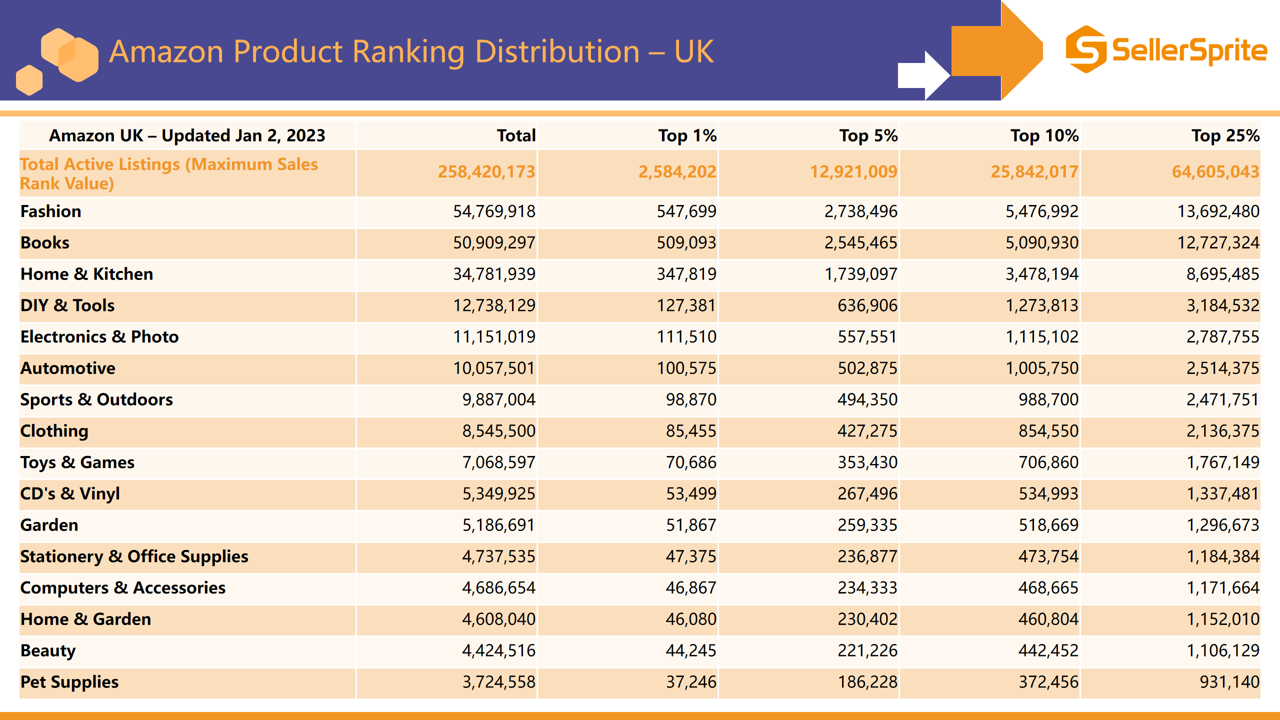
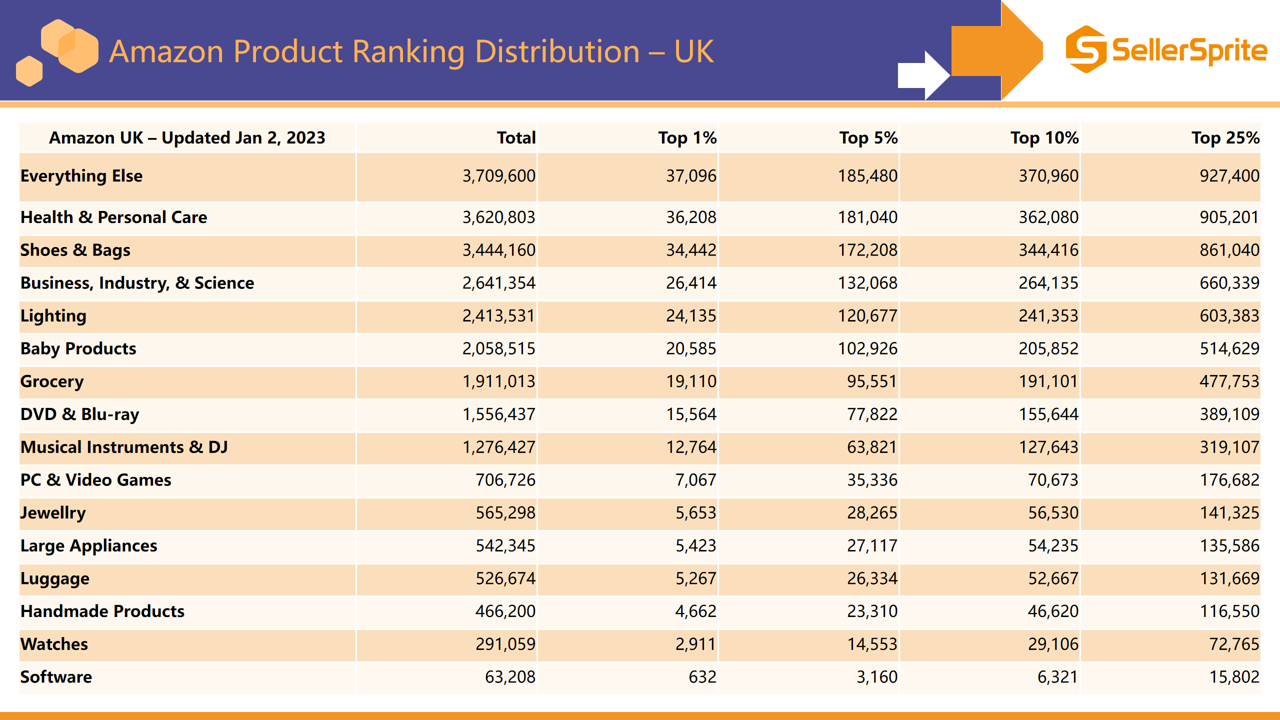
Amazon United Kingdom had more than 250 million active listings. The category with the most active listings was Fashion, and the smallest was Software.
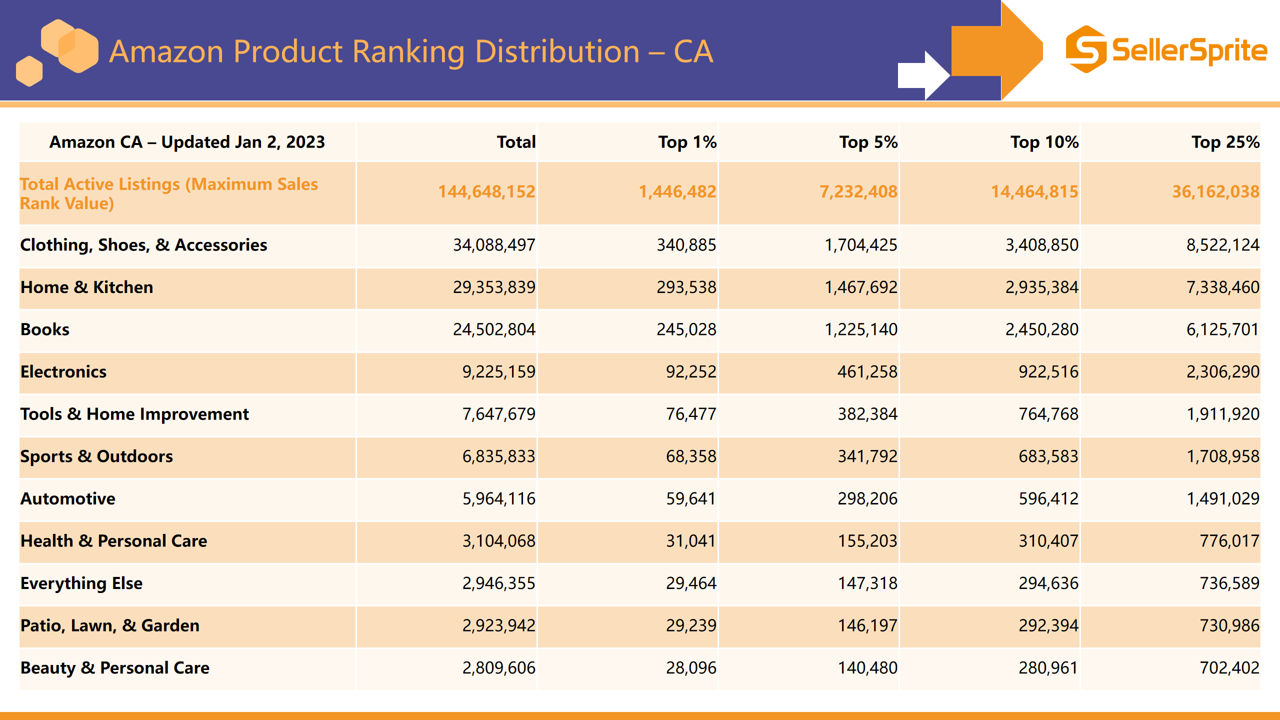
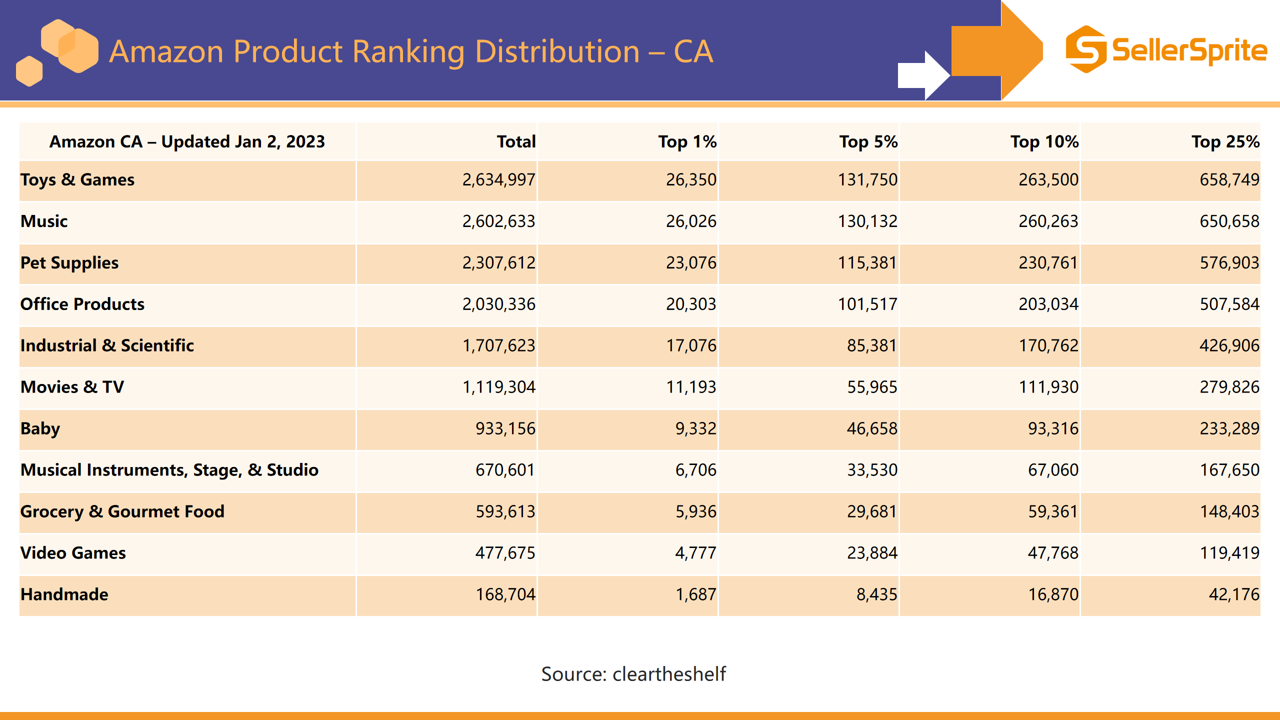
Amazon Canada had more than 140 million active listings. The category with the most active listings was Clothing, Shoes and Jewelry, and the smallest was Handmade.
Chinese Amazon Sellers
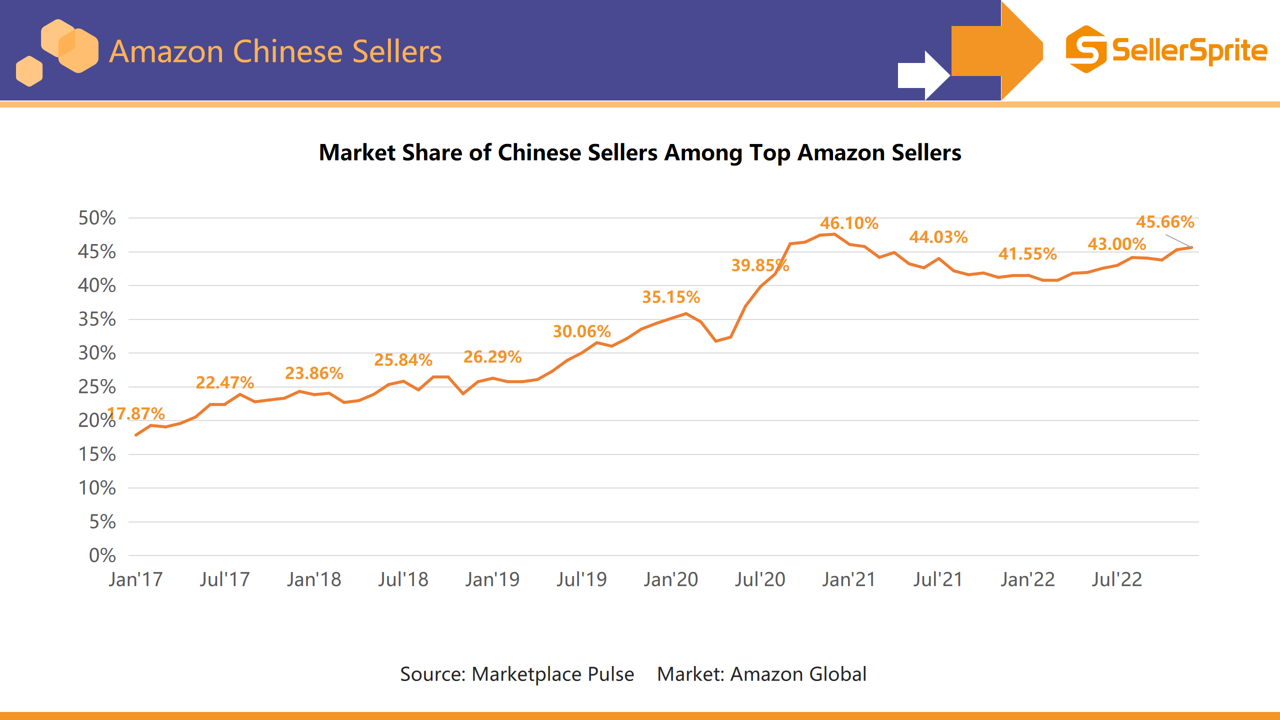
In the first half of 2022, Chinese sellers appeared to be pulling back from Amazon. Local sellers overseas regained marketplace share, reversing a long-standing trend dominated by Chinese sellers.
The 2021 wave of account suspensions dealt a major blow to many Chinese sellers. In April 2022, there were also reports suggesting that Chinese foreign trade companies should avoid becoming overly dependent on Amazon.
However, by the end of 2022, Chinese sellers recovered the market share they had lost on Amazon. In February 2022, Chinese sellers' share among top sellers fell to 40%, but by December, it rose again to 45%. As a result, despite various headwinds and many sellers attempting to reduce reliance on Amazon, there is currently no other ecommerce platform that offers the same level of reach and influence.
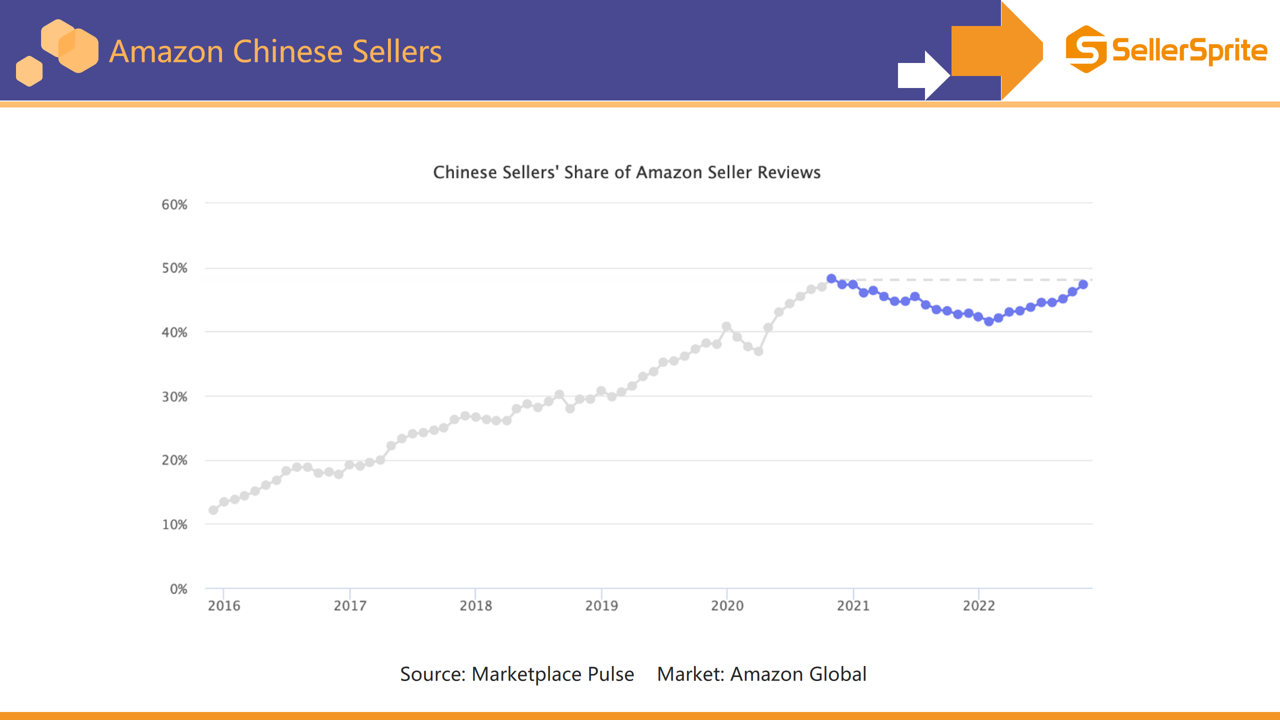
According to Marketplace Pulse research, the share of reviews left by Chinese sellers has returned to levels seen since November 2020. Made in China, sold on Amazon remains the norm.
While all sellers are working to diversify and avoid relying on Amazon for most of their revenue, Amazon is still the largest marketplace in the United States and many other major markets.
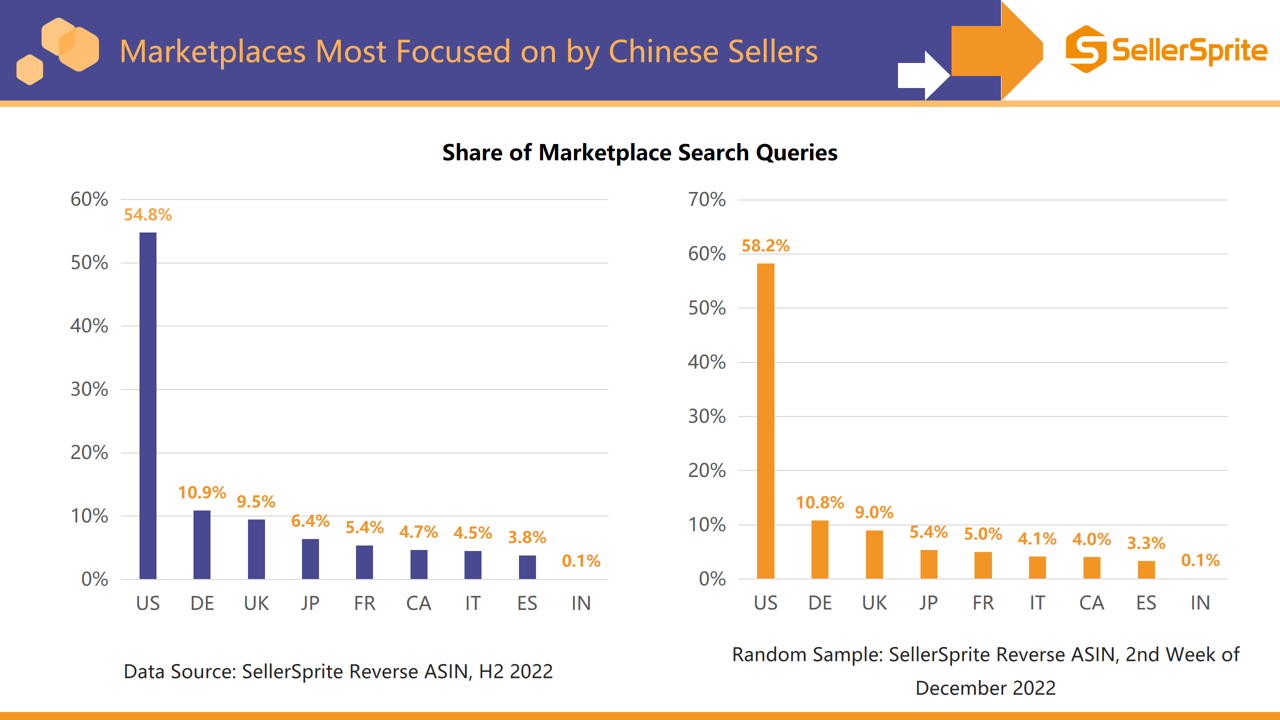
This chart shows marketplace selection frequency from SellerSprite's Keyword Reverse ASIN Lookup tool.
We analyzed marketplace selection frequency for the second half of 2022, meaning six months, and also took a random sample from the second week of December 2022.
The five marketplaces that Chinese Amazon sellers focus on most are the United States, Germany, the United Kingdom, Japan, and France.
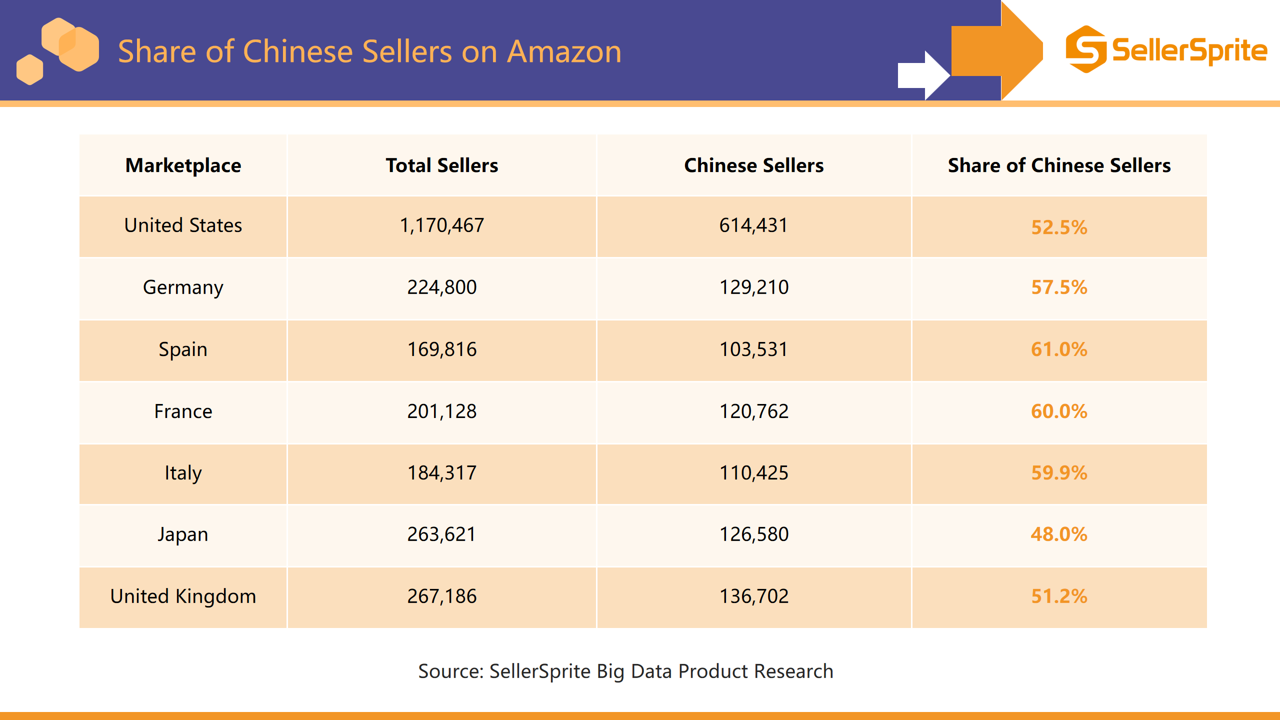
This chart shows the number of stores with active sales under top level categories across Amazon marketplaces as of 2022.
The share of Chinese sellers with active sales exceeds 50% in most marketplaces. The highest share is in Spain, at 61%.
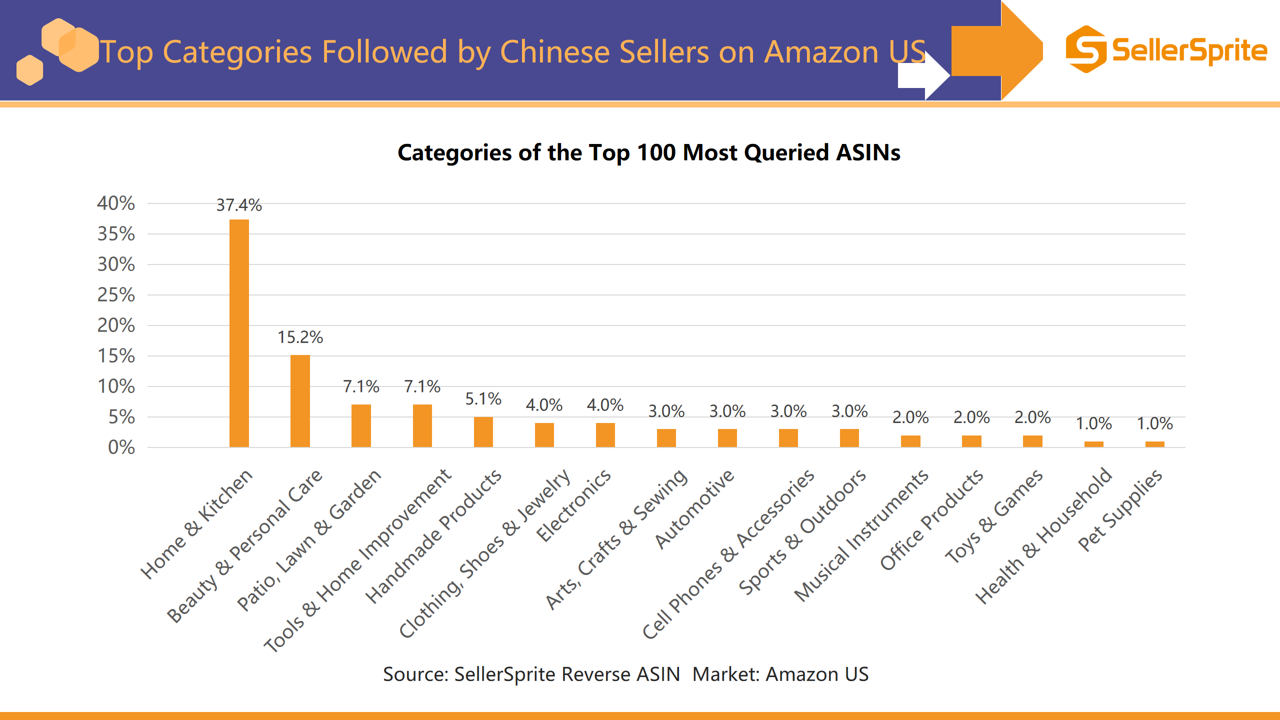
By analyzing the categories of the 100 ASINs most frequently queried by users in SellerSprite Reverse ASIN Lookup for the United States marketplace, we identified the top 10 categories that Chinese sellers focused on in the United States in 2022:
- Home and Kitchen
- Beauty and Personal Care
- Patio, Lawn and Garden
- Tools
- Handmade
- Clothing, Shoes and Jewelry
- Electronics
- Arts, Crafts and Sewing
- Automotive
- Cell Phones and Accessories
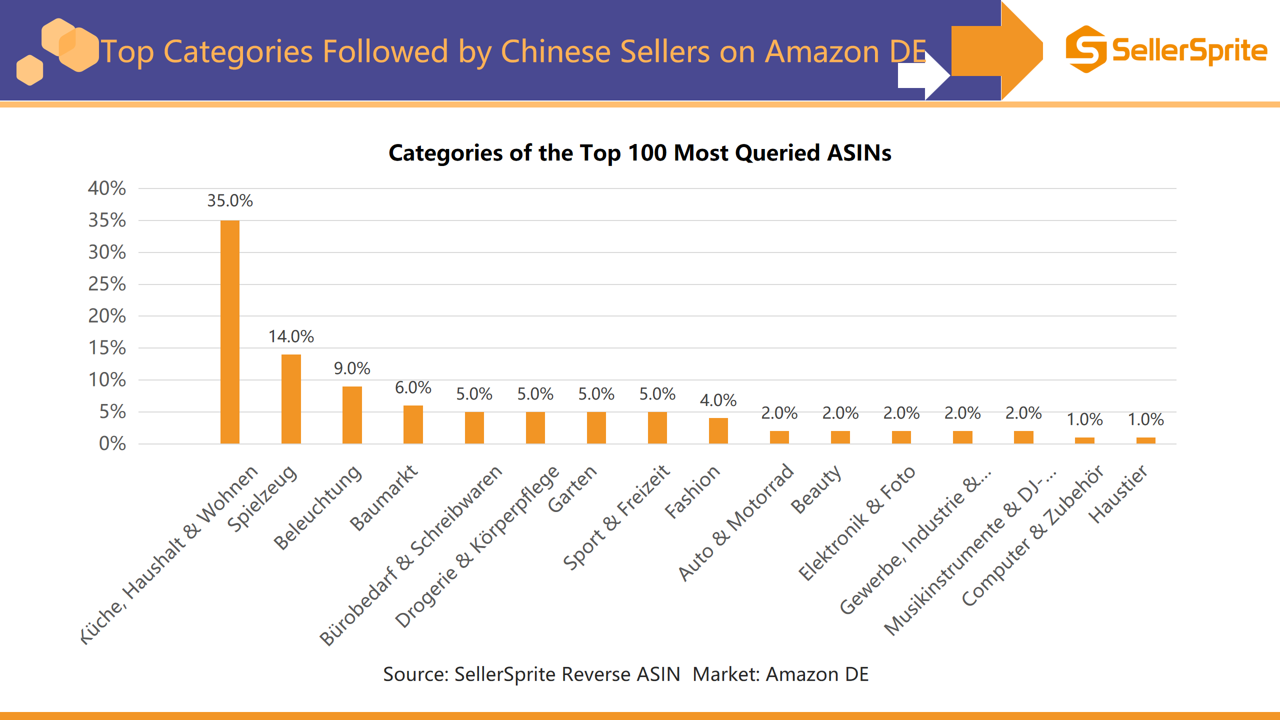
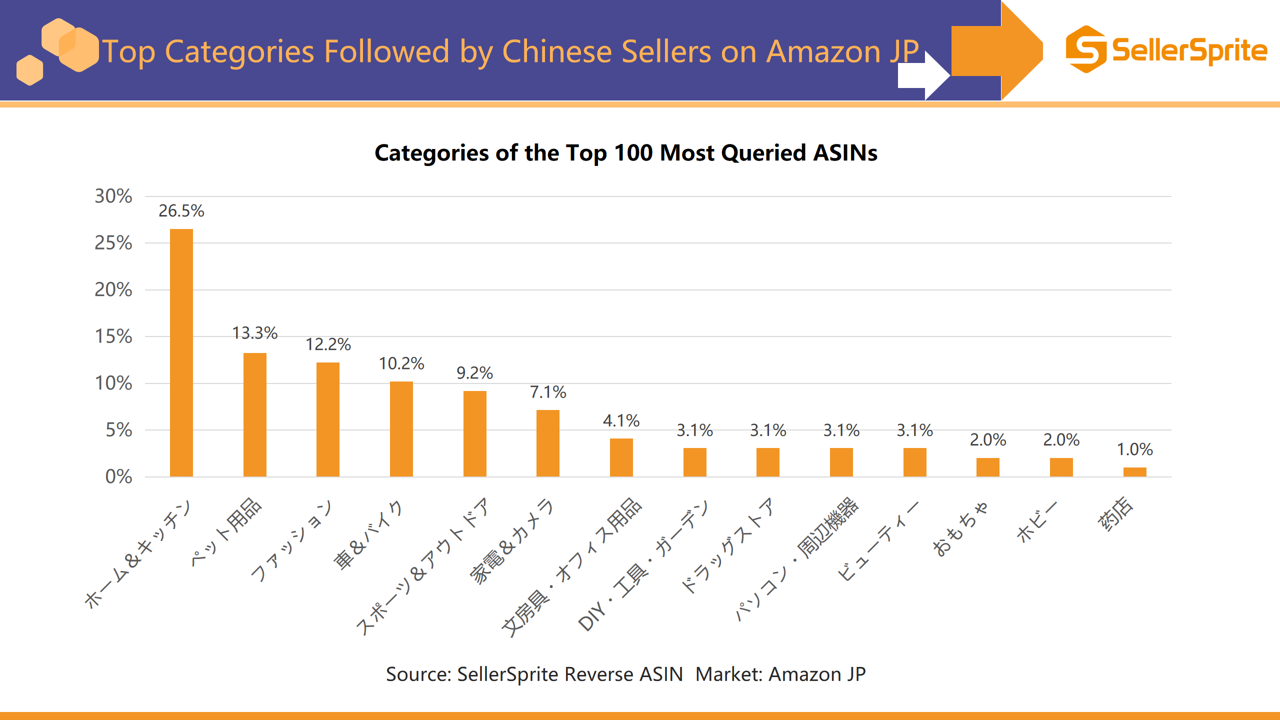
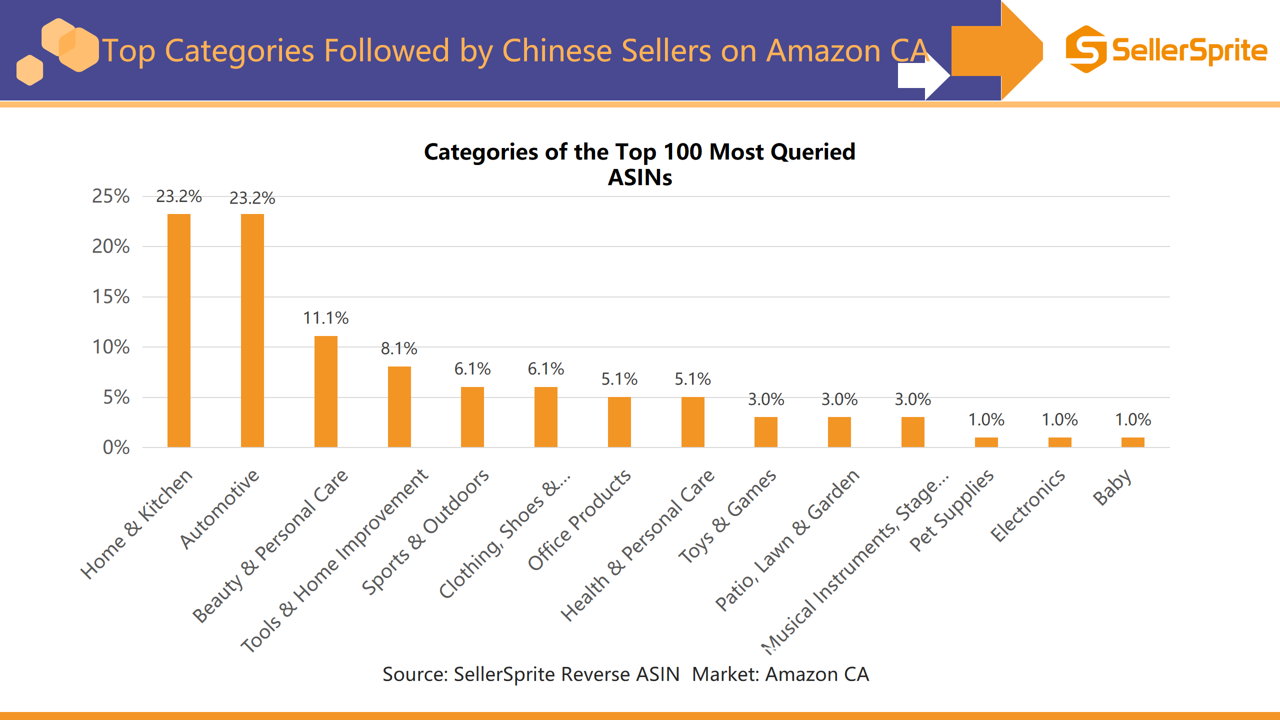
Using the same method, we also identified the top 10 categories that Chinese sellers focused on in Germany, Japan, and Canada in 2022.