TL;DR: Amazon conversion rate benchmarks vary significantly by category, with top performers averaging 10%–15%, while most sellers fall between 3%–10%. This guide breaks down 2026 data by category, explains key influencing factors, and provides actionable steps to improve your Amazon sales conversion rate.
Key Takeaways
- The average Amazon conversion rate for US sellers ranges from 3% to 10%, with top sellers achieving 15% or higher.
- Electronics and Home & Kitchen lead in conversion rates due to high buyer intent and competitive pricing.
- Conversion rates are influenced by product quality, pricing, reviews, images, and keyword relevance.
- Amazon's conversion rates outperform most general e-commerce platforms due to Prime trust and fast shipping.
- Use tools like SellerSprite's Sales Estimator to benchmark your performance and optimize listings.
Table of Contents
Note on marketplaces: This guide is specifically optimized for the US market.
Amazon Conversion Rate Overview
The Amazon conversion rate is one of the most critical performance metrics for sellers. It measures the percentage of shoppers who view your product listing and go on to make a purchase. While many factors influence this number, understanding the average Amazon conversion rate helps sellers set realistic goals and identify areas for improvement.
In 2026, the typical Amazon sales conversion rate for US-based sellers ranges from 3% to 10%. However, top-performing brands in competitive categories often exceed 15%, thanks to optimized listings, strong reviews, and strategic pricing. For new and growing sellers, hitting even 5% is a solid milestone that indicates healthy product-market fit and listing effectiveness.
It's important to distinguish conversion rate from ACoS (Advertising Cost of Sale), which measures ad efficiency. While ACoS benchmarks help evaluate ad spend ROI, conversion rate reflects organic and paid traffic performance at the product level. Both are essential Amazon seller performance metrics, but conversion rate directly impacts profitability and ranking.
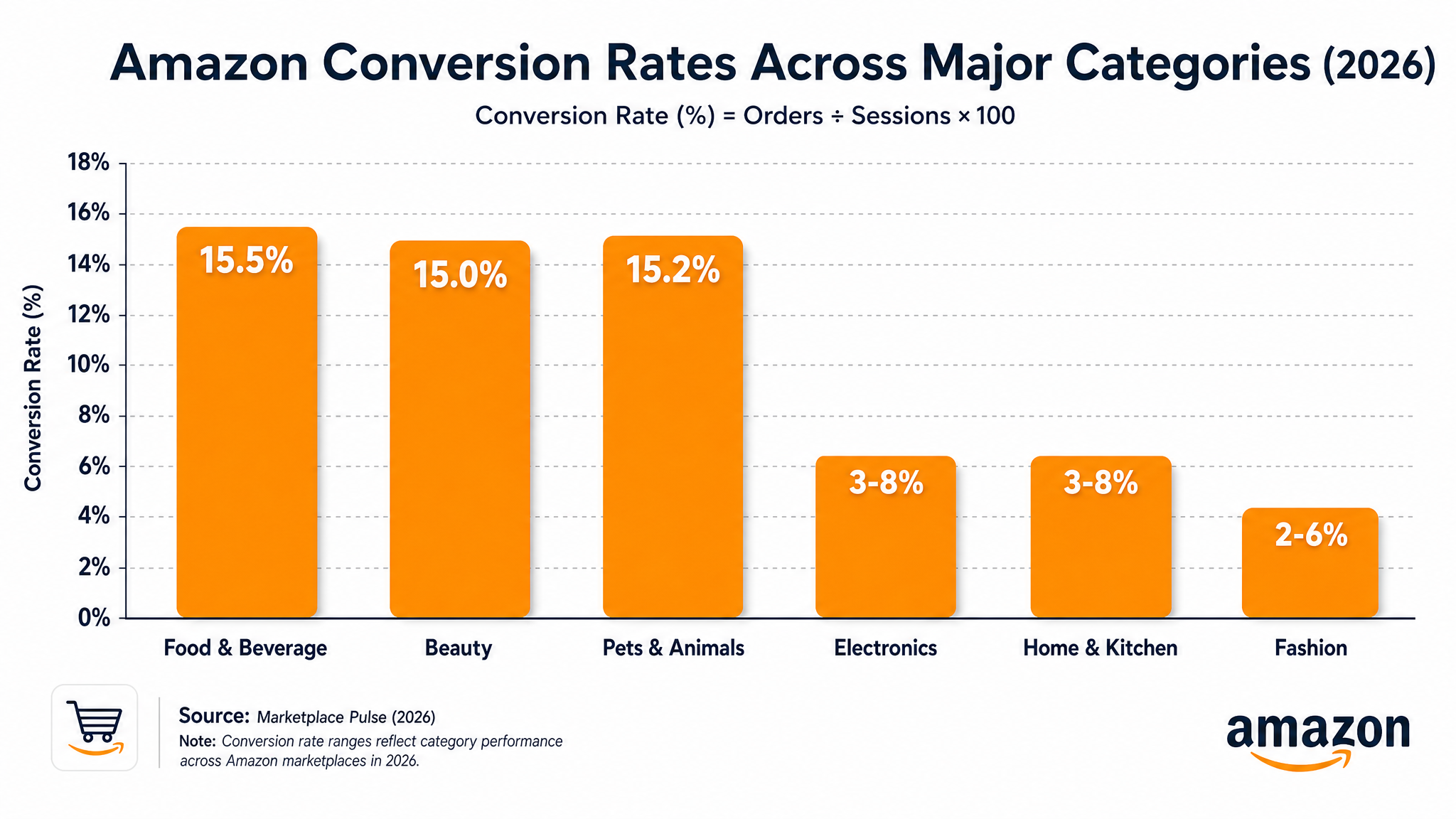
Conversion Rate Benchmarks by Category
Amazon conversion rates vary widely by category due to differences in buyer behavior, competition, and average order value. Below is a breakdown of 2026 benchmarks across key categories based on aggregated data from top-performing US sellers:
Electronics: 10%–15%
Electronics consistently rank among the highest-converting categories. Shoppers come with high purchase intent, often comparing specs and reviews before buying. Products like phone accessories, smart home devices, and audio gear perform particularly well when listings include detailed technical specs and comparison charts.
Home & Kitchen: 8%–12%
This broad category benefits from recurring household needs and seasonal demand. Items like kitchen organizers, coffee accessories, and storage solutions convert well when supported by lifestyle images and clear use-case descriptions. Prime eligibility and fast shipping further boost trust and conversion.
Beauty & Personal Care: 6%–9%
Conversion depends heavily on brand recognition, ingredient transparency, and customer reviews. Skincare, haircare, and grooming tools see higher conversion when backed by before-and-after visuals and dermatologist endorsements. Subscription models also improve repeat purchase rates.
Health & Household: 7%–11%
Products like vitamins, supplements, and cleaning supplies benefit from recurring purchases and auto-replenish options. Trust signals such as FDA compliance, third-party testing, and clear dosage instructions increase buyer confidence and conversion likelihood.
Toys & Games: 5%–8%
Seasonal spikes around holidays drive volume, but conversion depends on age appropriateness, safety certifications, and play value. Listings with demo videos and parent testimonials convert better, especially for educational toys.
Clothing, Shoes & Jewelry: 3%–6%
This category faces challenges due to sizing variability and return rates. Conversion improves with size charts, model photos, and fit feedback. Private label fashion brands that build strong storytelling and brand identity often outperform generic listings.
Factors Influencing Amazon Product Conversion Rates
Understanding what drives Amazon product conversion rates is essential for optimizing performance. Here are the top five factors that impact conversion for US sellers:
1. Product Reviews and Ratings
Products with 4.5+ star ratings and 50+ reviews convert at nearly double the rate of those with fewer or lower ratings. Positive feedback builds trust, while addressing negative reviews shows responsiveness. Encourage reviews using Amazon's Request a Review button and follow up with post-purchase emails.
2. High-Quality Images and Videos
Listings with at least seven high-resolution images, including lifestyle shots, infographics, and scale comparisons, see up to 35% higher conversion. Adding A+ Content with comparison charts and demo videos further enhances engagement and reduces hesitation.
3. Competitive Pricing and Promotions
Pricing within 10% of the Buy Box leader typically yields the best conversion. Strategic use of coupons, lightning deals, and Subscribe & Save options can push hesitant buyers over the edge. Monitor competitors using tools like SellerSprite's Amazon Seller Analytics Guide to stay competitive.
4. Keyword Relevance and Search Visibility
Even the best listing won't convert if it's not found. Products ranking on the first page for relevant keywords have a 50% higher chance of converting. Use tools like Search Query Performance Dashboard to identify high-converting search terms and optimize backend keywords.
5. Fulfillment Method (FBA vs FBM)
Fulfillment by Amazon (FBA) listings convert 20%–35% better than FBM due to Prime eligibility, fast shipping, and Amazon's customer service. For new sellers, FBA is often the fastest path to building conversion momentum and earning the Buy Box.
How to Improve Your Amazon Conversion Rate
Improving your Amazon conversion rate isn't about guesswork but about systematic optimization. Follow this actionable checklist to boost your performance:
Step 1: Audit Your Current Conversion Rate
Use Seller Central's Business Reports or SellerSprite's Sales Estimator to calculate your current conversion rate. Compare it to category benchmarks to identify gaps.
Step 2: Optimize Your Listing Content
Revise your title, bullet points, and description to highlight benefits, solve pain points, and include top keywords. Add A+ Content with comparison charts, usage scenarios, and trust badges.
Step 3: Enhance Visuals
Upload professional images with multiple angles, lifestyle shots, and infographics. Include a demo video if possible. Ensure all images meet Amazon's 1000x1000 pixel requirement for zoom functionality.
Step 4: Monitor and Adjust Pricing
Use repricing tools or manual checks to stay competitive. Run limited-time promotions to create urgency and boost early sales velocity.
Step 5: Leverage Customer Feedback
Analyze negative reviews to identify product or listing issues. Address common concerns in your content and consider product improvements. Respond professionally to all reviews to show engagement.
Step 6: Run Targeted Ads
Use Sponsored Products to drive traffic to high-potential listings. Focus on keywords with high click-through and low conversion to diagnose listing weaknesses. Use category analysis to identify underserved niches with high buyer intent.
FAQ
What is a good conversion rate for Amazon sellers?
A good Amazon conversion rate is typically 10% or higher. However, averages vary by category. Most successful sellers aim for 8%–15%, while new sellers should target 5% as a starting benchmark. Conversion rates above 15% indicate strong listing optimization and customer trust.
How does Amazon's conversion rate compare to other e-commerce platforms?
Amazon's average conversion rate (3%–10%) is significantly higher than general e-commerce sites (1%–3%). This is due to Prime membership, fast shipping, trusted reviews, and a frictionless checkout process. Amazon's ecosystem reduces buyer hesitation, making it one of the most conversion-efficient platforms.
What factors influence Amazon product conversion rates for US sellers?
Key factors include product reviews and ratings, image quality, pricing competitiveness, keyword relevance, and fulfillment method (FBA vs FBM). Additional elements like A+ Content, brand reputation, and customer service responsiveness also play critical roles in driving conversions on Amazon.
Next Steps
- Use SellerSprite's free tools to analyze your current conversion rate and compare it to 2026 benchmarks.
- Optimize your top-performing listings using the six-step checklist above and track improvements monthly.
References
- Amazon Seller Central Performance Metrics View
- SellerSprite Amazon Analytics Tools View
- Amazon Category Research Guide View
By SellerSprite Team
The SellerSprite Team combines deep expertise in Amazon algorithm dynamics, e-commerce data analytics, and seller growth strategies. With years of hands-on experience supporting thousands of US-based sellers, from beginners to enterprise brands, we deliver actionable insights grounded in real-world performance data. Our content is designed to help sellers make smarter decisions using transparent, up-to-date benchmarks and proven optimization frameworks.